

MICE & Group Travel in 2026: From a Booking Feature to a Managed Events Team



TLDR;
- ITILITE's group travel desk has managed 180+ flight offsites and events up to 500 attendees.
- A named specialist now replies to any event enquiry within 4 business hours.
- The global MICE market is projected at $1,142.22 billion in 2026, growing 7.02% a year.
- 70% of event organizers are also responsible for sourcing hotels for their company's travel program.
- The new service covers four categories: offsites and conferences, incentive trips, sports and athletic travel, and executive events.


Imagine your company is planning its next big event - a sales kickoff, an annual conference, an incentive trip for your top performers.
- Who's responsible for coordination?
- Who's negotiating the hotel room block?
- Who's booking forty flights instead of one?
- Who's on call when something breaks on the ground?
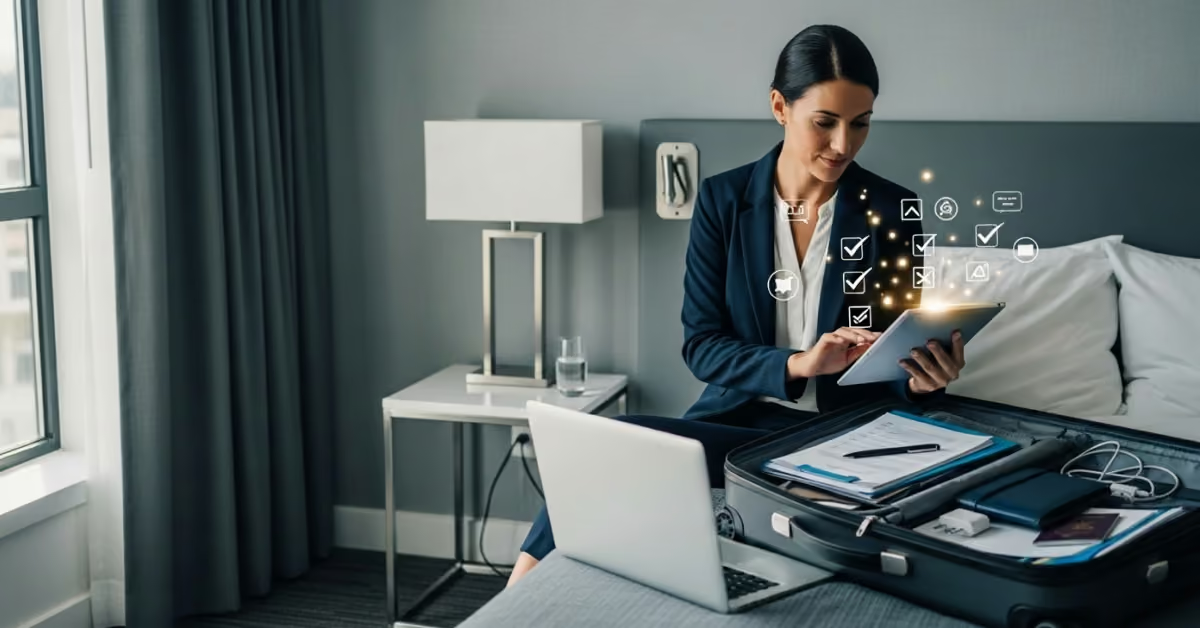
Most companies don't have a clean answer. It falls on whoever raised their hand last - an EA, an HR manager, a travel admin, juggling it alongside their actual job. That's what Events and group travel actually is. Not booking flights and hotels. Keeping forty people, or four hundred, moving in the same direction without anyone finding out the hard way that something broke.
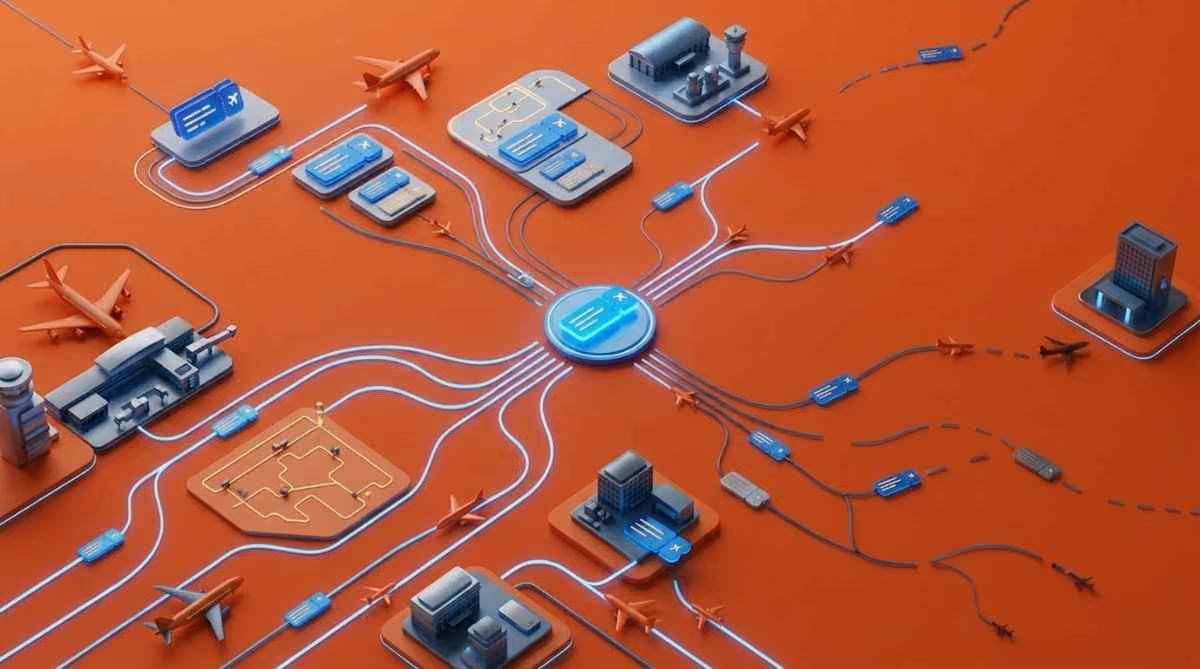
We've managed 180+ flight required offsites and events up to 500+ attendees against exactly that problem - venue sourcing, group flights, room blocks, and on-ground support, run by a specialist team instead of a self-serve form.
This year we have, a defined response time, and a process you can actually repeat: we are expanding our expertise to a fully managed Events and group travel service. A specialist now responds to any event enquiry within four business hours.
Why this was hiding in plain sight
Seventy percent of event organizers are also responsible for sourcing hotels for their company's broader travel program, and 48% spend roughly half their time on corporate business travel alone. Group travel and day-to-day business travel were never two separate jobs.
Our platform is built to do one thing extremely well: get a single traveler from A to B in minutes, self-serve, no calls needed. Group travel works differently — there's no self-serve search-and-book path at all. A group trip request goes directly to our specialist team, who negotiate the group rate, hold the room block, and adjust the rooming list a dozen times before anyone checks in. The self-serve platform stays the fast lane for individual travelers. Group and event trips get a specialist from the very first request.
What we built instead
A fully managed MICE and group travel service, run by a named specialist team. It handles venue sourcing, group flights, on-ground logistics, and live event support for anything from a twenty-person offsite to a five-hundred-attendee conference.
The mechanics matter more than the label. Five steps take an inquiry from a form field to a wrapped event.
- Step 1: Submit the enquiry: A traveler or admin fills in event type, group size, and a work email. You just need thirty seconds to fill the form. , no meetings required to get started.
- Step 2: A specialist responds within 4 hours: A named person picks up the enquiry, reads the brief, and reaches out to scope the event directly with the requester.
- Step 3: A custom proposal comes back: Venues, flights, ground transport, and pricing, built against the actual brief and budget rather than a generic package. This is where the same tactics covered in how to negotiate corporate hotel rates play out at group scale instead of one hotel at a time.
- Step 4: The team executes: Bookings, vendor coordination, and on-ground operations run end to end. This is the same mechanism behind group hotel bookings for corporate travel, scaled up with a named owner instead of a shared inbox.
- Step 5: A post-event report lands: Spend summary by category, vendor reconciliation, attendee feedback, and a reusable template for the next event. Nobody has to rebuild the plan from scratch six months later.
Who actually uses this
Different purpose, same formula. Here's where most of that group and event travel falls — four categories, each with its own vendor quirks, so each gets its own playbook instead of one generic "group travel" template.
1. Team offsites and conferences
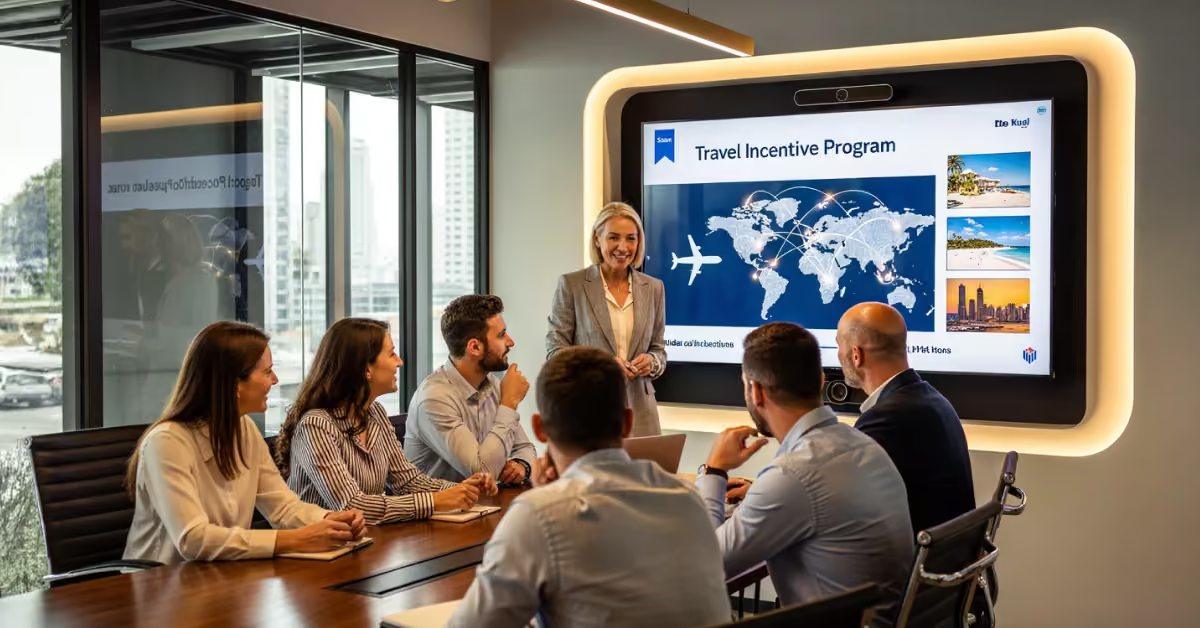
Group flights across multiple departure cities, negotiated hotel room blocks, ground transport, and on-the-ground activity coordination. This is the direct successor to the manual process where attendees never saw a self-serve booking flow. Hotel blocks now get set up the same way, just with a named owner and a defined SLA .
2. Employee incentive trips
Luxury resort negotiations, destination experiences planned around the incentive, and end-to-end budget tracking for the trips companies use to reward top performers. These trips carry higher per-person spend and more reputational risk than an internal offsite, which is exactly why they need a specialist.
3. University athletic and sports travel
Group flights with coordinated squad itineraries, hotel blocks near venues and training facilities, and coach transport that lines up with practice and game schedules. Multi-team coordination across overlapping schedules is the hard part here, not the individual bookings.
4. Executive and leadership events
Preferred-class booking with flexible cancellation, venue sourcing at preferred rates, private transfers, and meeting-room logistics. The travel side connects directly to the coordination problem covered in technology and executive travel coordination: a handful of senior travelers whose itineraries change constantly and can't wait in a general queue.
What "fully managed" actually includes
Five things separate this from a self-serve platform with a group-booking button bolted on. Each one exists because a customer hits its absence first.
- Group flights and hotels for 100+ travelers, negotiated as one contract instead of a hundred separate bookings. Coordinating a hundred-person trip is a different problem from booking one person a flight: fare consolidation across departure cities, room-block attrition clauses, and one payment thread instead of eighty individual confirmations.
- Vendor negotiation done on the company's behalf. ITILITE's specialists negotiate directly with hotels, airlines, and ground transport providers using supplier relationships and booking volume that an internal admin booking one event a year won't have.
- Event experience coordination beyond the travel itself, including venue setup, AV and stage arrangements, and welcome logistics for speakers and attendees. This is scoped to the event brief, not a generic checklist, and it is managed by the same specialist who owns the travel side.
- 24/7 human support for the duration of the event. ITILITE's support connects travelers to a human in 60 seconds, not a ticket queue. If a flight cancels or a hotel overbooks mid-event, that same fast human support backs the on-ground team, so attendees aren't stuck rebooking flights from a hallway.
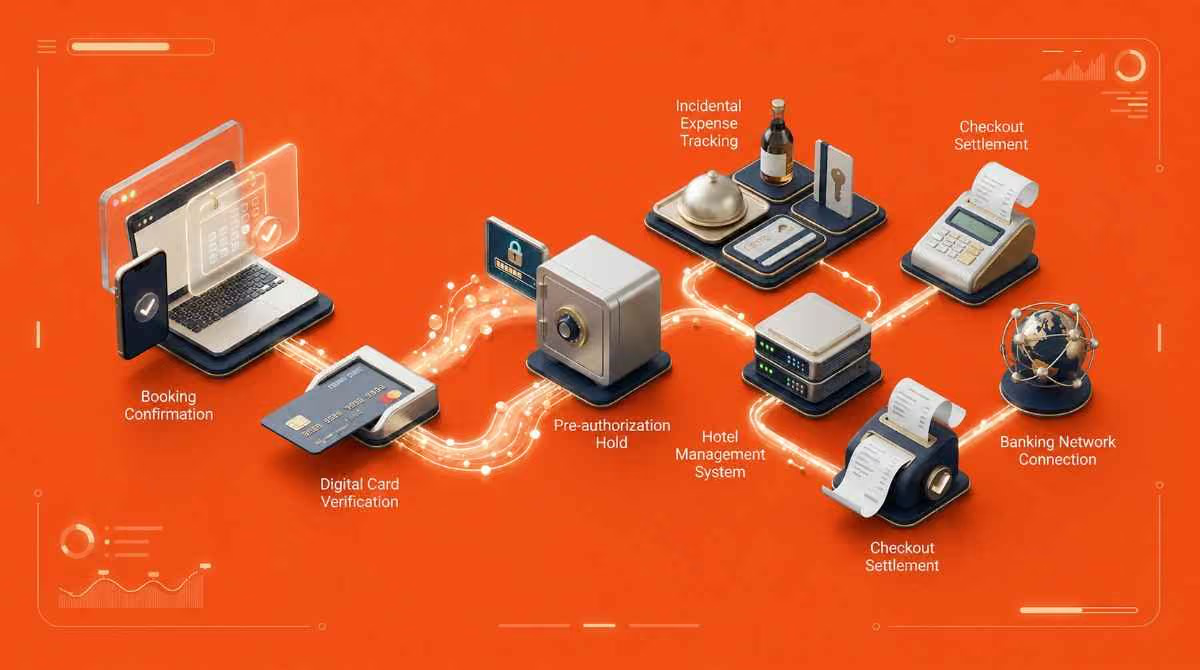
- Payments and reconciliation, backed by MIS reporting. One consolidated payment thread instead of a hundred individual invoices, with MIS-level reporting that reconciles spend against the approved budget line by line.
- Budget tracking against the approved number in real time, not just at reconciliation.
The direction we're heading
A booking platform and an events team solve different problems. We've spent the past year building the specialist expertise group travel actually needs — negotiating vendor rates, managing rooming lists, staying awake at 2 a.m. when a coach breaks down outside Cincinnati. That expertise now has a name: Events and Group Travel.
The compliance and spend visibility that ITILITE's travel policy enforcement already gives individual trips now extends to group trips too, through the same post-event report every customer gets back. The self-serve platform stays the fast path for one traveler. The managed service is the specialist path for everyone else in the room.
Same company, same instinct. We've just expanded the expertise to fit a completely different shape of problem.
FAQ
What counts as MICE travel?
MICE stands for meetings, incentives, conferences, and exhibitions. It covers any trip involving a group booked together rather than one traveler booking independently, from a 20-person offsite to a 500-attendee conference.
How is this different from ITILITE's regular booking platform?
The regular platform is self-serve. The managed service adds a named specialist who sources venues, negotiates group rates, and runs on-ground support for the whole event.
How fast does a specialist respond to an enquiry?
Within 4 business hours of submitting the event type, group size, and work email through the enquiry form.
Does this replace the self-serve platform for small trips?
No. A two- or three-person trip still books fastest through the regular platform. The managed service exists for the group sizes and vendor negotiations.
What size events does ITILITE handle?
From 20-person offsites to conferences with 500 attendees, across offsites, incentive trips, sports and athletic travel, and executive events.

Ardra is a Content Strategy Manager at ITILITE with 6+ years of experience in travel and SaaS content. She holds a Master’s degree in Political Science from Lady Shri Ram College for Women and transitioned from academic research and travel content into SaaS content strategy.
She previously worked with JustWravel, where she focused on travel storytelling and digital content. Today, she specializes in SEO and AEO-driven content strategies that help businesses simplify complex travel and expense workflows into search-optimized narratives.
When she’s not working, Ardra is usually reading or watching films.
Stop juggling group travel with your day job
A fully integrated corporate travel management software that dramatically reduces spends while improving user experience




.avif)

.avif)







.avif)

%20(1).png)
%20(1).png)




.avif)


.avif)
.avif)

.avif)

.avif)
.avif)

.avif)








.avif)