8 Best Corporate Traveler Alternatives in 2026 (Compared)
%20(1).avif)

Snapshot

- Corporate Traveler is a managed-service TMC built for SMBs, but many companies look elsewhere when pricing rises, self-service becomes a priority, or travel and expense tools remain disconnected.
- ITILITE, Navan, and TravelPerk are the leading SaaS alternatives, offering self-serve booking experiences and more predictable pricing models.
- ITILITE stands out by combining travel, expense management, and corporate cards on a single platform with flat per-trip pricing.
- FCM Travel, Egencia, and CTM are stronger fits for organizations that prefer high-touch account management and agent-led travel support.
- SAP Concur remains a top choice for enterprises that need deep ERP integrations, compliance controls, and advanced reporting capabilities.
- The right alternative depends on whether your priority is lower costs, better traveler experience, stronger service, or consolidating travel and spend management into one system.
Corporate Traveler is Flight Centre Travel Group's SMB-focused B2B brand. Their customers are typically 50 to 500 employees on a managed-service contract, paying transaction fees plus a management fee for agent-led booking and 24/7 support. The model works for some businesses. For others, the renewal pricing climbs faster than headcount, the agent model feels heavy for trips travelers want to self-book, or the unified expense and card workflow simply doesn't exist alongside the travel.
The 8 alternatives below are the platforms Corporate Traveler customers actually shortlist when they look elsewhere. Three are modern SaaS TMCs that pair travel with expense and cards on one platform. Two are mega-TMC service models (the up-market option for businesses that outgrow CT). One is a sibling brand under Flight Centre itself. One is the established enterprise default. One is the technology-platform play.
Quick Comparison Table
How to read this list
Corporate Traveler customers usually switch for one of three reasons. Each reason points to a different group on the list above.
- Cost is the issue: SaaS TMCs (ITILITE, Navan, TravelPerk) charge per active user or per trip with predictable monthly costs. Mega-TMCs charge transaction fees plus management fees that scale with volume. If you're leaving CT over pricing, you're probably looking at one of the SaaS options.
- Service is the issue: If your travelers are senior enough that agent-led 24/7 phone support is the value, FCM, Egencia, and CTM are the natural step-ups. SaaS TMCs lead with self-serve and escalate to phone; the agent experience is different.
- Tech stack is the issue: If your finance team is consolidating onto one platform across travel, expense, and cards, ITILITE and Navan are the strongest fits. Spotnana is a third option but typically sold as infrastructure to other TMCs rather than directly to end customers.
1. ITILITE
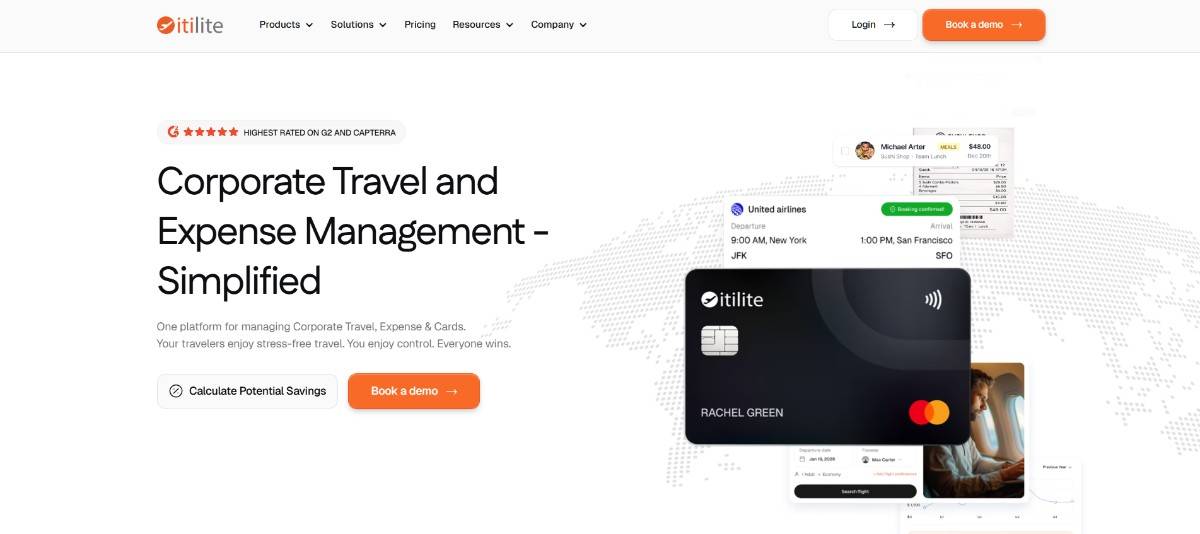
ITILITE is a unified travel, expense, and corporate card platform built for mid-market businesses. Where Corporate Traveler sells managed-service contracts with transaction fees and management fees, ITILITE offers flat-rate SaaS pricing at $10 per trip, discounted to $7 via pre-paid wallet, or paired with Expense at $6 per user/month billed annually, with free corporate cards and all travel workflows on the same interface.
The unification is the differentiator. A CT customer running travel through CT, expense through Concur or Certify, and corporate cards through a bank consolidates onto one platform with ITILITE. The booking is the expense (the data flows automatically). The card is the spend control (real-time alerts, virtual cards, merchant restrictions). There's no quarterly reconciliation between three vendors.
- What it doesn't do: ITILITE doesn't have the agent depth of a mega-TMC. If your travelers expect a named travel agent who knows their preferences and handles complex multi-leg itineraries by phone, the agent model isn't ITILITE's strength.
- Best for: Mid-market businesses (100–1,000 employees; 50–500 travelers) transitioning from Corporate Traveler to a unified corporate card, travel, and expense platform
- Pricing: $10 per trip, no setup fees, no inactive-user charges.
2. Navan
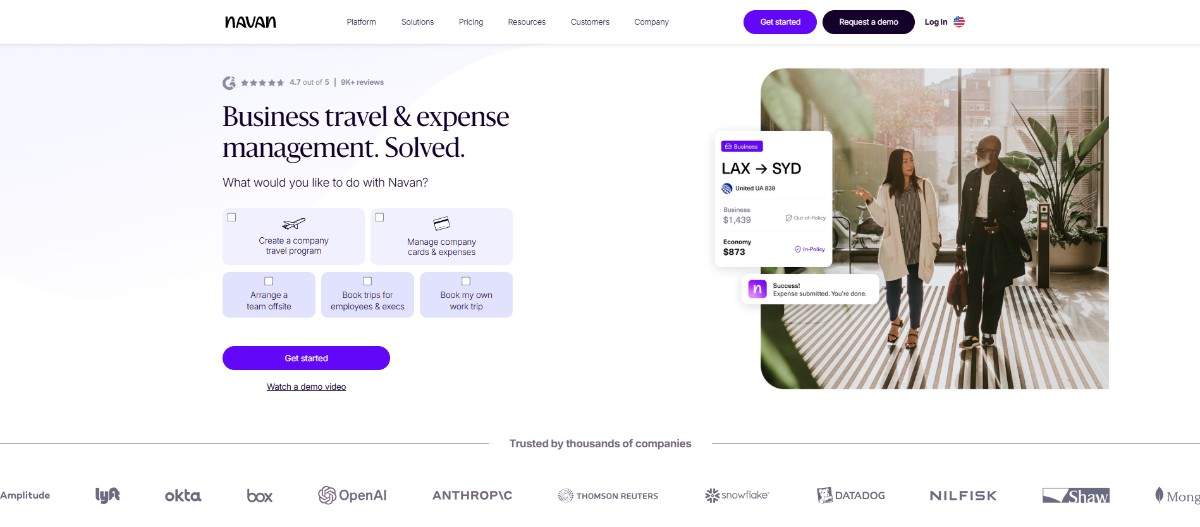
Navan (formerly TripActions) is the SaaS TMC with the most polished UX. The mobile app feels like a personal travel app rather than a corporate tool, which fixes one of the recurring problems Corporate Traveler customers report: travelers booking outside the system because the booking experience feels heavy.
Navan's free tier covers up to 200 active users. Beyond that, Navan Connect adds the expense and corporate card layer at custom pricing. The expense module is newer than the travel module, which is worth pressure-testing if your AP team needs deep policy depth.
- Best for: Tech and professional services companies, especially those where traveler adoption has been the issue on CT and the team will respond to a better app.
- Pricing: Free tier under 200 users. Navan Connect custom-quoted.
3. TravelPerk

TravelPerk is the SaaS TMC with the strongest European market position. The product launched in Barcelona, expanded across Europe through the late 2010s, and pushed into the US starting 2023. For Corporate Traveler customers who book heavy European travel or work with European subsidiaries, TravelPerk's inventory and local-market support compete favorably.
FlexiPerk is the standout feature. For a small fee per trip, you can cancel any booking for any reason and recover about 80% of the cost, including on non-refundable flights. For programs where plans change frequently, the math works out.
- Best for: SMB and mid-market companies with European travel volume, or US businesses that prioritize fast self-serve rollout and flexibility on changes.
- Pricing: Free tier for small teams. Usage-based pricing above that.
4. SAP Concur

SAP Concur is what Corporate Traveler customers end up evaluating when they're considering moving up-market into enterprise software rather than across to another SaaS platform. Concur sells the Concur Travel OBT (online booking tool) plus a partner network of TMCs for fulfillment. The customer gets software from SAP and agent service from a TMC under the Concur umbrella.
The reason to consider it: Concur's ERP integration depth (especially with SAP S/4HANA, Oracle ERP Cloud, and most major finance systems) is the deepest in the category. If your finance team's reporting and reconciliation depend on tight ERP coupling, Concur is the strongest fit.
The reason against: implementation timeline. Concur rollouts typically run 4 to 6 months. SaaS alternatives ship in weeks. For a 200-person business outgrowing CT, the 6-month Concur timeline may not be worth the integration depth gain.
- Best for: Large enterprises already on SAP or Oracle ERP, or mid-market businesses with serious reporting and compliance requirements.
- Pricing: Custom quote. Implementation fees apply.
5. FCM Travel
FCM is Corporate Traveler's enterprise sibling brand under Flight Centre Travel Group. Same parent company, same technology stack in many places, different go-to-market segment. CT serves SMB; FCM serves mid-market and large enterprises.
This makes FCM the most predictable switch for CT customers growing beyond CT's SMB sweet spot. Account management transitions are typically smoother (some account teams move with the customer when the customer outgrows CT into FCM), and the underlying booking technology is familiar. Reports from FCM customers indicate the service tier is genuinely different: more proactive program management, deeper account resourcing, stronger category-management support.
- Best for: Existing Corporate Traveler customers growing into the 500+ employee range who want to stay within FCTG.
- Pricing: Custom quote, transaction fee plus management fee model.
6. Egencia (now part of Amex GBT)
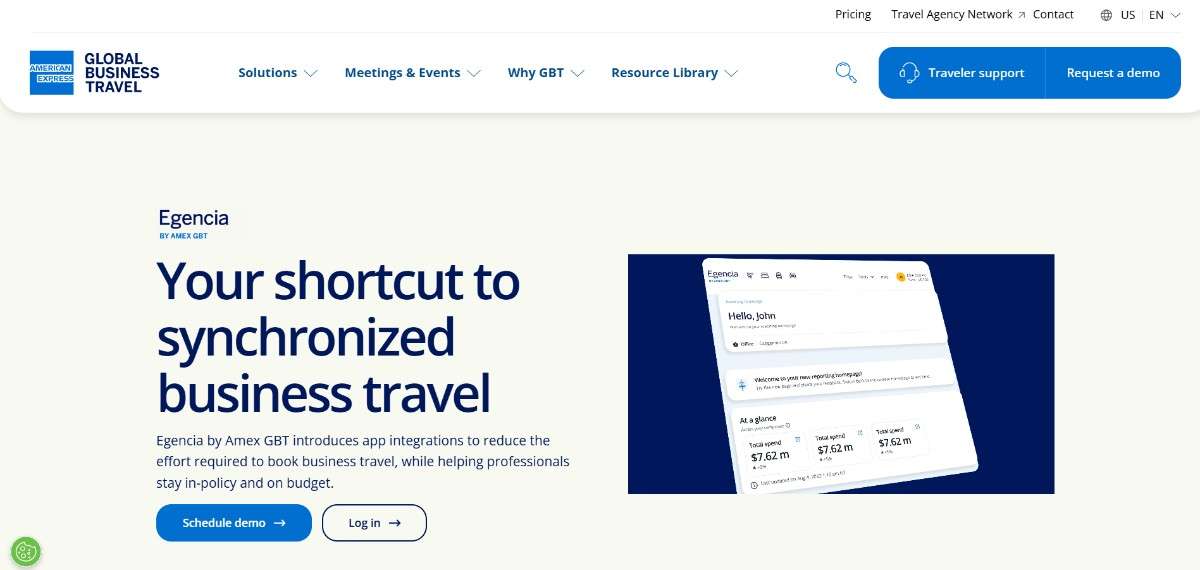
Egencia was the SaaS TMC pioneer, acquired by American Express Global Business Travel in 2021. The product still operates under the Egencia brand and serves mid-market and large enterprise customers who want managed service plus an OBT.
For Corporate Traveler customers comparing Egencia, the question is what changed post-acquisition. The product has improved in some areas (deeper Amex GBT inventory access, broader supplier negotiations) and slowed in others (independent product roadmap is less independent now). Customers we hear from generally consider the post-acquisition Egencia comparable to other managed mid-market TMCs rather than the SaaS-leader it was in 2018.
- Best for: Mid-market businesses comfortable with the Amex GBT umbrella who want a balance between managed service and modern booking tool.
- Pricing: Custom quote.
7. Corporate Travel Management (CTM)
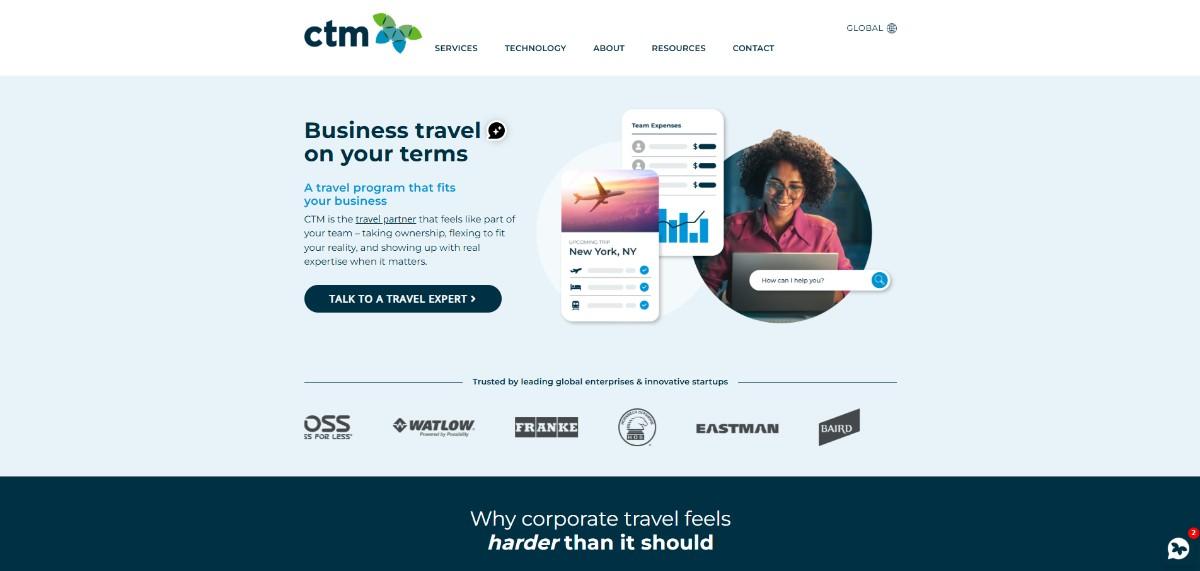
CTM is an ASX-listed Australian TMC that grew aggressively into North America through its 2020 acquisition of Travel & Transport. It's now one of the top six global TMCs by managed spend, with particular strength in North America, APAC, and the government and not-for-profit niches.
For Corporate Traveler customers, CTM is the alternative when single-account-manager continuity matters. CT customers often cite agent turnover as a friction point; CTM positions specifically against this with a single-team-per-account model. The trade-off is that CTM is a similar managed-service model overall, so customers leaving CT for cost reasons may not see meaningful savings on the same model from a different vendor.
- Best for: Mid-market businesses where a named account team and program continuity matter more than cost or technology.
- Pricing: Custom quote, transaction fee plus management fee.
8. Spotnana
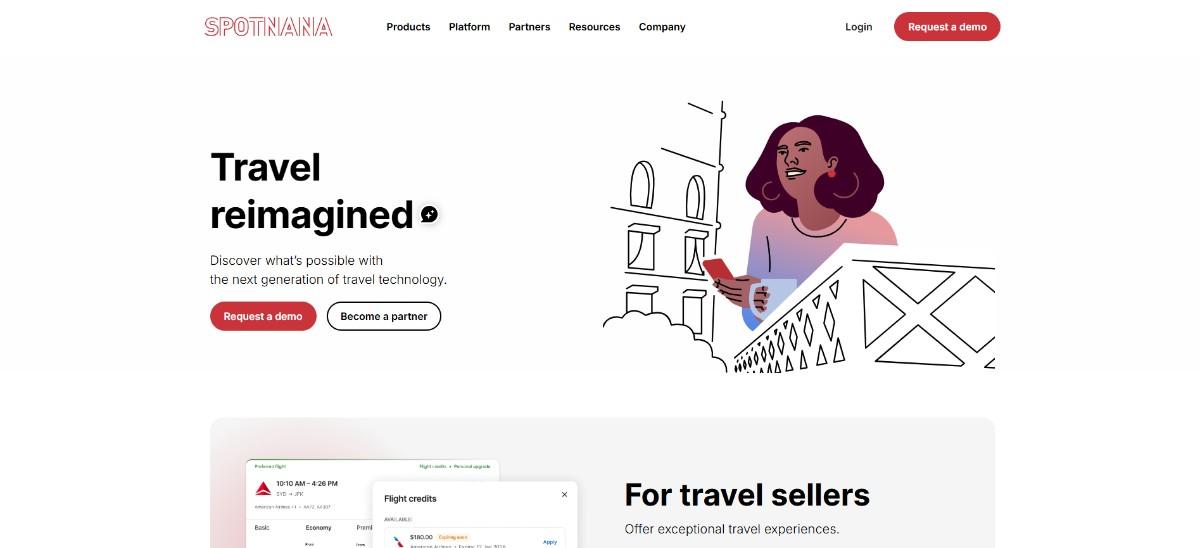
Spotnana is a modern TMC infrastructure platform that powers other travel programs (including Expensify Travel, some BCD Travel deployments, and several SaaS TMC products) rather than typically being sold direct. Some larger or tech-led travel programs do work with Spotnana directly as a private-label or platform deployment.
The reason this matters for Corporate Traveler comparison shoppers: if you're considering a SaaS TMC like Expensify Travel or Navan, the booking infrastructure underneath is sometimes Spotnana. Understanding what Spotnana is and what it adds helps you evaluate platforms that depend on it.
- Best for: Tech-led travel programs and enterprises building custom travel experiences on top of TMC infrastructure. Most SMB and mid-market buyers will encounter Spotnana indirectly through other platforms rather than as a direct vendor.
- Pricing: Platform pricing, custom.
So which one?
If you're a Corporate Traveler customer thinking about switching, the decision usually maps to one of three patterns.
- You want SaaS-style pricing and a unified T&E platform: Pick ITILITE or Navan. The first wins if you want one platform across travel, expense, and corporate cards. The second wins if your priority is the traveler app experience and your finance team is OK keeping expense on a separate tool.
- You're growing past CT's SMB sweet spot and want managed service done well: FCM is the natural step-up within the FCTG family. CTM is the strongest external alternative.
- You're consolidating onto a single enterprise platform: SAP Concur if you're already on SAP or have heavy ERP integration needs. A unified SaaS platform if you want the consolidated workflow without the implementation overhead.
A finance lead at a mid-market services firm we work with described their CT-to-ITILITE move this way: "We weren't unhappy with CT. We just realized we were paying three vendors to do what one could do." That trade-off is the one most departing CT customers describe.
FAQ
Why do companies leave Corporate Traveler?
The most common reasons are renewal pricing climbing faster than travel volume, agent service feeling heavy for trips travelers want to self-book, and the desire to consolidate travel, expense, and corporate cards onto one platform rather than three.
What's the difference between Corporate Traveler and FCM Travel?
Both are owned by Flight Centre Travel Group. Corporate Traveler targets SMB (typically under 500 employees with light-to-medium travel). FCM targets mid-market and enterprise (500+ employees, complex global programs). The technology stack overlaps significantly; the service model and account team structure differ.
Is there a free alternative to Corporate Traveler?
Navan and TravelPerk both offer free tiers for small teams (under 200 active users at Navan; small teams at TravelPerk). The free tiers cover travel booking but not the advanced expense and corporate card modules, which are custom-priced.
How long does it take to switch from Corporate Traveler to a SaaS TMC?
SaaS TMC rollouts typically take 2 to 6 weeks for SMB and mid-market customers. Managed-service alternatives like FCM, Egencia, and CTM typically take 8 to 16 weeks because of contract negotiation, supplier rate transfer, and account team setup.

Ardra is a Content Strategy Manager at ITILITE with 6+ years of experience in travel and SaaS content. She holds a Master’s degree in Political Science from Lady Shri Ram College for Women and transitioned from academic research and travel content into SaaS content strategy.
She previously worked with JustWravel, where she focused on travel storytelling and digital content. Today, she specializes in SEO and AEO-driven content strategies that help businesses simplify complex travel and expense workflows into search-optimized narratives.
When she’s not working, Ardra is usually reading or watching films.



One platform. One workflow. One source of truth.
A fully integrated corporate travel management software that dramatically reduces spends while improving user experience
.avif)

%20(1).avif)