


Top SAP Concur Alternatives for Travel and Expense in 2026


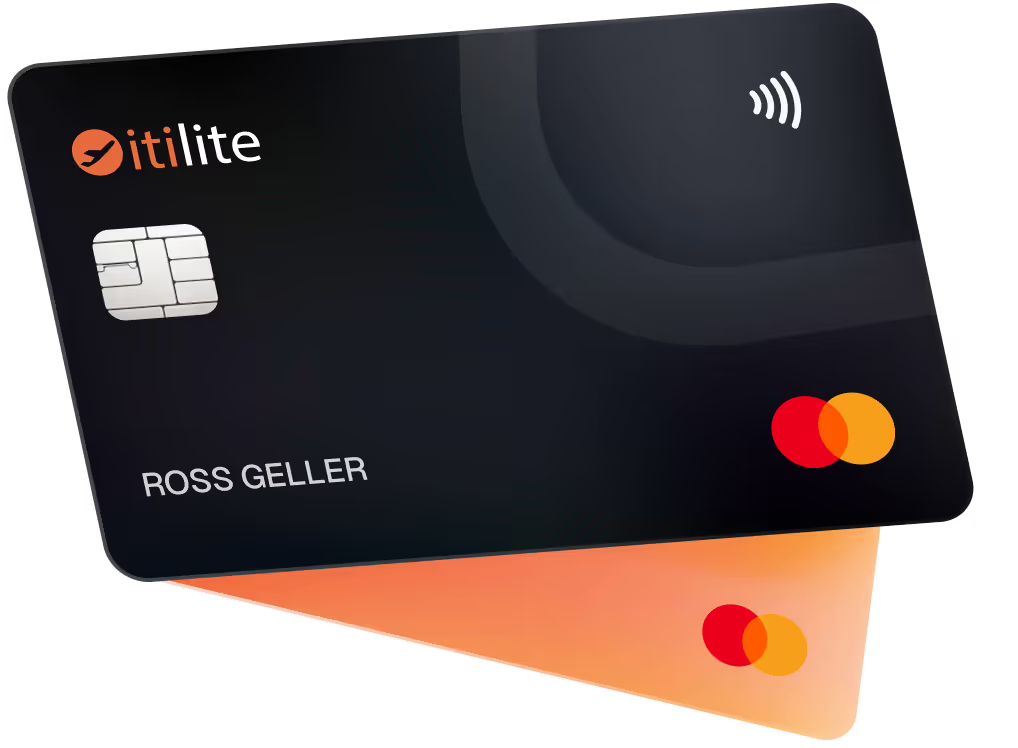


We have a dog in the fight.
We are ITILITE. We are a travel and expense management platform. Yes, we are writing a list of alternatives to SAP Concur, and yes, we are on that list.
You might think we’re biased. And honestly? We are. We believe we’ve built something better. But we also know that we aren’t the perfect fit for every single company out there. You pick a tool based on your needs.
Whether you are currently using Concur or just outgrowing your current setup, this guide breaks down the 8 best options, including where they win and where they might fall short.
Concur’s comparison with top alternatives - at a glance
Why consider an alternative to Concur?
Switching software is a hassle. Nobody wakes up excited to migrate data or train employees on a new tool. So, why are so many companies looking for Concur alternatives right now? Before diving into the alternatives, it's worth understanding why companies outgrow legacy travel and expense tools, the patterns are consistent and the switching triggers are predictable.
Usually, it comes down to three signs that you have outgrown your current setup:
1. User Experience Struggles: If your employees delay filing expenses until the last possible second, it’s possible the software is hard to use. Modern teams are used to apps like Uber and Airbnb. But legacy tools like SAP Concur often feel outdated and sluggish. Several companies say employees avoid using Concur because the booking flow feels clunky and can take 20+ clicks to complete a simple flight booking. Several user reviews mention slow uploads and frequent hangs in Concur, suggesting that even basic actions can feel unnecessarily time-consuming for employees.
2. Unreliable Support: Business travel is unpredictable. Flights get cancelled; plans change. An important concern with Concur is that it often functions as a “tool” that still requires a distinct Travel Management Company (TMC) for support/inventory. Long hold times, paying extra for support, or being confused if you should reach out to the software support or the Travel management support—all make the process cumbersome. Many companies switch simply to get a human on the phone when it matters.
3. Complex Pricing: With providers like SAP Concur, the base price is rarely what you actually pay. For travel, you often pay a fee for itinerary updates and the total cost per trip can increase disproportionately. Support costs can become unpredictable, often rising during urgent situations when businesses need help the most. In many Concur setups, costs increase as more expense reports are created, which can make managers hesitant to push employees to file expenses more frequently or on time. Modern alternatives tend to favor flat, transparent pricing so you can predict your costs better.
List of The Top SAP Concur Alternatives
If any of that sounded familiar, here are the alternatives you need to know in 2026.
1. ITILITE: Best Concur Alternative for an "All-in-One" Experience
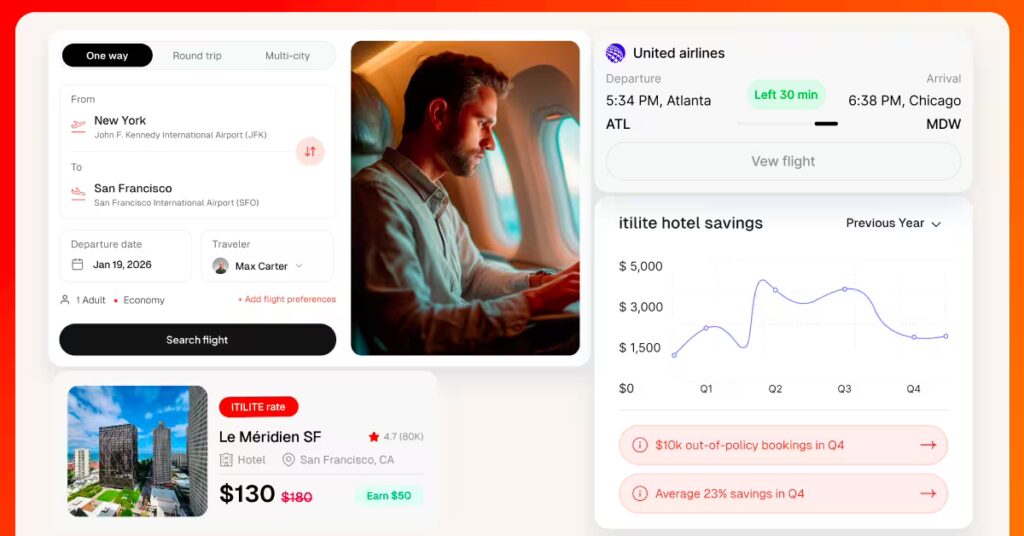
As the authors of this post, we’re obviously fans of what we’ve built. Biases aside, we built ITILITE specifically to solve the frustrations we just mentioned above. ITILITE is a corporate travel, expense management and cards program but with much better user experience, pricing, and support when compared to Concur. If you want modern tech plus the safety net of real human support when things go wrong, we’re a great fit.
Key benefits of ITILITE:
- All-in-one Travel, Expense and Cards: Book business travel, manage expenses, and corporate cards—all in one place. Every transaction syncs with your ERP automatically. Result? Finance saves 100+ hours monthly while getting crystal-clear visibility into every dollar spent.
- Guaranteed savings: We're not just cheap: we're confidently cheap. ITILITE guarantees the best hotel and flight rates, period. Better than any platform, anywhere. Our customers pocket an average 23% savings on travel spend from day one. That's money in your bank account.
- AI powered recommendations: ITILITE Mastermind tells you exactly the top 3 moves to hit your savings target. It benchmarks you against peers so you know if you're winning or just participating. Then there's Iris - your conversational AI analyst who delivers insights and reports on demand. Just ask in plain English.
- Policy Control, as desired: Build policies in minutes, not meetings. Lock down rules by level, travel class, or city - whatever keeps your CFO sleeping soundly. Set approvals your way: by itinerary, cost, or when someone goes rogue off-policy. Total control, zero headaches.
Human support at $0, anytime: Your traveler's stranded at 2 AM, staring at departure boards, absolutely done. They call ITILITE Support. A real human answers in 30 seconds and books their next flight. Unlimited calls, unlimited support, $0 extra. Because sometimes you just need someone who gets it..
Why customers choose ITILITE over Concur:
- User experience: While we have features at par with Concur, our tool actually “works”. You wont get come across any down-times, slow loading times, glitches. ITILITE gets job done - at speed, always
- Reliable Support, free: during any hiccups, there is just one number to dial, one email to reach out to. Your users will never be confused between the “software” and the “travel management company”. Use it as many times as you want during a trip - we cost you $0 additional.
- Simple Pricing: Our prices are flat, without any add ons. Travel is based on number of trips booked, Expense is based on number of active users
Pricing: Travel - $10 per trip. Expense - $9 per active user per month, No setup or integration fee. Unlimited Support. If you use ITILITE’s Corporate Cards, you can use the whole module for free - no jokes. See detailed ITILITE pricing here.
2. Navan
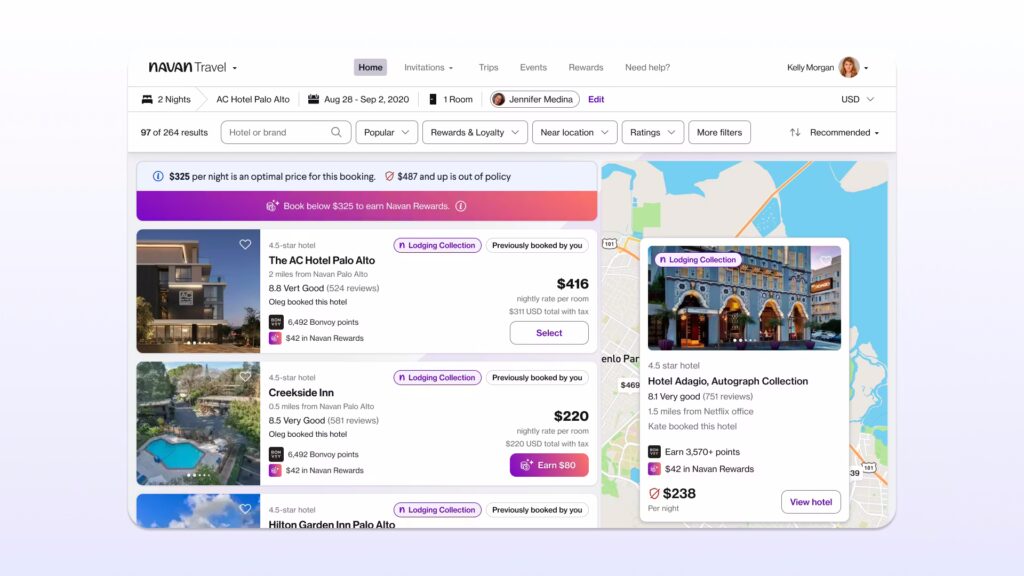
Navan is one of the leading platforms for travel and expense management. They have slick, consumer-grade software and majorly focus on tech companies.
Key benefits of Navan:
- Usability: The interface is intuitive and easy to use
- Scanning and reimbursement: they automate expense categorization and reports well
- Rewards: Navan’s rewards program nudges employees to save on travel before the booking is made
- Features: they have all the must-have features for travel and expense management, such as policy and approvals, group booking, receipt scanning, integrations, etc.
The Catch: Their support leans into AI, so in urgent situations you might face a bot. If you prefer talking to a human over a bot when your flight is cancelled, this might be a frustration point.
Why customers choose Navan over Concur:
- While Concur’s interface can often feel like a dated legacy ERP system, Navan feels like the modern apps your employees use every day.
Pricing: For expense, ~$15 per user/month (Offers free in some cases)e bonus for frequent travelers.
Teams moving off Concur often also evaluate modern platforms like Navan - if Navan is on your list, see how it compares in our Navan alternatives breakdown.
3. Egencia (AmexGBT)
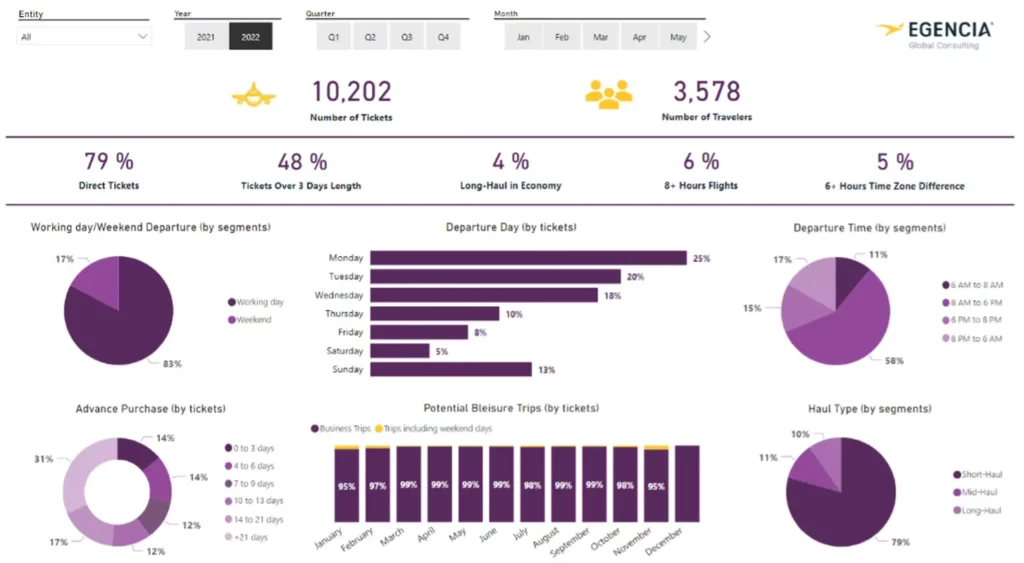
Egencia was born out of Expedia, so it feels very familiar to anyone who has booked a personal vacation online. It is owned by AmexGBT.
Key Benefits of Egencia:
- Their travel inventory is huge, and the booking tool is reliable.
- A good fit for global companies with complex travel patterns.
- Users can book travel across multiple currencies due to their global presence
The Catch: Amex GBT acquired Egencia in 2021, and it primarily is into business travel. So if your employees want to file expense reports they have to switch to a separate tool: an extra step that adds friction
Why customers choose Egencia over Concur:
- Egencia is a travel first platform that adds light expense features. It is often chosen when the priority is optimizing booking business travel. While SAP Concur is an expense-first platform with strong travel capabilities.
Pricing: contact sales for details
4. Ramp

Ramp started as a corporate card and spend management platform, and they are excellent at it. They are one of the leading "spend management" platforms on the market right now.
Key benefits of Ramp:
- Corporate cards: Ramp provides cards with great flexibility on limits and controls
- Reconciliation: transactions on ramp cards get reconciled seamless with the ERPs
- Global capabilities: Ramp supports multi-entity and international payments
The Catch: To unlock the full potential of their automation, like instant receipt capture, policy controls, and real-time integration, you are recommended to use Ramp’s corporate Cards. Additionally, travel is not their core DNA. Their booking tool is a recent add-on powered by Priceline inventory, which means it lacks the deep inventory and specialized support.
Why customers choose Ramp over Concur
- Expense features: Expense scanning and categorization process takes far lesser in Ramp than in Concur
- Card controls: Shifting to ramp gives companies a card-first approach to expense with great controls
Pricing: $15 / month / user + platform fees. They have free and enterprise plans too
For teams evaluating Ramp specifically against other spend-first platforms, our Ramp alternatives guide covers the key differences in depth.
5. Brex
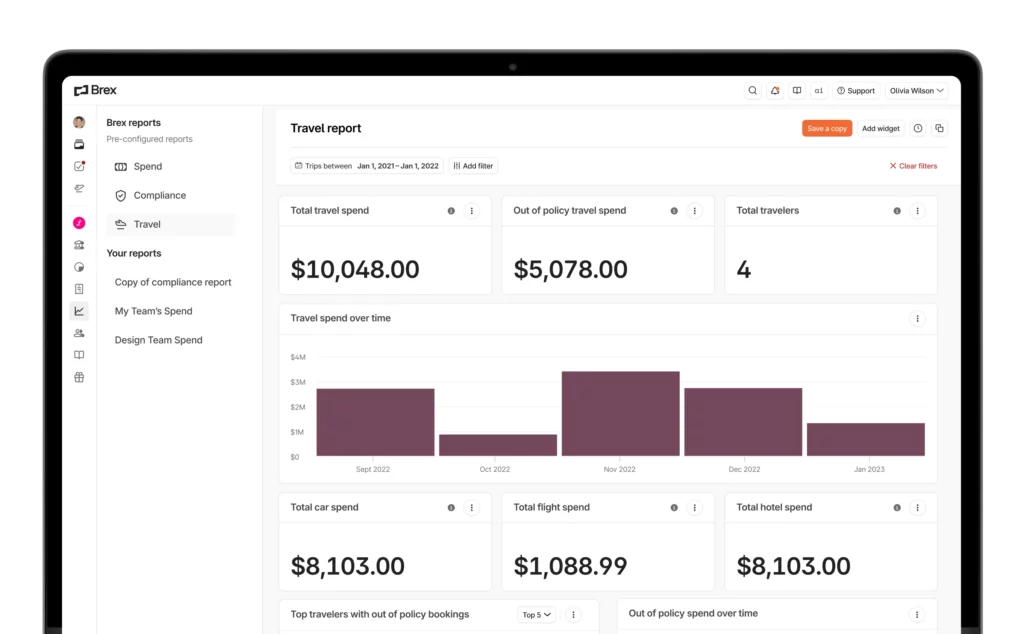
Like Ramp, Brex is a financial heavyweight. They offer banking, cards, and spend management all in one.
Key benefits of Brex:
- Credit Cards: It is a great choice for high growth startups who want to open bank account and get credit cards instantly
- Integration with Netsuite: They have a smooth integration with Netsuite which helps in great spend visibility.
The Catch: Their travel solution is powered by a third party (Spotnana). This means they are effectively relying on another tool's inventory, which can sometimes limit flexibility compared to a direct travel platform.
Why customers choose Brex over Concur
- Brex has a great ability to manage and track spending compliance in real time
- Compared to Concur’s legacy model, Brex emphasizes automation, faster reconciliation, and real-time control across expense workflows.
Pricing: $12 per user/month. Free and enterprise plans available
6. Emburse
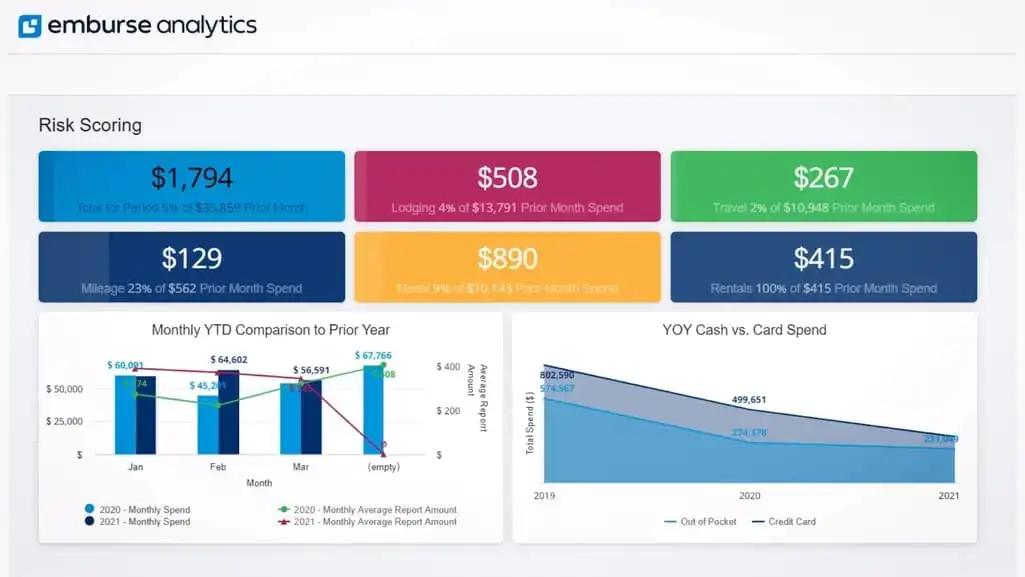
Emburse provides a suite of corporate spend, expense, and travel solutions designed to help finance teams gain total visibility and control.
Key benefits of Emburse:
- Expense Policies: If you have incredibly specific, complicated expense policies that most tools can't handle, Emburse can usually be configured to make it work.
- Scanning receipts: Emburse’s OCR technology extracts important details from receipts that helps in creating expense reports
The Catch: Emburse is a result of integration of lot of products. Emburse’s platform was built mainly when it integrated with Chrome River. Their travel solution is also fairly new.
Why customers choose Emburse over Concur:
- It acts as a strong alternative for companies that need Concur-level policy granularity but want to avoid the SAP ecosystem lock-in.
Pricing: Tiered Plans (Per user or per feature pricing)
7. Expensify
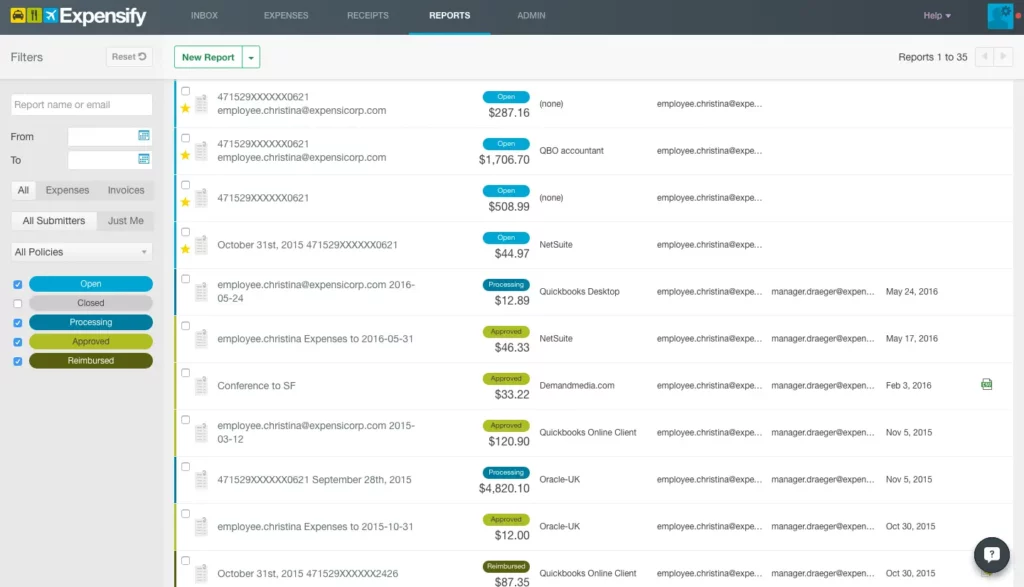
Expensify is the ideal solution if your team’s "travel" consists mostly of client dinners and Uber rides rather than complex international flights.
Key Benefits of Expensify
- Receipt scanning: It’s very good at reading receipts. The mobile app is widely used and recognized.
- Expense processing: Expensify has customizable workflows, multi-GL coding and many other features
The Catch: It is not really a travel management company. While it offers basic booking features, the inventory and controls are limited compared to dedicated travel platforms.
Why customers choose Expensify over Concur
- Concur is often overkill for simple needs; Expensify strips away the enterprise bloat to focus purely on the receipt.
- Expensfy offers user based pricing which is different from Concur’s report based pricing
Pricing: Starting from $9 per active user per month for medium-to large businesses
If Expensify's travel limitations are a concern, our Expensify alternatives breakdown covers platforms with stronger travel and card integration.
8. Coupa
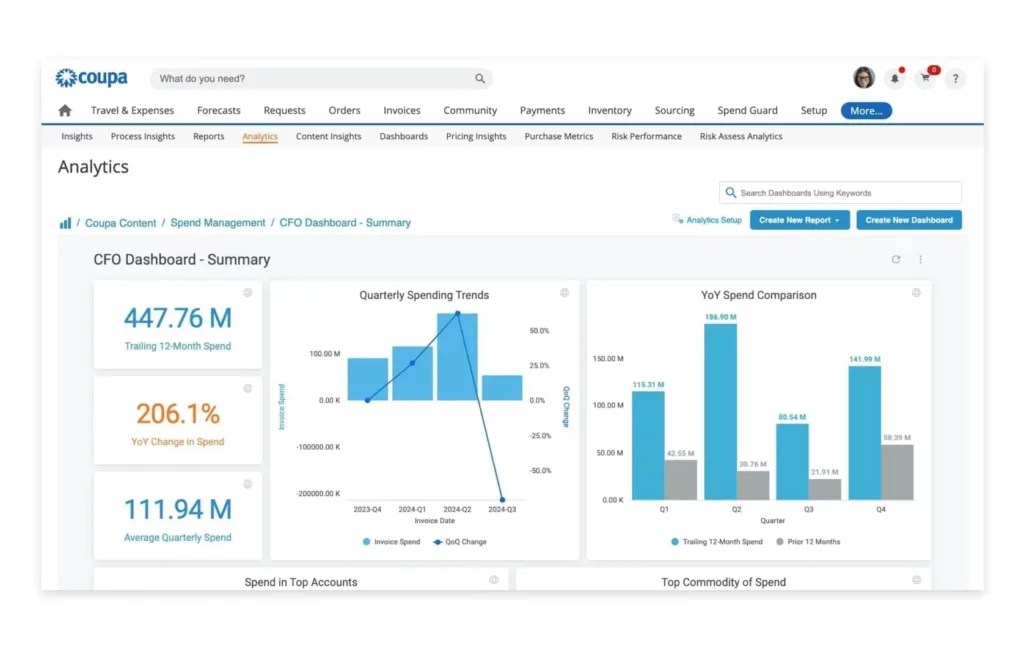
Coupa is a leading spend management software offering procurement, AP automation, and supply chain planning. Users switching from Concur should consider Coupa mainly if they're looking to automate their entire Procure-to-Pay process
Key Benefits of Coupa
- P2P automation: Coupa is an AI-driven total spend management platform focused on procurement, expense automation, and supplier spend visibility
- Supply chain design management: Coupa provides visibility, analytics and scenario modelling to accelerate decisions and build on adaptive supply chain
The catch: Coupa doesnt have a business travel offering. While it is great at expense management, like Concur, it doesnt provide corporate cards
Why customers choose Coupa over Concur
- While Concur majorly focus on expense management and travel, Coupa focuses on holistic spend management, combining procurement, invoicing, expense automation, and real-time spend and supplier analytics in one platform.
If you're still early in the evaluation and want to map the full landscape first, our comparison of the top travel management companies in 2026 is a good starting point.
Let’s keep it simple
Choosing travel and expense software isn’t the most exciting job on your list. You just want something that works, doesn’t cost the earth, and won’t create more admin for your team.
- Want a "Financial OS" with cards? Look at Ramp or Brex.
- Need a familiar booking tool? Check out Egencia.
- Just need to scan receipts? Expensify is your friend.
- Want a modern, all-in-one T&E platform with human support? Give ITILITE a look.
FAQ
1. What is the best alternative to Concur in 2026?
If you’re looking for a single platform that covers travel, expenses, and corporate cards, ITILITE stands out as a strong alternative to Concur.
Tools like Ramp and Brex are solid options too, but they’re primarily expense-first platforms. Travel exists, but it’s not their core focus. If business travel is a big part of your operations, that distinction matters.
2. If I switch from Concur to ITILITE, how quickly can I get started?
Most teams can go live with ITILITE in as little as 3 to 4 days.
A dedicated account manager helps with user setup, policy configuration, and integrations with systems like ERP and HRMS, so you’re not left stitching things together on your own.
3. Which Concur alternatives use AI effectively?
If AI is high on your checklist, ITILITE, Ramp, and Navan are worth shortlisting.
ITILITE uses AI in practical, everyday ways, such as:
i. Automating hotel credit card authorizations
ii. Creating dynamic reports using simple chat prompts
iii. Recommending cost-saving options for business travel
4. Which alternatives offer the fastest customer support?
Platforms that put travel first, like ITILITE and Navan, are generally preferred for support.
Many users switch from Concur specifically for this reason. With ITILITE, travelers and managers can expect a real human response in under 10 seconds, regardless of time zone. Especially helpful when plans change and waiting is not an option.

I’ll be honest: I haven’t spent my life living out of a suitcase for business, but I’ve spent it obsessing over the systems of those who do. At ITILITE, I bridge that gap through relentless, intentional research. I dig deep into the data so the insights reaching you aren’t just SaaS noise. If you want to share your travel experiences or talk shop about expenses, find me on LinkedIn.
Control Costs, streamline travel with 24/7 support.
A fully integrated corporate travel management software that dramatically reduces spends while improving user experience


.jpeg)


.jpeg)
.jpeg)

.webp)

.jpeg)
.jpeg)

.webp)








.png)