10 Best Navan Alternatives & Competitors in 2026



TLDR;
- The 10 best Navan alternatives in 2026 are ITILITE, Amex GBT, BCD Travel, TravelBank, Perk, SAP Concur, Emburse, Ramp, Spotnana, and Brex.
- 30% of T&E buyers reevaluated their platform in 2025; 39% cited tech issues, 37% service quality
- The 4 most-common Navan churn drivers: AI-only support during travel disruptions, weaker hotel savings than promised, inventory and pricing bias, and per-trip fees that surface unexpectedly.
- Pick by use case: integrated T+E+cards (ITILITE), traditional enterprise TMC service (Amex GBT/BCD), modern mobile-first OBT (Spotnana), cards-led (Brex/Ramp), expense-led (Emburse), SAP-anchored compliance (Concur).
- The best Navan alternative for your team is the one that closes the specific gap that pushed you to look in the first place.




For a long time now, Navan has been one of the leading platforms for corporate travel management. It offers travel booking, including hotels and flights, expense management, and corporate cards on a single platform. Given these features, it has emerged as an all-encompassing alternative to traditional travel management companies or booking websites. For many tech and software-first companies, Navan delivers some clear benefits: a consumer-friendly booking experience, easy expense tracking and reconciliation, and the ability for employees to earn loyalty points while traveling for work.
However, as the volume of corporate travel has increased, and companies and employees have become savvier and more knowledgeable, they have voiced some concerns with Navan and started looking for alternatives. If you are evaluating a Navan alternative in 2026, the four most-common drivers we hear are lack of reliable customer support, weaker savings than promised, hidden fees, and inventory bias. Increasingly, companies are exploring alternatives that offer greater transparency, stronger savings, and more dependable customer service.
Where Are Companies Turning as They Reconsider Navan?
While Navan is often praised for its user interface and booking experience, many user reviews and discussions on community forums like Reddit have brought forth some recurring concerns. These concerns are not only about surface-level features but also touch on the core value proposition and whether Navan delivers on it. When the core platform misfires on support, savings, or pricing visibility, that 77% need-for-one-platform turns into a search for something different.
More on why users are exploring alternatives to Navan
While Navan remains a popular choice for modern travel and expense management, some businesses are actively evaluating alternatives due to concerns around service consistency, flexibility, pricing transparency, and support responsiveness during high-stakes travel situations.
1. Questionable customer support during critical moments
One of the most common pain points the users have highlighted is related to Navan's customer support. Several travelers reported being routed to AI chatbots during urgent situations like flight cancellations, missed connections, or last-minute changes in plans. While AI can be efficient for simple queries, it often falls short when travelers are stranded and need immediate human assistance. In some reviews and forum discussions, customers have described long hold times during time-sensitive situations. Unreliable support during business travel can mean lost productivity, missed meetings, and frustrated employees.
“Cancelling the booking through the Navan AI chatbot was an utter pain. I got no help from Navan in rebooking.”
The same friction surfaces in our customer conversations. An aviation company evaluating ITILITE in April 2026 reported Navan support wait times of “20-40 minutes during peak hours” and noted Navan was “shifting to AI-based support,” both of which drove their evaluation timeline.
2. Growing scrutiny over actual savings
One of Navan's major value propositions, as mentioned on their website, is increased savings for companies. But a closer look has revealed that hotel rates on Navan are not as attractive as they should be. When users are booking through a consolidated travel program, they should typically see meaningful discounts compared to direct booking. More often than not, these savings are not realized.
“Prices are often substantially higher than they would be if you booked directly with the provider.”
The pattern shows up in finance-team data too. A growth-stage analytics company running roughly $1.1 million in monthly travel through Navan estimated material leakage beyond that figure, with flights booked outside the platform and reimbursed separately because employees were finding better pricing direct.
3. Inventory and pricing bias
Another issue users discuss is inventory bias. Some reviewers report that Navan's curated inventory hides options they would prefer and surfaces pricier alternatives. This may work in the short run, but over time it erodes trust.
“Sometimes it doesn't give me options for hotels I'd rather stay at that I know are there, and I have to dig in to find them.”
A travel admin at a logistics company echoed the underlying mechanic to us in April 2026, noting Navan “offers ‘free’ but recoups costs via commissions on higher pricing.” Whether the steering is intentional or just a side effect of how the inventory is sourced, the user experience is the same: limited choice plus higher prices.
4. High transaction fees and unexpected charges
Although Navan has a free plan, many users have reported that it ends up charging a per-trip fee of up to ~$25, along with service charges the customer was not made aware of earlier. When these fees are not clearly stated upfront, they can lead to financial surprises and friction between travel, finance, and accounting teams.
“I was unable to book a flight due to a nondescript error... my only alternative was to pay Navan $25 to get support.”
A finance team at an EV charging infrastructure company in a March 2026 ITILITE conversation cited the cost delta directly: Navan at “$24 per trip versus ITILITE's $10” and “$180 per user versus $72” for their evaluation. The pricing gap was the headline reason they were looking.
Navan alternatives - a quick summary
| Platform | Key Features | Key Differentiators vs Navan | Pricing |
|---|---|---|---|
| ITILITE | Travel + expense + cards on one platform, 24/7 human support, ERP-native integrations | Human-led support, transparent per-trip pricing, up to 5% cashback | Travel: $10/trip; Expense: $9/user/month |
| American Express Global Business Travel | Global TMC across 140+ countries, integrated travel + expense + reporting | Traditional TMC service, agent-assisted bookings, no public pricing | Custom contract-based |
| BCD Travel | Global TMC in 170+ countries, tech + human travel experts | Agent-assisted services, traveler tracking, crisis support | Custom membership + booking fees |
| TravelBank | T+E for SMBs with rewards program for cost-conscious bookings | Simple workflows, 24/7 support across phone/chat/email/Slack | Free up to 20 users; Premium ~$5,000/year; Elite ~$10,000/year |
| Perk | Modern OBT with negotiated rates, FlexiPerk cancellation flexibility | EU-strongest inventory, 15-second response target, flexible refunds | Premium: $99/mo + 3%; Pro: $299/mo + 3% |
| SAP Concur | Enterprise T&E with deep ERP integrations and audit depth | Best for SAP-anchored enterprises, deepest compliance controls | Per-booking + $2–$4 modification fee |
| Emburse | Expense-led with audit + analytics + integrated travel | Strongest expense controls and configurable policies | Basic: $18/user/mo |
| Ramp | Corporate cards + expense + bill pay with built-in spend AI | Card-spend automation, free tier, real-time card-to-receipt matching | Free / ~$15/user/mo Plus |
| Spotnana | Modern mobile-first airline booking tool, partner-focused | API-first travel platform, encountered through TMCs, Brex, Direct Travel | Custom quote-only |
| Brex | Banking + cards + bill pay with travel via partner integration | Multi-country card issuance, real banking product, free tier | Free / $12 per user/mo Premium |
What are the top Navan competitors worth exploring?
If you are evaluating alternatives to Navan, the platforms below stand out for their travel inventory, expense automation, support quality, integrations, and overall user experience.
1. ITILITE
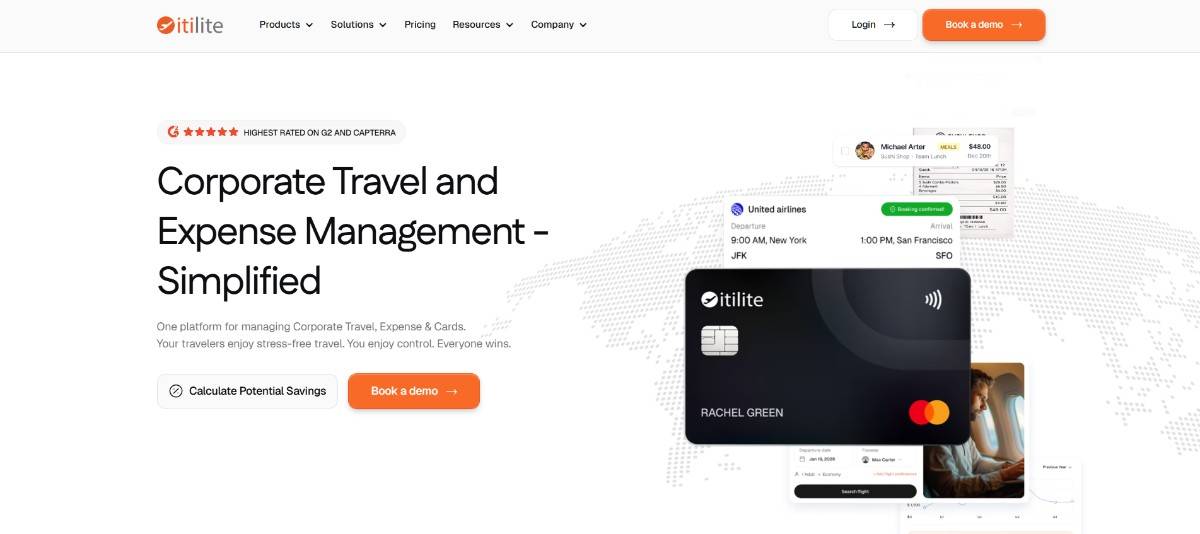
ITILITE is an all-in-one travel, expense, and corporate card platform catering to modern, cost-conscious businesses. It is among the fastest-growing travel and expense management companies globally. ITILITE offers a clean, user-friendly experience and stands out from its competitors by focusing sharply on two things that matter most to finance teams and those who are actually traveling: real savings and reliable, human-led customer support. For companies looking for a Navan alternative, ITILITE is a strong, value-driven replacement.
ITILITE's key features and benefits
- ITILITE actively nudges its clients' employees toward cost-conscious options during booking. Users are rewarded for selecting lower-cost flights, hotels, or rental cars. Thus, ITILITE helps organizations with reducing corporate travel costs.
- ITILITE consistently surfaces hotel prices 10-25% lower than the same listings on Navan for the same property and dates, available through corporate negotiated rates across 500,000+ hotels.
- Business travel policies can be customized by employee level, flight class, hotel categories, city-specific spend limits, and more. Approval chains are equally flexible, which enables organizations to control travel without appearing heavy-handed.
- Customer support is ITILITE's core value proposition. The platform offers round-the-clock, human-driven support, ensuring travelers can connect with a real agent within 30 seconds chat.
- ITILITE issues its own physical and virtual corporate cards with spend and merchant controls. Companies can earn up to 2.5% cashback on all card spends, which is higher than many other companies that cap cashback at 1%.
- Employees can swipe cards and upload receipts on the go, while expenses are automatically created, categorized, and tagged to the correct GL codes which can then be reconciled in the ERP, reducing manual effort.
- ITILITE lets you create unlimited custom reports at no additional cost. Its AI-powered modules, Iris and Mastermind, contribute to this. Iris is a conversational chatbot that can answer queries related to travel and expense data, while Mastermind provides actionable recommendations to reduce spend on travel by benchmarking key metrics with peer companies.
Key differences between ITILITE and Navan
- Customer support is the most visible differentiating factor between ITILITE and Navan. While Navan relies heavily on AI bots for customer support, ITILITE remains firmly human-led. This is something many companies prioritize during high-value and high-stress travel situations.
- Savings is another key difference. In many cases, hotel prices on ITILITE's portal are 10-25% lower than the same listings on Navan for the same property and dates.
- ITILITE issues its own card which enables higher cashback rewards (up to 2.5%) compared to Navan's third-party card partnerships.
ITILITE pricing
- Travel: $10 per trip.
- Expense: $9 per active user per month.
- No platform fees, no integration fees, and no support charges. This transparent pricing structure makes it easier for finance teams to forecast and calculate costs without unexpected add-ons.
Already considering ITILITE as your next platform? See exactly how it stacks up against Navan in our ITILITE vs Navan comparison before you decide.
2. Amex GBT
American Express Global Business Travel (Amex GBT) is a popular corporate travel management company which has integrated tools for travel booking, travel policy compliance, expense tracking, and traveler support. It operates across 140+ countries, and has a large network of travel partners.
Amex GBT's key features and benefits
- Amex GBT allows companies to book flights, hotels, rail, and ground transport in one platform, with integrated policy compliance and reporting.
- The platform offers 24/7 assistance through travel counselors and digital channels in case there are itinerary changes or disruptions.
- Amex provides real-time alerts and support for travelers which allows organizations to ensure the safety of their employees.
- Amex GBT's platform includes automated expense tracking, reporting dashboards, and analytics to give finance teams insights into travel spend and compliance.
Key differences between Amex GBT and Navan
- Amex GBT and Navan differ on how modern their platforms and pricing models are. Amex GBT operates more as a traditional travel management company. Navan, on the other hand, positions itself as a tech-driven travel company which offers users an intuitive interface and clearer pricing.
- Navan is also largely transparent about its costs, whereas Amex GBT's pricing is contract-based, with service fees and support costs varying by client and usage.
- Amex GBT provides support to its clients through counselors and agent networks, while Navan relies more on automation and AI.
Amex GBT's pricing
- Amex GBT does not have a publicly listed rate.
- Instead, bookings are contract-based and vary by company size, travel volume, and negotiated terms.
3. BCD Travel
BCD Travel is one of the world's largest corporate travel management companies and serves clients in more than 170 countries. It helps businesses manage travel with a combination of technology and human support. It brings together its own digital tools with human travel experts to provide a strong travel experience to its clients.
BCD Travel's key features and benefits
- This facility is offered across flights, hotels, rail, and ground transport, with options for both self-service and agent-assisted trips.
- BCD Travel does this with real-time alerts, traveler tracking, and crisis support.
- Companies can monitor rates and rebook a hotel if rates lower during the cancellation window. It also gives travel managers visibility into spend and compliance.
Key differences between BCD Travel and Navan
- BCD Travel and Navan differ most in operating model and user experience.
- BCD Travel works like a traditional travel management company with agent-assisted services whereas Navan is a technology-driven platform focused on self-service booking and unified travel + expense management.
- Navan focuses on providing users with a modern interface and integrated expense tools, while BCD focuses on global coverage and consulting.
BCD Travel's pricing
- BCD Travel uses custom pricing based on contract terms rather than per-user or per-trip fees.
- For its BCD Travel Direct offering (a packaged self-service + expert support model), pricing includes a membership or service fee plus additional fees for bookings such as air travel or hotel.
- Because pricing varies, companies have to request a quote.
4. TravelBank
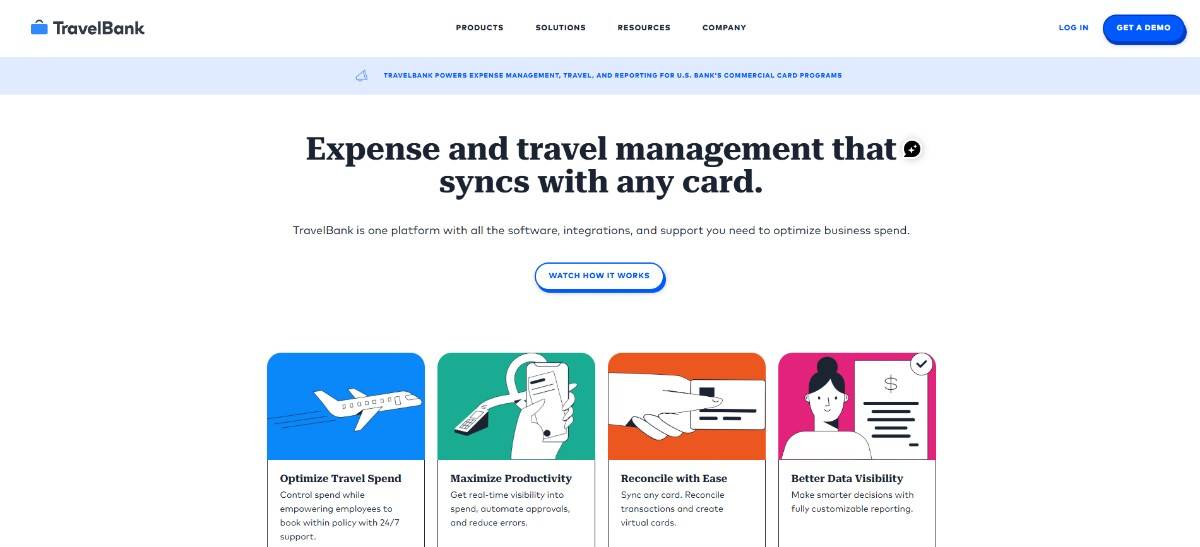
TravelBank is a travel and expense management platform that helps businesses book flights, hotels, and cars, while also managing travel policy, spend controls, and reimbursements. It has a rewards program to encourage cost-conscious booking, and is often used by small- to mid-sized companies.
TravelBank's key features and benefits
- Flights, hotels, and car rentals are managed within a single interface, and policy controls and approval are part of the system.
- TravelBank incentivizes employees to choose cost-effective travel options and helps organizations reduce spend.
- Dedicated travel support is available around the clock through phone, chat, email, and platforms like Slack.
- It has a user-friendly interface that works on both, desktops as well as mobile phones.
Key differences between TravelBank and Navan
- Navan offers access to more complex, real-time analytics and spend insights for larger, data-driven travel programs, while TravelBank's reporting is more basic and suited to simpler budgets.
- Navan has more sophisticated rule-based travel policies that also account for employee needs, whereas TravelBank's policy controls are simpler and effective for smaller teams.
TravelBank's pricing
- Starter: Free for up to 20 users.
- Premium: Starts around $5,000 per year with additional oversight tools and a travel rebate.
- Elite: Around $10,000 annually with deeper insights, integrations, and a 2% travel rebate.
For teams comparing TravelBank specifically, our TravelBank alternatives guide covers how it stacks up against the broader market.
5. Perk

Perk (formerly TravelPerk) is a corporate travel and spend platform which aims to simplify business travel booking, policy compliance, expense workflows, and spend visibility in a single interface. The company rebranded from TravelPerk to Perk in 2025 as part of a strategic evolution toward a broader travel and spend management platform.
Perk's key features and benefits
- Perk provides access to flights, hotels, car rentals, etc., from multiple suppliers with negotiated rates.
- It targets a response time of 15 seconds, ensuring travelers have timely access to help if they need it.
- Customers have the option to cancel bookings up to two hours before the trip with refunds of 80% of the fare under flexible plans.
Key differences between Perk and Navan
- Perk offers flexible travel with features like FlexiPerk (cancellable bookings close to departure), making it attractive for teams with changing plans.
- Navan focuses more on policy enforcement and program-level optimization.
- Perk offers fast human support, especially for cancellations and changes. Navan relies more on automation and AI-led flows first.
Perk's pricing
- Premium: $99 per month + 3% of booking value.
- Pro: $299 per month + 3% of booking value.
6. SAP Concur

SAP Concur is a long-established travel, expense, and spend management platform that provides clients with a suite of solutions like travel booking, automated expense reporting, invoice management, and so on. It is widely integrated with ERP and also offers users mobile access as well as ease-of-use features like AI receipt capture while tracking expenses.
SAP Concur's key features and benefits
- SAP Concur helps connect travel bookings with automated expense reporting and policy enforcement in one system.
- It reduces errors by capturing and enforcing expenses, itinerary data, and corporate policies automatically.
- Dashboards and analytics tools offer real-time views of spending, with AI-supported expense reporting and auditing.
Key differences between Concur and Navan
SAP Concur focuses on strong integration capabilities, compliance tools, and deep spend visibility. Navan, in contrast, emphasizes a simpler, more modern user interface and AI-driven automation.
Concur's pricing
- SAP Concur charges a per-booking fee, which is between $5 and $20, with extra charges for modification and support up to $35 per modification / support call.
For teams evaluating whether Concur is the right fit at all, our breakdown of SAP Concur alternatives covers where it falls short and what to consider instead.
7. Emburse
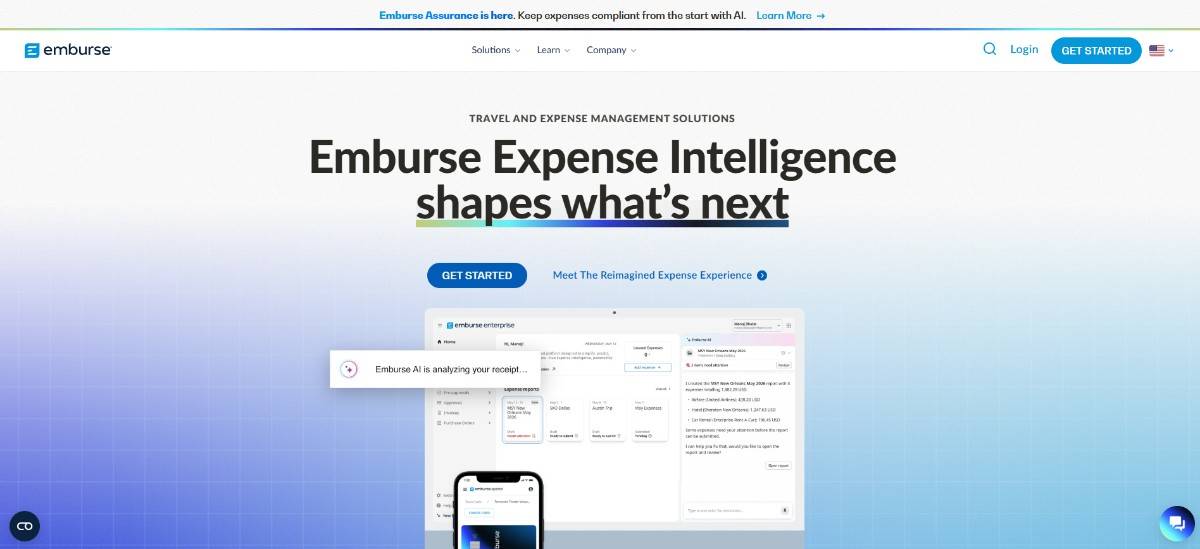
Emburse helps companies automate expense reporting, travel expense tracking, invoices, and spending visibility. The platform emphasizes real-time spend visibility, integrated travel and expense capabilities, and analytics to improve compliance.
Emburse's key features and benefits
- The platform captures spend as it happens to spot and reduce risk.
- Clients can scan and auto-fill receipt information to reduce manual data entry.
- Emburse offers configurable controls that enforce travel and expense policies automatically.
Key differences between Emburse and Navan
- Emburse's core strength is expense and spend management with integrated analytics and controls, prioritizing finance-team visibility and policy compliance.
- Navan, in contrast, began as a travel-first platform that tightly integrates travel bookings with corporate card and expense workflows in one unified user experience.
Emburse's pricing
- Basic Plan: $8 per user per month.
- Plus Plan: $12 per user per month.
8. Ramp
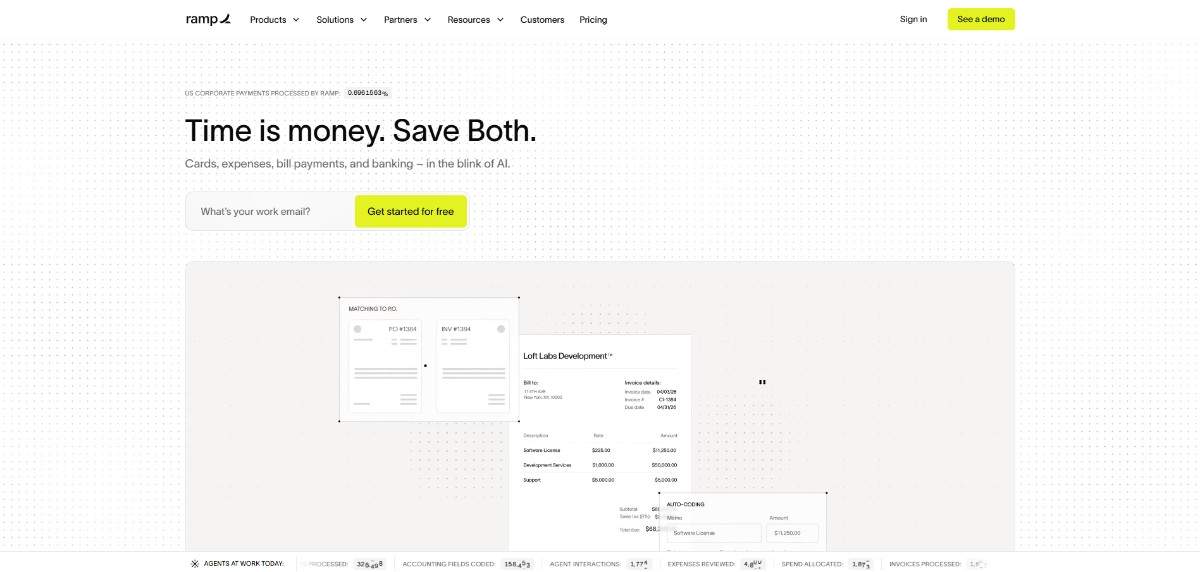
Ramp is a corporate spend and finance management platform that helps companies automate expenses, set travel policy controls, and complete bill payments. It started as a corporate card provider but has expanded into broader finance and travel-linked spend automation.
Ramp's key features and benefits
- Companies can issue unlimited physical and virtual cards with merchant, category, and spend limits to reduce unauthorized expenses.
- Ramp captures and matches receipts, categorizes transactions, and enforces expense policies, eliminating manual reporting work.
- Users can set travel policies and spending controls so flights, hotels, and related expenses adhere to company rules.
Key differences between Ramp and Navan
- Ramp's strength is in finance and spend automation, whereas Navan is a travel-first platform designed primarily for booking and managing travel with integrated expense workflows.
- When it comes to corporate card controls, Ramp is quite advanced. You can add merchant-level and spend-level restrictions.
Ramp's pricing
- Ramp costs around $15 per user per month + platform fees. Free plans are also available.
For teams evaluating Ramp specifically against other spend management platforms, our Ramp alternatives guide covers the key differences.
9. Spotnana
Spotnana is a newer entrant in corporate travel, built around an API-first travel platform architecture that powers booking, support, and modifications for a range of partner products. Where Navan is sold direct and operates as a unified booking-plus-expense product, Spotnana more often shows up inside the front-end branding of Mesh Payments, Brex, or Direct Travel as the travel layer underneath. For teams that want a modern mobile-first travel experience without committing to Navan's pricing model, Spotnana is increasingly the answer.
Spotnana's key features and benefits
- The traveler app supports full-catalog booking across GDS, low-cost carriers, and hotel aggregators in one unified search.
- In-app modification flows allow travelers to change flights and hotels without dropping to an agent in most common scenarios.
- The platform's API-first design means corporate buyers can access Spotnana through whatever finance or card platform they already run, rather than learning a new front-end.
Key differences between Spotnana and Navan
- Spotnana is sold primarily through partner products (Mesh, Brex, Direct Travel) rather than direct, which means buyers often encounter it as the travel layer beneath another brand.
- Navan is direct-sales and owns the front-end experience. Spotnana's API-first approach gives it deeper architectural flexibility for buyers already standardized on a finance or card platform; Navan offers a more unified out-of-the-box product.
Spotnana's pricing
- Spotnana uses quote-based pricing rather than published rates.
- Per-trip and per-user costs surface during the sales conversation depending on whether buyers come direct or through a partner integration.
10. Brex
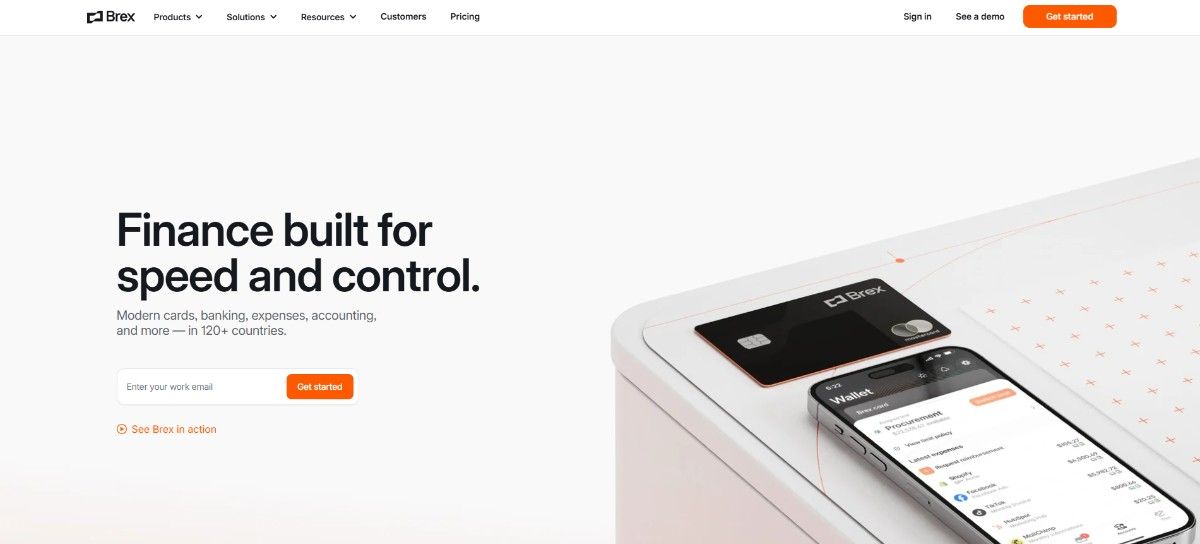
Brex started life as a corporate card company for venture-backed startups and has steadily added banking, bill pay, and travel into one product. For globally distributed teams that need card issuance across multiple countries plus a real banking layer, Brex is one of the few options on this list with that combined footprint. Travel arrived later as a partner-built module, and Brex is therefore not a like-for-like Navan replacement on the travel side. It is the right swap for teams where the Navan pain is fees and card economics rather than travel inventory itself.
Brex's key features and benefits
- Cards issue in over 50 countries with local-currency billing, no annual fees, and a rewards stack on the Premium tier.
- The banking account holds idle balances and earns yield. AutoMap rules apply vendor logic and GL codes automatically.
- Receipts attach to transactions via email forwarding, and the mobile app surfaces every charge in real time.
Key differences between Brex and Navan
- Brex is a banking-and-cards-first platform that added travel later. Navan is a travel-first platform that added cards later.
- Brex's card issuance reaches 50+ countries with local currency; Navan's card program runs through third-party partnerships.
- On travel, Brex routes through partner inventory and shows up less polished than Navan or dedicated TMCs. On cards and banking, Brex outperforms Navan by a meaningful margin.
Brex's pricing
- Brex Essentials is free; Brex Premium runs $12 per user per month.
- Enterprise pricing is quoted. For teams evaluating Brex specifically against other card-led platforms
Which Navan alternative is right for you?
With so many options, there is no one-size-fits-all Navan alternative. What works well for one company may not suit another. If you are still in early research mode, our comparison of the top travel management companies in 2026 covers a broader set of platforms beyond Navan alternatives specifically. Teams already moving off Expensify alongside Navan should also see our guide to Expensify alternatives for the expense-side comparison.
As companies rethink Navan in 2026, the decision increasingly comes down to a few basics: real savings, transparent pricing, dependable support, and ease of use for both travelers and finance teams.
FAQ
What is the best Navan alternative for customer support?
ITILITE stands out with human-led support and 30-second response time, ensuring real help during emergencies and disruptions.
Which Navan alternative offers the best global coverage?
Amex GBT and BCD Travel provide strong global reach but dated user experiences. ITILITE also offers extensive global inventory with a modern platform and highly rated mobile app.
Navan vs Concur: which is better for corporate travel management?
It depends on your stage and stack. Navan suits modern mid-market teams that want a polished mobile-first experience with integrated travel, expense, and a corporate card. SAP Concur fits multinational enterprises with multi-entity, multi-currency, multi-jurisdiction operations and deep SAP ERP integration. Concur is a heavier implementation; Navan is faster to deploy but trails on global compliance depth.
Who are Navan's biggest competitors in 2026?
Navan's top competitors in 2026 fall into three groups. Modern T+E platforms like ITILITE and Perk compete directly on the travel-plus-expense product story. Traditional TMCs like Amex GBT, BCD Travel, and SAP Concur compete on global coverage and enterprise depth. Card-led platforms like Brex and Ramp compete from the spend-management side, with travel as a secondary capability.
What should companies consider when choosing a Navan alternative?
Prioritize dependable human support, transparent pricing, and unbiased search recommendations that align with company travel policies, cost controls, and traveler preferences.
How long does it take to switch from Navan to another travel platform?
Most companies transition within one to two weeks. ITILITE can go live within three days, but complex finance integrations and incorporating your negotiated rates can take the process upto 2 weeks.

Ardra is a Content Strategy Manager at ITILITE with 6+ years of experience in travel and SaaS content. She holds a Master’s degree in Political Science from Lady Shri Ram College for Women and transitioned from academic research and travel content into SaaS content strategy.
She previously worked with JustWravel, where she focused on travel storytelling and digital content. Today, she specializes in SEO and AEO-driven content strategies that help businesses simplify complex travel and expense workflows into search-optimized narratives.
When she’s not working, Ardra is usually reading or watching films.
Control Costs, streamline travel with 24/7 support.
A fully integrated corporate travel management software that dramatically reduces spends while improving user experience
.avif)

%20(1).avif)
%20(1).avif)