

10 Best Ramp Alternatives & Competitors in 2026: Travel, Expense & Cards Compared



TLDR;
- Ramp's biggest gap is integrated business travel: only round-trip flights are supported, hotel modifications are not self-serve, and bookings are tied to the Ramp card
- The 10 best Ramp alternatives in 2026 are ITILITE, Brex, Navan, Expensify, BILL Spend & Expense, SAP Concur, Fyle, Emburse, Spendesk, and Coupa.
- Pick by use case: integrated T+E+Cards (ITILITE), banking-led startups (Brex), enterprise compliance (SAP Concur or Coupa), AP-led SMBs (BILL).


Ramp has reset the bar for corporate cards and finance automation. It is fast, well-designed, and the pricing is hard to beat. For a hyper-growth startup that runs on cards and bill pay, Ramp is often the right call.
But Ramp is finance-first. It was not built to plan trips, manage approvals across multi-leg itineraries, or absorb a travel-heavy stack into one platform. Teams that book real business travel often hit the edge of what Ramp Travel can do today, especially around modifications, multi-traveler bookings, and inventory breadth.
This guide breaks down the 10 best Ramp alternatives and competitors for 2026, with real pricing, honest pros and cons, migration complexity ratings, and a head-to-head section that maps each tool against the gap most finance buyers come looking to fill.
Ramp competitors at a glance
A 30-second comparison of the top 10 Ramp alternatives across pricing, travel, cards, expense, and customer rating.
*G2 ratings checked May 2026
Want to see how an integrated Travel+Expense+Cards platform stacks against Ramp on real bookings? [Book a 30-minute walkthrough with itilite]
Why companies look for Ramp alternatives in 2026
Most teams searching for Ramp competitors fall into one of four patterns.
- The first is the travel gap. Ramp Travel launched in 2025 and is still building out core booking and modification features that established travel platforms have shipped for years. Round-trip flights only, no self-serve hotel modification, and one-traveler-at-a-time bookings are real limits when a 200-person sales team is booking a kickoff.
- The second pattern is integration scope. Ramp solves payments and bill pay well, but it does not pull from a full GDS. A VP of Finance at a recent prospect meeting asked us point-blank whether Ramp uses Priceline; we confirmed travel and expense management platforms like ITILITE pull from Sabre, Amadeus, Travelport, plus direct airline connections and low-cost carriers, while Ramp's travel inventory is narrower.
- The third is multi-region scaling. Companies with operations outside the US run into limits on Ramp's local-currency cards, country-specific tax handling, and multi-entity approvals. The fourth is support. AI-first triage works for low-stakes finance ops, but a stranded traveler at 11 p.m. needs a human in under a minute, and that is not Ramp's model.
How we evaluated these Ramp competitors
We started with 23 spend management and T+E platforms surfaced from G2, Capterra, and the actual SERP for "ramp alternatives" and "ramp competitors" in May 2026. Each was scored against six criteria, with travel-and-expense parity weighted highest because that is where Ramp is genuinely thin.
The criteria:
- Integration depth: Connections to NetSuite, Workday, ADP, Okta, and major ERPs. Surface integrations were dropped.
- Real pricing transparency: Public per-user or per-transaction pricing for at least one tier. "Contact sales" platforms were noted, not penalized.
- Customer evidence: G2 review count, average rating as of May 2026, and recency of reviews.
- Implementation timeline: Median time to go-live based on vendor docs and prospect conversations. Each tool gets a migration-from-Ramp complexity rating: Easy, Moderate, or Heavy lift.
- Persona fit: Whether the platform is built for SMB, mid-market, or enterprise; travel-heavy or finance-heavy operations.
- Geographic coverage: US-only, North America, EMEA, or global multi-entity support.
Disclosure: ITILITE is the publisher of this article. ITILITE ranks first because it is the only platform on this list that combines business travel booking, expense management, and corporate cards in a single product.
The 10 best Ramp alternatives and competitors in 2026
1. ITILITE: Best for integrated travel, expense, and cards
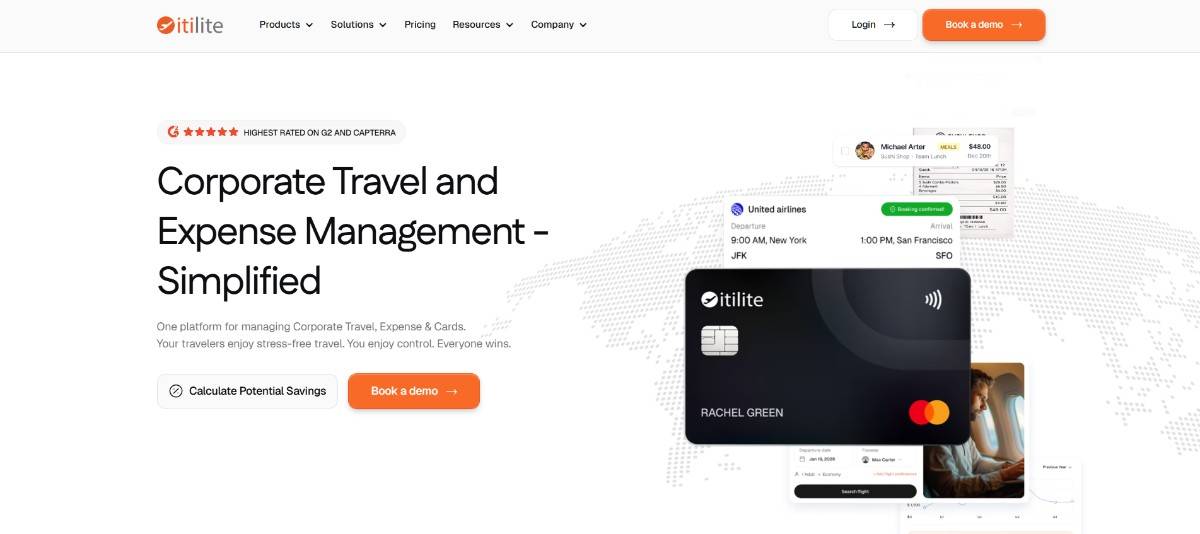
- Best for:Mid-market finance teams that want one platform for booking, paying, and reconciling business travel.
ITILITE is the only tool on this list that ships travel booking, expense management, and corporate cards as a single product. Where Ramp asks finance teams to bolt travel onto a card-led stack, ITILITE was built T+E-first and added cards on top.
The travel inventory is the difference most prospects ask about first. ITILITE pulls from Sabre, Amadeus, Travelport, Booking.com, Priceline, and Agoda, exposing 500,000+ hotels and 500+ airlines from a single search. The default booking flow includes NDC fares, multi-city itineraries, multi-traveler bookings, self-serve modifications on hotels, flights, and cars, and automated CC-Auth (OTVCs) for hotels.
On the expense and cards side, the platform supports virtual cards, project-coded expense routing, OCR receipt capture, automated ERP reconciliation, and spend controls enforced at the point of booking. Customer support runs 24/7 with sub-30-second human response and a dedicated CSM for every account, regardless of company size.
Pricing:
- $10 per trip for travel
- $9 per user for expense
- No additional platform, integration, or support fees. Check detailed pricing.
Pros:
- Only platform here with integrated T+E+Cards in a single product
- Full GDS inventory (Sabre, Amadeus, Travelport) plus direct airline and low-cost carrier connections
- 24/7 human support with sub-30-second response and a dedicated CSM per account
Cons:
- Mid-market positioning means very small teams (under 25 users) may find it over-spec'd
- Card program currently strongest in US; expanding to other regions
Migration from Ramp: Moderate. Most customers move card spend in 2-4 weeks, with travel and expense layered in as policies and HRIS feeds connect.
G2 evidence: 4.6 / 5 average rating with 600+ reviews as of May 2026.
Ramp vs ITILITE
Already comparing Ramp vs ITILITE? Book a 30-minute demo now!
2. Brex: Best for banking-led startups
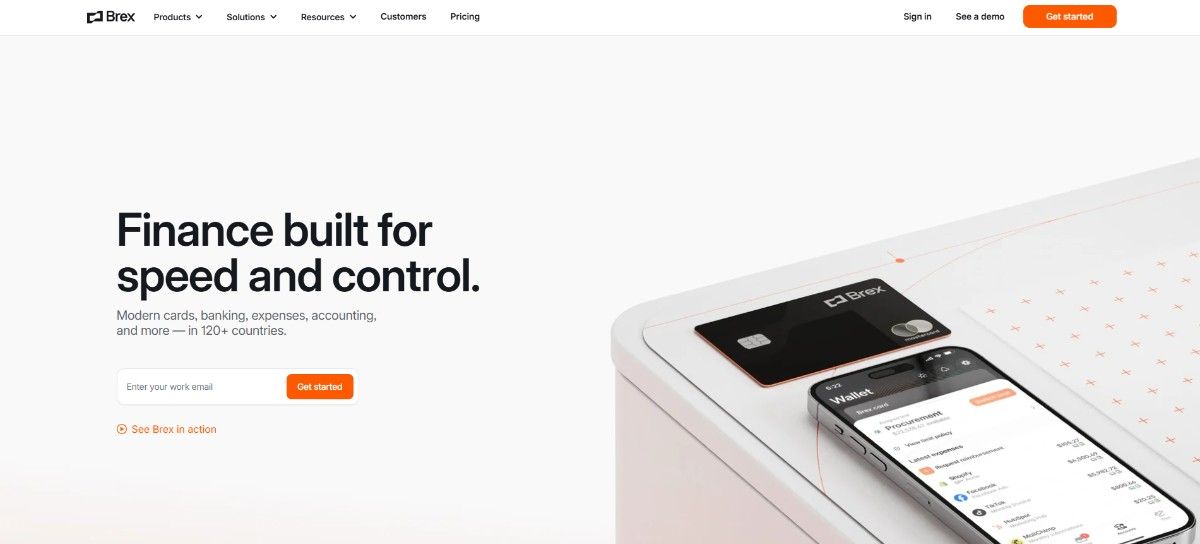
- Best for:Funded startups and high-growth companies that want a banking-plus-cards stack in one place.
Brex is the closest 1:1 replacement for Ramp on cards. The card program issues globally in 50+ countries with local-currency billing, no annual fees, and a usable rewards stack on the paid tier. Bill pay, banking, and travel all live inside the same product, which makes Brex attractive for startups that want the entire money-movement stack from one vendor.
Travel was added later and remains weaker than dedicated T+E platforms. It works for simple bookings, but multi-leg itineraries, negotiated rates, and hotel modifications are not on par with Navan or ITILITE.
Pricing: Brex Essentials is free; Brex Premium is $12 per user per month; Enterprise is custom.
Pros:
- Closest cards-and-banking experience to Ramp, with stronger global coverage
- Local-currency cards in 50+ countries
- Genuine banking product, not just spend management
Cons:
- Travel module is thin compared to Navan, ITILITE, or Concur
- Approval workflows are simpler than mid-market T+E platforms
- Pricing tiers can climb fast for finance-only teams
Migration from Ramp: Moderate. Card and bill-pay workflows port over in 1–3 weeks for SMBs.
G2 evidence: 4.7 / 5 with 1,500+ reviews as of May 2026.
Ramp vs Brex
Choose Brex if you want a Ramp-style card platform with proper banking and global card coverage.
3. Navan (formerly TripActions)
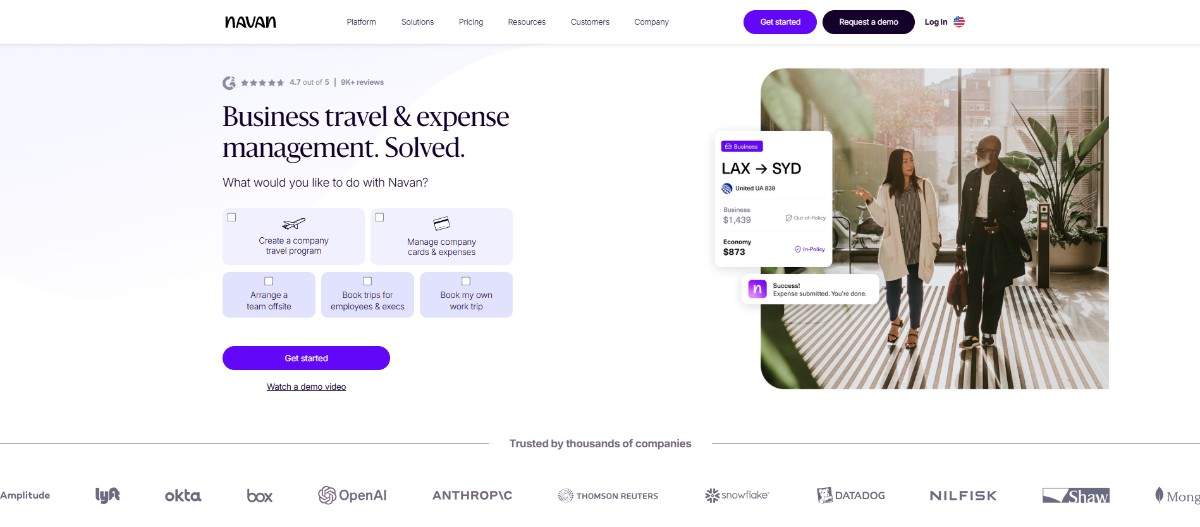
Best for: Travel-heavy organizations that book often, across many destinations, and want booking and expense in one tool.
Navan is the most direct travel-side competitor to ITILITE on this list. Booking inventory is wide, the mobile app is polished, and the product handles multi-traveler and multi-leg itineraries cleanly. Expense and cards exist alongside, although the cards program is less mature than Ramp or Brex.
The trade-off is pricing and control. A finance leader at a 300-person clean-tech company we spoke to in March cited Navan inventory at $24 per trip versus $10 elsewhere, and per-user fees on the order of $180 versus $72, with thinner approval flexibility than they wanted.
Pricing: $15 per user per month range, plus per-trip fees on inventory.
Pros:
- Strong travel inventory and a polished mobile booking experience
- Multi-traveler and multi-leg itineraries supported by default
- Expense and cards available without bolting on a second vendor
Cons:
- Per-trip and per-user fees can stack up faster than buyers expect
- Approval flexibility is narrower than ITILITE or Concur
- Cards program is younger than Ramp or Brex
Migration from Ramp: Moderate. Travel comes online quickly; expense and card migration take 3–5 weeks.
G2 evidence:4.7 / 5 with 8,000+ reviews as of May 2026
Ramp vs Navan
4. Expensify: Best for SMB receipt capture
e
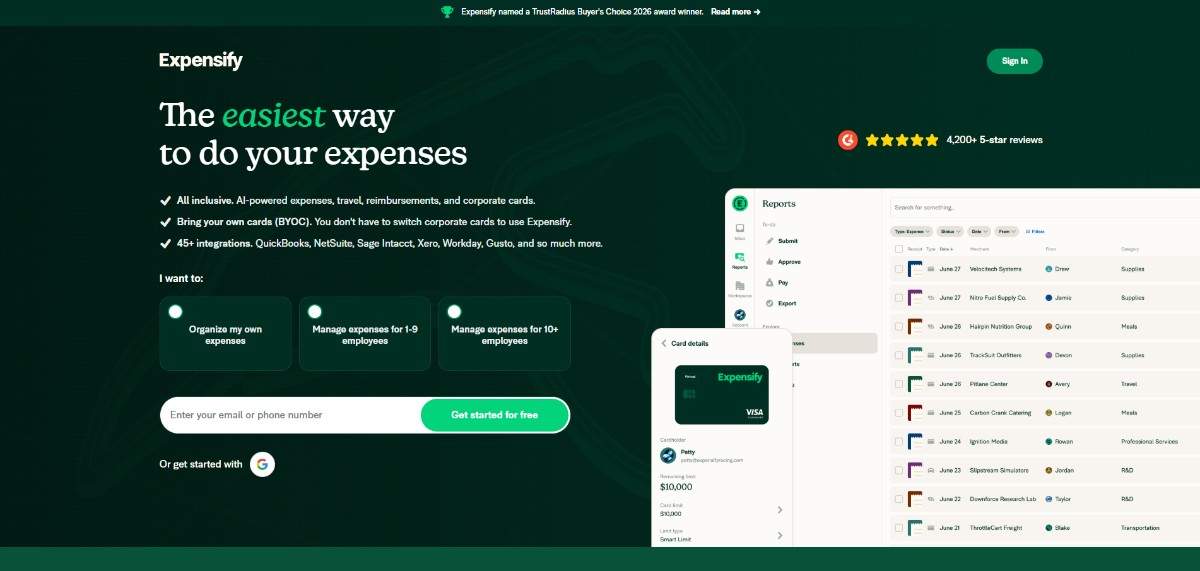
Best for: Small businesses, freelancers, and consultants that need fast receipt capture and simple reimbursements.
Expensify is the most familiar name on the list and remains the easiest tool to deploy for receipt-and-reimburse workflows. SmartScan reads receipts in seconds, the mobile app is among the best in class, and the company recently expanded its card and travel offering.
For a finance team that needs deep approval workflows, ERP-integrated GL coding, or full corporate travel booking, Expensify is thin.
Pricing: Collect plan starts at $5 per user per month; Control plan is $9 per user per month.
Pros:
- Fastest receipt-to-report flow on the market for SMB use cases
- Transparent per-user pricing, no annual contract required
- Strong mobile experience for one-person finance teams
Cons:
- Travel is bolted on, not core, and inventory is narrow
- Approval depth and ERP integration lag mid-market platforms
- Company-wide controls weaker than Ramp's spend automation
Migration from Ramp: Easy for expense-only teams; Heavy lift if Ramp's spend automation is load-bearing.
G2 evidence: 4.5 / 5 with 5,300+ reviews as of May 2026.
Ramp vs Expensify
5. BILL Spend & Expense (formerly Divvy): Best for AP-led SMBs
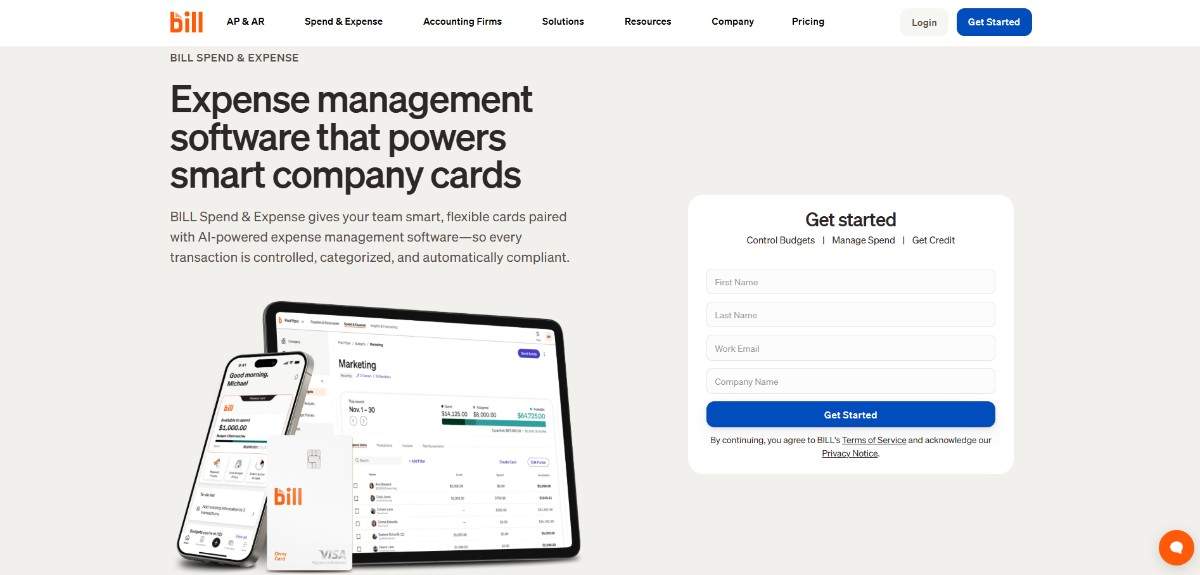
Best for: Small and mid-sized businesses where bill pay and AP are the dominant workflows, with cards as a control layer.
BILL Spend & Expense is the spend management product inside the BILL ecosystem, paired with one of the largest AP automation platforms in North America. It runs on a credit-push model where funds are loaded onto cards before they are used, which keeps a hard ceiling on unauthorized spend.
Pricing: The Spend & Expense card product is free; AP automation starts around $79 per month for the Corporate package, with Enterprise custom-priced.
Pros:
- Credit-push card model gives strong pre-authorization control
- Pairs naturally with BILL's AP automation, the largest installed base in SMB North America
- Free entry tier on the card-and-budget side
Cons:
- No native travel booking
- Credit-push model is a poor fit for teams that want flexible buying limits
- Approval and reporting are narrower than mid-market spend tools
Migration from Ramp: Easy on cards; Moderate if Ramp Bill Pay is load-bearing.
G2 evidence: 4.4 / 5 with 1,400+ reviews as of May 2026.
Ramp vs BILL Spend & Expense
6. SAP Concur: Best for enterprise compliance

Best for: Multinational enterprises with complex compliance, multi-entity reporting, and travel as a major spend category.
SAP Concur is the incumbent for a reason. It handles multi-currency, multi-entity, and multi-jurisdiction travel and expense at a depth no startup-era tool matches. The travel module is mature, the reporting stack is wide, and the SAP integration is native.
The cost is operational. Implementation is heavy, the UI feels its age, and total cost of ownership tends to be the highest on this list. A senior procurement director at a major distributor told us in April that they were "currently evaluating staying with Concur vs. unraveling Concur," which captures the typical sentiment of long-tenured Concur customers.
Pricing: Custom; depends on number of users, modules, and SAP relationship.
Pros:
- Deepest enterprise feature set on this list
- Native fit for SAP-anchored finance organizations
- Mature global travel inventory and policy engine
Cons:
- Implementation timelines often run 4-9 months
- UI and configuration tooling lag modern competitors
- Total cost of ownership higher than mid-market alternatives
Migration from Ramp: Heavy lift. Concur is generally a Ramp expansion target for enterprises, not a peer swap.
G2 evidence: 4.0 / 5 with 6,500+ reviews as of May 2026.
Ramp vs SAP Concur
7. Sage Expense (Formerly Fyle)
s
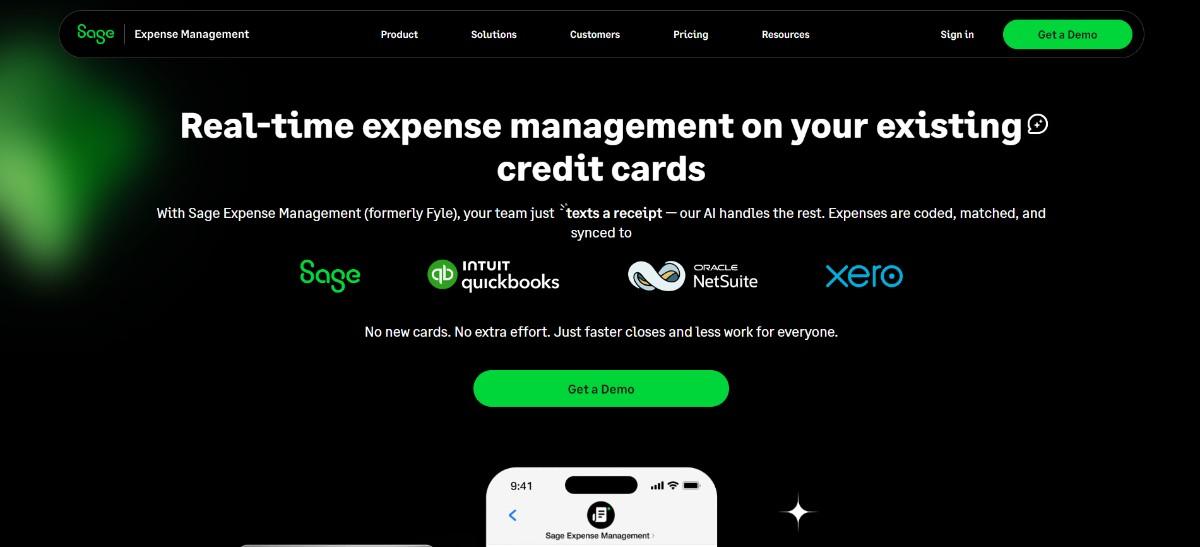
Best for: Finance teams that want strong real-time card feeds and tight accounting integrations without a full T+E platform.
Sage Expense’s differentiator is real-time card feeds across Visa, Mastercard, and a long list of issuer banks. Transactions land in the Sage Expense inbox the moment they are charged, not 24 hours later. The integrations with QuickBooks, Xero, NetSuite, and Sage Intacct are close to native, which makes Sage Expense a natural pick for accounting-led finance teams
Pricing: Standard plan starts at $6.99 per user per month; Business is $11.99 per user per month.
Pros:
- Real-time card feeds across most major US issuers
- Tight QuickBooks, Xero, NetSuite, and Sage Intacct integrations
- Per-user pricing is transparent and predictable
Cons:
- No travel booking
- Card program is narrower than Ramp or Brex
- Approval workflows lighter than Concur or ITILITE
Migration from Ramp: Easy on expense; Moderate where Ramp's card program is load-bearing.
G2 evidence: 4.6 / 5 with 1,400+ reviews as of May 2026.
Ramp vs Sage Expense
8. Emburse
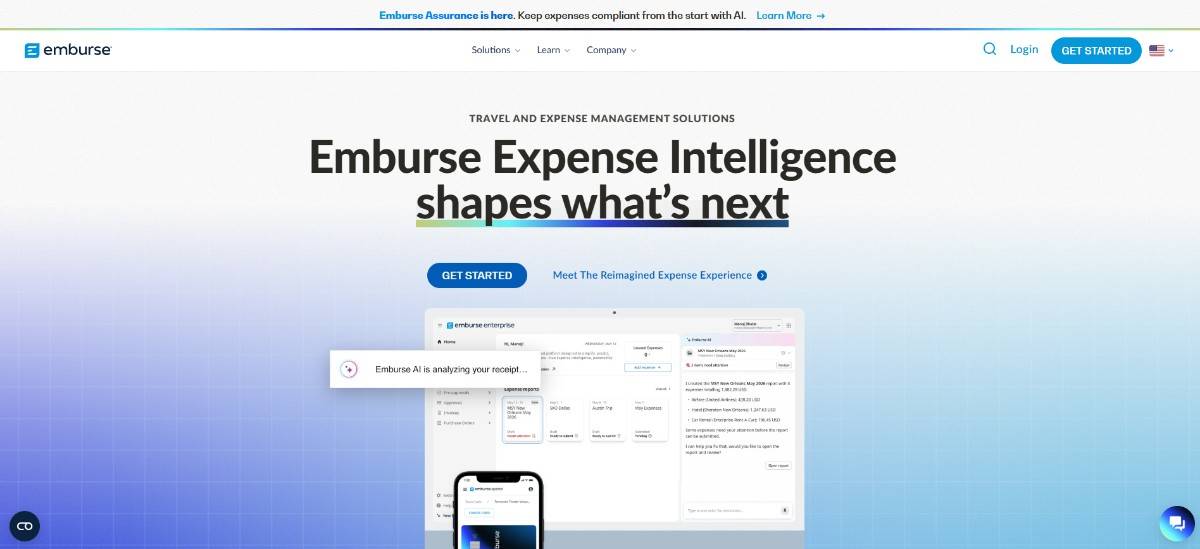
Best for: Mid-market teams looking to consolidate Certify, Chrome River, Abacus, or Tallie under a single Emburse roof.
Emburse is the parent brand for Certify, Chrome River, Abacus, and Captio. The portfolio covers expense, card, and reimbursement use cases at every scale from small business to enterprise. For finance teams already on one of those products, the Emburse path lets you stay inside a known data model while picking up newer features.
The trade-off is product unification. Different Emburse products have different UIs, different release cadences, and different roadmaps. The brand consolidation is real, but the products are not yet one product.
Pricing: Custom across the product line.
Pros:
- Wide portfolio covers SMB through enterprise
- Strong fit for teams already on Certify or Chrome River
- Travel + cards + expense all available somewhere in the lineup
Cons:
- Products inside the portfolio are not fully unified
- Pricing is opaque without a sales conversation
- UX varies meaningfully across the Emburse stack
Migration from Ramp: Moderate. Easier when going to Certify or Chrome River; heavier into newer Emburse products.
G2 evidence: Emburse Certify holds 4.5 / 5 with 1,300+ reviews as of May 2026.
Ramp vs Emburse
9. Spendesk
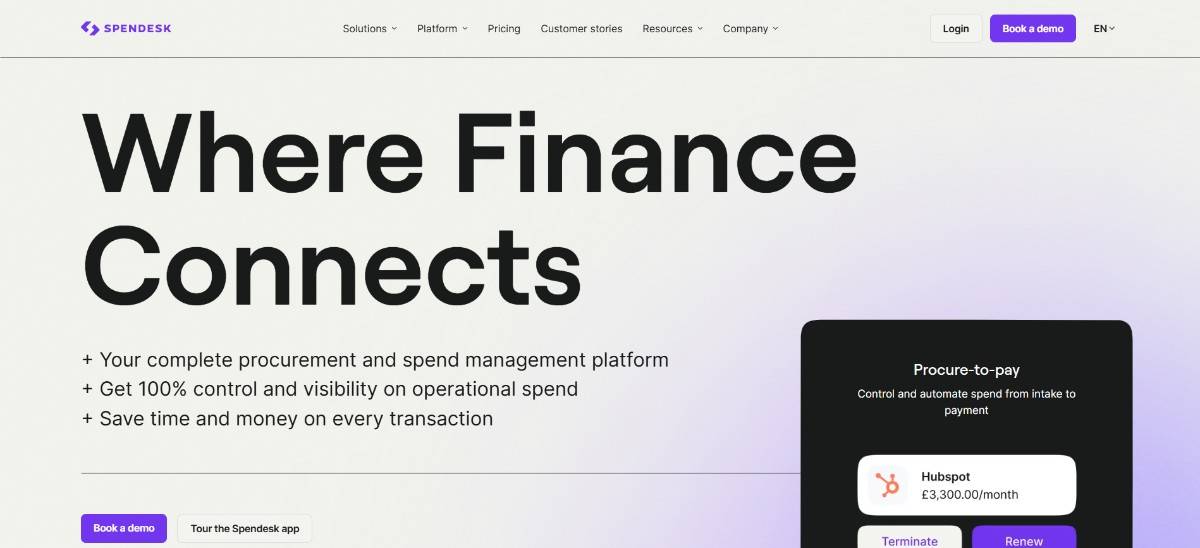
Best for: European mid-market teams that want spend management plus invoice management and bill pay tuned to EU tax rules.
Spendesk is the strongest European spend management platform on this list. It bundles cards, invoice management, expense, and pre-approval workflows into a single product designed around EU VAT, multi-entity setups, and SEPA payment flows. For US-only teams, the case is weaker; for EU-headquartered teams, the case is strong.
Pricing: Custom, with three plan tiers (Essentials, Scale, Premium).
Pros:
- Strongest fit for EU-centric finance ops on this list
- Pre-approval workflows are deeper than most competitors
- Built-in invoice management reduces tool count for mid-market EU teams
Cons:
- US functionality is thinner than EU
- Custom pricing only; no public per-user rate
- Travel is not a native module
Migration from Ramp: Moderate for US teams; Easy for EU-headquartered teams already on a euro-denominated card program.
G2 evidence: 4.7 / 5 with 600+ reviews as of May 2026.
Ramp vs Spendesk
10. Coupa

Best for: Large enterprises that need procurement, sourcing, and AP under a single platform alongside T&E.
Coupa is positioned at the top of the market. It is built around procure-to-pay and treasury, with travel and expense as part of a wider suite. For finance organizations with a procurement function and multi-billion-dollar spend, Coupa's depth is hard to match. For SMB and mid-market buyers comparing against Ramp, the gap is too wide. Coupa is a different product category solving an adjacent problem.
Pricing: Custom enterprise contracts.
Pros:
- Deepest procurement and sourcing capabilities on this list
- Strong fit for finance organizations with a procurement team
- Treasury and AP available alongside T&E
Cons:
- Implementation timelines run 6–12 months
- Wrong fit for SMB and most mid-market companies
- T&E module is functional but not best-in-class
Migration from Ramp: Heavy lift. Coupa is rarely a Ramp swap; it is an enterprise procurement decision.
G2 evidence: 4.2 / 5 with 600+ reviews as of May 2026.
Ramp vs Coupa
How to choose the right Ramp alternative
Start with the spend category that drives your decision.
- If travel is your dominant spend (over 30% of T&E), look at ITILITE, Navan, or Concur first. Card-led tools cannot match real travel inventory, modifications, or approval flexibility.
- If banking is your priority, Brex is the cleanest swap. Native banking, global card coverage, and bill pay live inside the same product.
- If you are AP-led, BILL Spend & Expense is the natural pair. Cards are a control layer; AP automation is the workflow.
- If you are a small team (under 50 users), Expensify or Fyle deliver expense-and-cards basics without mid-market complexity.
- If you are an enterprise with multi-entity reporting and a procurement function, look at Concur or Coupa, not Ramp peers.
Ramp is a strong card and spend automation platform; it is not a strong travel platform. The right Ramp alternative depends on which category drives your roadmap. Travel-heavy teams should look at ITILITE first, with Navan as the closest peer. Banking-led startups should look at Brex. AP-led SMBs should look at BILL. Enterprises with procurement should look at Concur or Coupa.
If you are evaluating Ramp competitors because integrated travel, expense, and cards are the actual problem you are solving, that is the gap an integrated T+E+Cards platform was built for.
FAQ
If Ramp is "free", why do teams search for alternatives?
Ramp's free tier covers cards and basic spend management, but teams that book real travel hit feature gaps fast. Round-trip flights only, no self-serve hotel modifications, and Ramp-card-required bookings push travel-heavy teams to dedicated T+E platforms.
Will switching away from Ramp affect my accounting or ERP workflows?
It depends on how deep your Ramp ERP integration runs. Most alternatives connect to NetSuite, QuickBooks, Sage Intacct, and Workday natively, so ledger flows port over in 2–4 weeks. Open AP balances and Bill Pay schedules need a clean cutover plan to avoid duplicate transactions.
Is Ramp still a good choice if business travel is a big part of our spend?
Probably not as the only platform. Ramp Travel works for occasional bookings, but multi-traveler trips, modifications, and full GDS inventory are limited today. Most travel-heavy teams pair Ramp with a TMC or move to a dedicated T+E+Cards platform.
What kind of support should I expect after moving away from Ramp?
It varies. ITILITE runs 24/7 human support with sub-30-second response and a dedicated CSM per account. Navan and Concur run AI-first triage with human escalation. Expensify is largely self-serve with email-based support.
What is the cheapest Ramp alternative?
Expensify's Collect plan at $5 per user per month is the cheapest entry on this list with a real expense product attached. BILL Spend & Expense is free on the card side, but AP automation starts around $79 per month.
Which Ramp alternative has the best travel booking?
ITILITE and Navan are the two strongest. ITILITE pulls from Sabre, Amadeus, Travelport, Booking.com, Priceline, and Agoda; Navan offers similar inventory depth with a polished mobile app
Is Brex or Ramp better for startups?
It depends on geography. US-only startups often prefer Ramp for card-spend AI and bill pay automation. Globally distributed startups usually pick Brex for local-currency cards across 50+ countries and the integrated banking product.
How do I switch from Ramp without disrupting accounting?
Stage the move. Run new card spend on the new platform for one full month while Ramp continues for committed renewals. Reconcile both ledgers against your ERP at month-end, then close Ramp once outstanding charges clear. Most ERP integrations migrate in 2–4 weeks.

Ardra is a Content Strategy Manager at ITILITE with 6+ years of experience in travel and SaaS content. She holds a Master’s degree in Political Science from Lady Shri Ram College for Women and transitioned from academic research and travel content into SaaS content strategy.
She previously worked with JustWravel, where she focused on travel storytelling and digital content. Today, she specializes in SEO and AEO-driven content strategies that help businesses simplify complex travel and expense workflows into search-optimized narratives.
When she’s not working, Ardra is usually reading or watching films.
Built for business travel. Not just business spend.
A fully integrated corporate travel management software that dramatically reduces spends while improving user experience


.jpeg)

%20(1).png)
%20(1).png)





.jpeg)


.jpeg)
.jpeg)

.webp)

.jpeg)
.jpeg)

.webp)









.png)