

Travel and Expense Management: What It Is, How It Works, and How to Choose a Platform



TLDR;
- Travel and expense management (T&E) covers the entire business travel lifecycle: trip approval, booking, spending, receipt capture, reimbursement, and reporting.
- Most companies adopt T&E software because travel, expense, and corporate card data are spread across multiple systems, creating manual reconciliation work.
- A unified T&E platform automates six core stages: approval, booking, spending, receipt capture, reimbursement, and reconciliation.
- The biggest drivers for adoption are reducing finance workload, improving policy compliance, preventing spend leakage, and increasing visibility into travel costs.
- Key features include online booking, receipt OCR, policy controls, approval workflows, corporate cards, ERP integrations, analytics, mobile access, and traveler support.
- SaaS platforms typically deploy in 2–6 weeks, while enterprise platforms can take 4–6 months due to deeper configuration requirements.


Most companies don't have a "travel and expense management problem." They have an integration problem. Travel data lives in one tool, expense data in another, corporate card data in a third, and finance spends a week each month stitching them together. T&E management software exists to collapse those three tools into one.
This is the guide for anyone evaluating whether to adopt a T&E platform or replace the patchwork their company is running today. It covers what T&E management means, how the process runs end to end, why companies move off fragmented stacks, the features that matter when choosing a platform, the ROI math finance teams actually care about, and the implementation reality nobody discloses in sales meetings.
What "travel and expense management" actually means
Travel and expense management (T&E) is the end-to-end process of approving, booking, paying for, documenting, and reconciling business travel and the expenses that come with it. Every company with employees who travel runs T&E whether they have software for it or not.
In the simplest version, the employee books a trip, swipes a card, submits receipts, gets reimbursed if they paid personally, and the company posts the expenses to the general ledger at month-end. In larger companies the process layers on policy enforcement (which travelers can book what class), approval workflows (who signs off on what amounts), category management (negotiating airline and hotel rates at scale), and audit (proving every dollar to the IRS).
T&E management software is the toolset that runs each step automatically. The platform books the trip, captures the receipt, applies the policy, routes the approval, posts to the ERP, and produces the report. Done well, it removes most of the manual work finance teams do today. Done poorly, it produces three tools where there used to be one and finance still spends the week reconciling.
How the process runs end to end
The full T&E cycle has six stages. A platform either handles all six or fragments across multiple tools.
- Trip request and approval: Employee requests a trip with a stated purpose and proposed budget. Manager reviews and approves before booking. Skipping this step is the most common reason policy violations happen later: the employee books outside policy because nobody flagged it pre-trip.
- Booking: Employee or admin books flights, hotels, ground transportation through the company's chosen channel (online booking tool, TMC, or direct supplier). Modern platforms enforce policy at the point of booking (block a $500 hotel before it's confirmed) rather than catch the violation after.
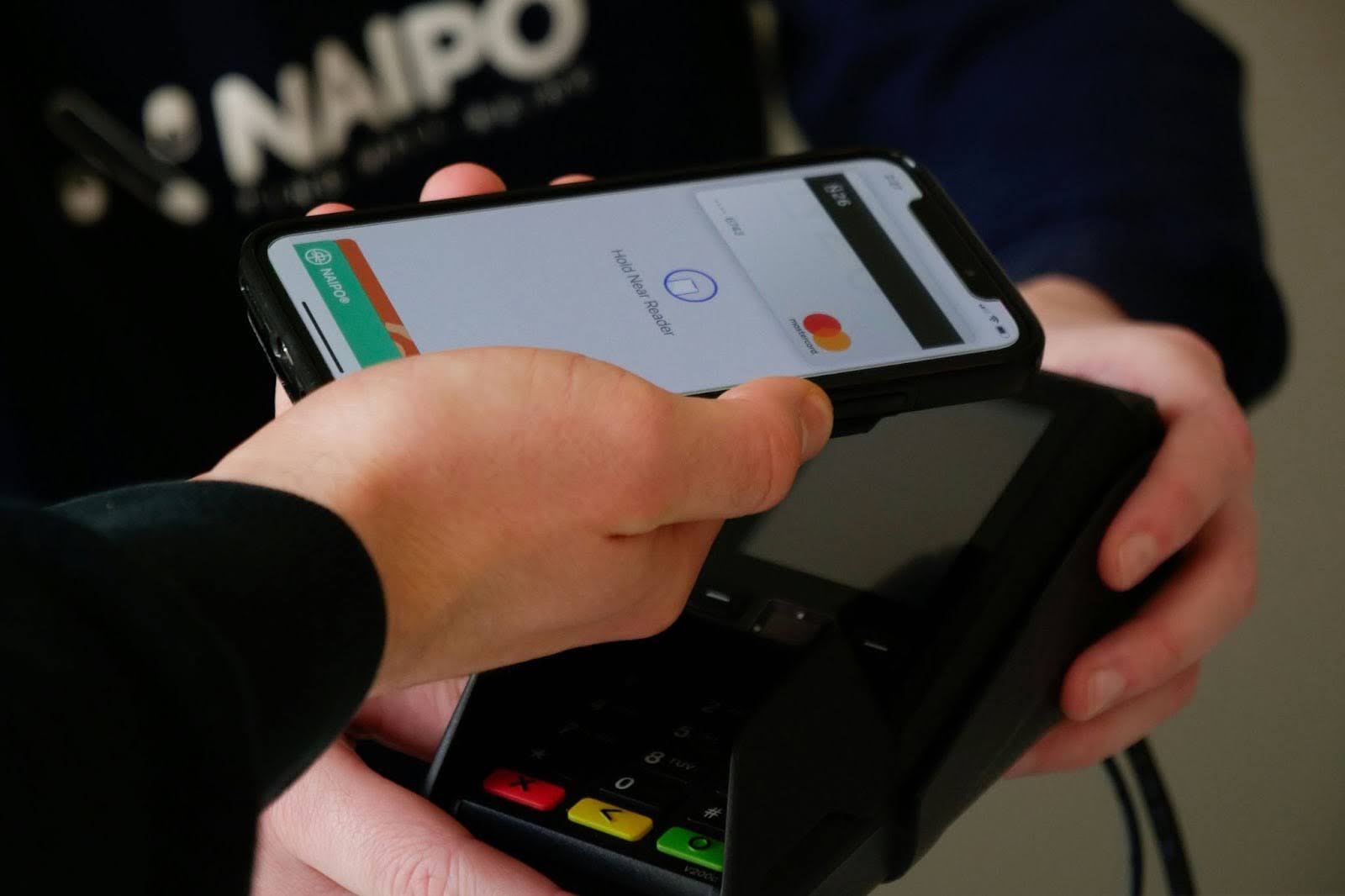
- Card spend during the trip: Corporate card, personal card with reimbursement, or virtual card for the specific trip. Each model produces different data and different audit trails.
- Receipt and expense capture: Employee photographs or forwards receipts. Modern platforms auto-extract the line items and categorize the expense. The faster this step happens, the higher the receipt-to-charge match rate.
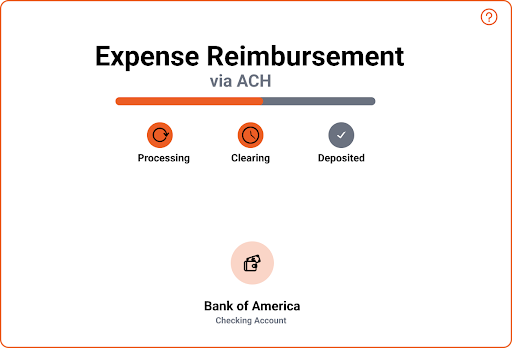
- Approval and reimbursement: Expense report routes through the approval chain, finance reviews exceptions, employee gets reimbursed for personal-card spend, and the report posts to the GL.
- Reporting and reconciliation: Finance closes the books with T&E data integrated into the broader P&L. Travel managers analyze category spend, identify savings opportunities, and renegotiate supplier contracts.
Every step is a potential failure point. A trip booked outside the system never shows up in pre-trip approval. A receipt missing past 14 days reduces reimbursable amounts. An approval that takes three weeks delays the close. The job of T&E software is to compress each step from days to minutes.
Why companies move from manual or fragmented to unified
Three patterns push finance teams to adopt or replace T&E software.
- The reconciliation tax is too high: Companies running travel through a TMC, expense through Concur or Certify, and corporate cards through a bank typically spend 30-50 hours a month reconciling the three sources. The Association of Certified Fraud Examiners has tracked expense reimbursement schemes as one of the longest-detection-lag fraud types because the data sits in too many systems to monitor in real time (https://www.acfe.com/report-to-the-nations).
- The pre-trip blind spot is producing surprises: Without a unified system, finance learns about a $4,000 client dinner two weeks after it happened. The category management work (negotiating airline rates, picking preferred hotels, blocking out-of-policy spend) only functions when finance sees travel data before the trip, not after.
- Travelers are booking outside the system: If the corporate booking tool is harder to use than Expedia, travelers default to Expedia and submit reimbursements. The company loses negotiated rates, loses duty-of-care visibility, and creates expense reports that don't match the actual itinerary. The Global Business Travel Association tracks "leakage" rates of 10-30 percent in companies with poor traveler adoption (https://www.gbta.org/research/).
The fourth pattern, less common but rising fast in 2025-2026, is the consolidation pressure from finance leadership. CFOs who joined post-2020 increasingly want one platform across travel, expense, and card data rather than three best-of-breed tools that don't talk to each other.
What a T&E management platform does
The features that actually matter, separated from the features that get bullet-pointed in sales decks.
- Online booking tool with managed inventory: The platform connects to airline and hotel inventory (often through a GDS like Sabre or Amadeus) and shows the traveler in-policy options. The booking tool that powers a real T&E platform has a depth of inventory; the ones that don't have policy compliance issues because travelers can't find what they need and book elsewhere.
- Receipt OCR and auto-categorization: A photo of a receipt or a forwarded email gets parsed into line items with vendor name, date, amount, category, and tax. Modern OCR is accurate enough that the manual categorization step largely disappears.
- Policy engine: Rules for who can book what class, what hotel categories are allowed, what amounts trigger approval, what merchant categories the card can transact in. The engine should enforce at the point of booking or swipe, not at the point of expense submission.
- Approval workflow: Routing rules with SLAs (response time required from approvers) and auto-escalation when approvers miss the SLA. The workflow that runs in 24 hours beats the workflow that takes two weeks every time.
- Corporate card and virtual cards: A platform that issues the card alongside the booking and expense workflows eliminates the reconciliation between card and expense systems. Virtual cards in particular close the hotel CC authorization fraud surface because the card details never leave the platform.
- ERP and HRIS integrations: The expense data has to flow into NetSuite, Sage Intacct, QuickBooks, Workday, or wherever the books actually close. Native connectors save weeks of finance time per month versus middleware or manual exports.
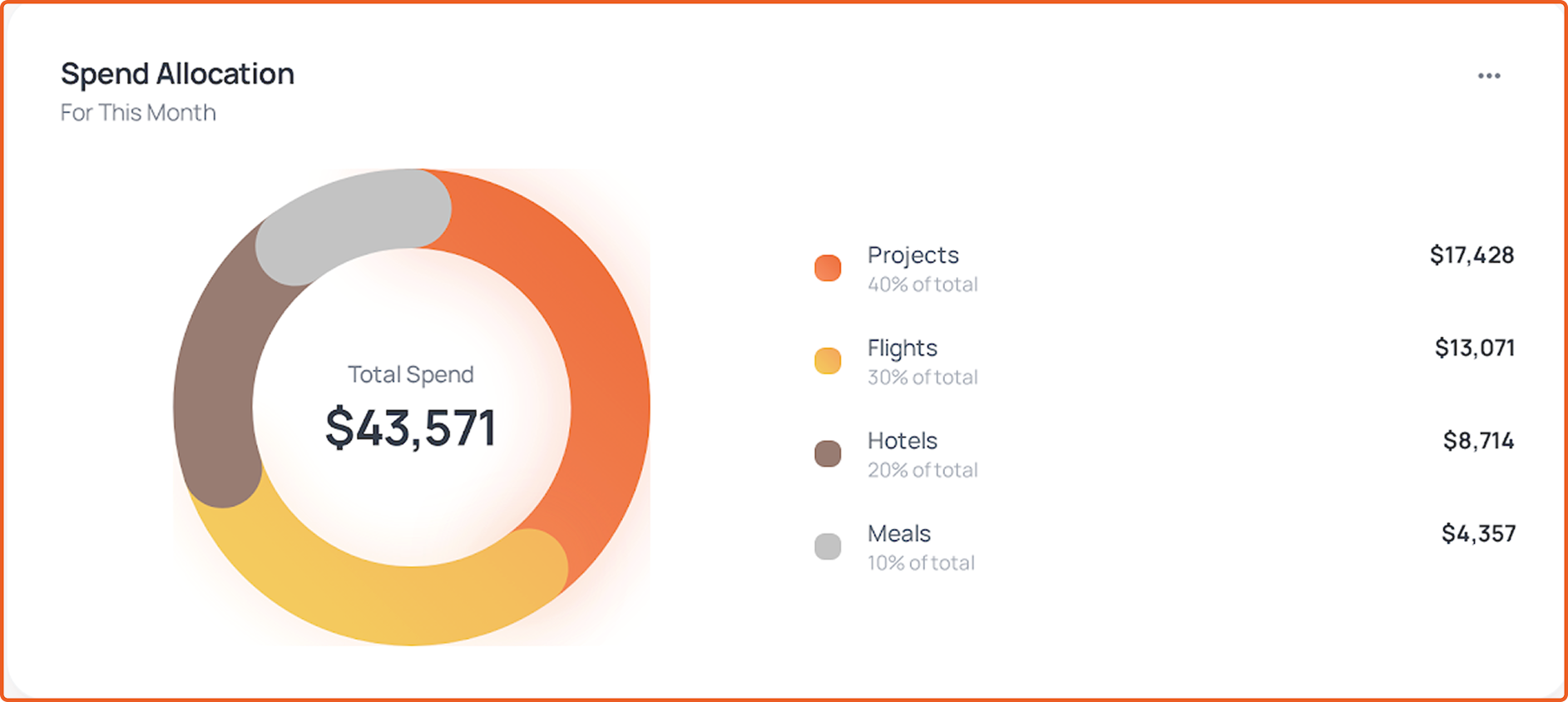
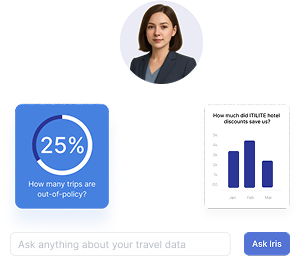
- Analytics and reporting: Real-time spend dashboards, category breakdowns, supplier performance reports. Travel managers and CFOs use the same dashboards for different reasons; the platform should serve both views.
- Mobile-first traveler experience: If the app feels worse than Expedia, traveler adoption is the limiting factor on every other feature. Adoption beats compliance: a policy a traveler ignores doesn't enforce.
- 24/7 support: Travelers stranded at midnight in an airport need someone to pick up. SaaS-led platforms typically offer chat-first support with phone escalation; managed-service TMCs lead with phone. Both work; the question is what your travelers will actually use.
A platform that ships all nine well is rare. Most platforms are strong on 5-6 and weaker on the rest. The platform that fits your company is the one that's strong on the dimensions that matter most to your travelers and your finance team. ITILITE is one example of a unified T&E platform; the 10 best travel and expense management software for 2026 compares the field across these dimensions.
The questions that actually matter when choosing
Most "how to choose a T&E platform" articles list 15 evaluation criteria. The real decision narrows to four questions.
1. Where does your spend actually go?
Audit the last 6 months of T&E. If it concentrates in travel (flights, hotels, ground transport, meals during travel), prioritize travel inventory depth and traveler experience. If it concentrates in operational categories (SaaS subscriptions, advertising, vendor payments), prioritize card controls and AP automation.
2. How fast does the platform need to roll out?
Mid-market SaaS platforms ship in 2-6 weeks. Enterprise platforms like SAP Concur ship in 4-6 months. The faster timeline trades implementation depth for time-to-value. Your CFO's patience window decides this.
3. What's your travelers' booking behavior today?
If 70+ percent already book through a corporate tool, you're optimizing within an existing workflow. If 50 percent book through Expedia and submit reimbursements, you're solving an adoption problem first.
4. What systems are you replacing or integrating with?
A NetSuite shop has different integration priorities than an SAP shop. A Sage Intacct shop has yet another set. The platform's native connectors to your finance stack often matter more than the platform's headline features.
The fifth question, sometimes worth asking: what's the cost of doing nothing for another year? A platform that pays back in 6 months on saved finance time and recaptured negotiated rates is a different ROI calculation than one that pays back in 24 months. Be honest about which one your team is buying.
What implementation actually looks like
Vendor sales decks describe T&E implementation as "8 to 12 weeks." The real timeline depends on three things.
- Data migration: Historical expense data, vendor master, employee roster, GL chart of accounts, approval hierarchies. Migrating these from the old system (or assembling them for the first time) takes 2-6 weeks depending on data quality. A clean NetSuite shop migrates faster than a multi-entity SAP shop with custom dimensions.
- Configuration: Policy rules, approval workflows, merchant category restrictions, role-based limits, integration mappings. SaaS platforms ship with defaults that work for most companies in 2-3 weeks. Enterprise platforms require 4-8 weeks of custom configuration because the defaults don't cover the complexity.
- Change management: Telling employees the booking tool changed. Training managers on the new approval workflow. Communicating the new policy. This is the step most implementations underestimate. A company that runs a clean change management process sees 80-90 percent adoption in month 1. A company that announces the new tool via email and hopes for the best sees 40-50 percent adoption in month 3.
The platforms that ship fast (Ramp, Brex, ITILITE) get to month-1 adoption inside 4-6 weeks for SMB and mid-market. The platforms that ship slow (Concur, BCD, Amex GBT for enterprise) are still in configuration at month 3 but typically deliver more depth at the end.
How to calculate the ROI
T&E platform ROI breaks down into four buckets. The dollar amounts vary; the buckets are consistent.
- Finance team time saved: A 200-person company spends roughly 30-50 hours per month on T&E processing (receipt capture, approval routing, reconciliation, exception handling) without modern software. A unified T&E platform cuts that by 60-80 percent. At a loaded finance rate of $75/hour, that's $1,500-3,000 per month, $18,000-36,000 per year.
- Recaptured savings on negotiated rates: When travelers book outside the system, the company loses access to negotiated rates. The Global Business Travel Association estimates 10-30 percent of total T&E spend leaks to consumer channels in companies without strong adoption. Recovering that leakage on a $500K annual T&E budget is $50K-150K per year.
- Reduced fraud and policy violations: Real-time receipt matching and policy enforcement at the swipe close most of the small-fraud surface. Companies with formal policies and platform controls see materially lower median losses to expense reimbursement schemes per ACFE data. The dollar value varies by company; the order of magnitude is meaningful.
- Faster close: A T&E platform integrated to the ERP reduces month-end close time by 1-3 business days. The opportunity cost of those days varies; for fast-growing companies, it's the difference between making investor reporting cycles and missing them.
ITILITE pricing runs $10 per trip with no per-user fees, putting an annual cost for a 200-person company at around $20K-30K depending on travel volume. Ramp and Brex are effectively free (card-funded). Concur runs custom-quote but mid-market deals land between $8 and $15 per user per month. Net ROI for most mid-market companies is positive inside 12 months once finance time and rate recapture are counted.
FAQ
What is travel and expense management?
Travel and expense management is the end-to-end process of approving, booking, paying for, documenting, and reconciling business travel and related expenses. It covers trip requests, bookings, corporate card spend, receipt capture, approvals, reimbursement, and reporting. Software exists to run each step automatically rather than manually.
What is a travel and expense management tool?
A travel and expense management tool is software that handles the T&E workflow: an online booking tool, receipt OCR, policy engine, approval workflows, corporate card integration, and ERP connectors. Modern unified platforms (ITILITE, Navan, TravelPerk) ship all of these on one interface; legacy stacks split them across two or three vendors.
Why do companies need travel and expense management software?
Three reasons: the reconciliation time across fragmented tools is excessive (30-50 hours per month for a mid-market company), travelers book outside the system when the corporate tool is hard to use (10-30 percent spend leakage), and pre-trip approval and policy enforcement only work when data flows in real time rather than at month-end.
How does travel and expense management work?
Six stages: trip request and approval, booking, card spend, receipt capture, approval and reimbursement, reporting and reconciliation. A T&E platform automates each step. Without a platform, the steps are run manually across multiple tools and spreadsheets, which produces longer cycles and higher error rates.
What are the key features of a T&E management tool?
Online booking with managed inventory, receipt OCR with auto-categorization, policy engine that enforces at booking or swipe, approval workflows with response-time SLAs, corporate card and virtual card issuance, native ERP and HRIS integrations, real-time analytics, mobile-first traveler experience, and 24/7 support. A platform strong on 7 of 9 is rare and good enough for most companies.
How long does it take to implement a T&E management platform?
SaaS platforms (Ramp, Brex, ITILITE) typically roll out in 2-6 weeks for SMB and mid-market customers. Enterprise platforms like SAP Concur take 4-6 months because of deeper configuration and integration work. Data migration, policy configuration, and change management are the three stages that drive the timeline.
How do you measure ROI on a T&E management platform?
Four buckets: finance team time saved (typically $18K-36K/year for a 200-person company), negotiated-rate leakage recaptured (typically 10-30 percent of total T&E spend), reduced fraud and policy violations (variable but material), and faster month-end close (1-3 days faster). Net positive inside 12 months for most mid-market deployments.

Ardra is a Content Strategy Manager at ITILITE with 6+ years of experience in travel and SaaS content. She holds a Master’s degree in Political Science from Lady Shri Ram College for Women and transitioned from academic research and travel content into SaaS content strategy.
She previously worked with JustWravel, where she focused on travel storytelling and digital content. Today, she specializes in SEO and AEO-driven content strategies that help businesses simplify complex travel and expense workflows into search-optimized narratives.
When she’s not working, Ardra is usually reading or watching films.
Control Costs, streamline travel with 24/7 support.
A fully integrated corporate travel management software that dramatically reduces spends while improving user experience




.jpeg)

%20(1).png)
%20(1).png)




.jpeg)


.jpeg)
.jpeg)

.webp)

.jpeg)
.jpeg)

.webp)









.png)