

Expense Policy Template: Free Download + 8 Step Guide (2026)
.webp)


TLDR;
- An expense policy template is a pre-built document that defines what employees can spend, how they get approval, what receipts are required, and how they get reimbursed, so you don’t write the whole thing from scratch.
- In an internal analysis of 3,323 customer conversations, 37% of finance, HR, and operations leaders (1,214 calls) raised expense-policy pain as an active problem, usually around approvals, receipt matching, or out-of-date policy documents.
- A working policy has seven core components: scope, expense categories, spending limits, documentation rules, approval workflow, reimbursement timeline, and violation consequences.
- The #1 mistake: writing rules that require managers to review every line item. Approvers burn out and start rubber-stamping. Good templates design around approver time, not against it.
- Review and revise the template at least annually, or whenever tax rules, GSA per diem rates, or company structure change.


What is an expense policy template?
An expense policy template is a pre-built document you adapt to your company, so you don’t have to write every rule from scratch. It tells employees what they can expense, how much, which receipts they need, who approves, and when they get reimbursed.
The word “template” matters. A policy written in isolation by one finance leader usually misses the realities employees face, and gets worked around within a quarter. A template gives you a starting structure that’s already been pressure-tested by other companies, then lets you tune the specifics (spending caps, categories, approval tiers) to your size and industry.
Most companies keep the first version of their policy short, one to three pages. Length comes later, only if exceptions keep hitting edge cases the one-pager doesn’t address.
Why does your business need an expense policy in 2026?
Without a clear expense policy, companies typically overspend on reimbursable categories by 20–30% relative to companies with enforced rules, not because of fraud, but because of inconsistent, individual decisions made by dozens of employees over thousands of transactions.
Three things changed about expense policies between 2019 and 2026:
- Manual expense processing is expensive. GBTA Foundation benchmarks, as cited by American Express Business Insights, show manual expense reports cost $58 per report with a 19% error rate, and $52 per correction. A 200-employee company with monthly expenses is losing six figures a year to pure process.
- Hybrid work blurs the policy perimeter. Home-office stipends, remote coworking-day costs, and hybrid travel patterns don’t fit policies drafted for “everyone commutes to HQ.” The template needs explicit rules for what the company covers now, not what it used to.
- Enforcement has moved into the booking and expense flow. Policies that only get checked after submission catch violations after the money is gone. Modern platforms enforce at the point of spend, the template should describe rules that can actually be coded into those workflows.
A policy also shields the company legally. Under the IRS’s Publication 463 framework, reimbursements only escape taxation if the company runs an “accountable plan” - which requires documented policy, receipts, and return of excess advances. Without a written template, your reimbursements are exposed.
What should an expense policy template include?
A complete expense policy template has seven components. Missing any one of them creates a predictable failure mode later.
1. Scope and eligibility
- Who the policy applies to (employees, contractors, interns, executives)
- What activities count (business travel, client entertainment, home-office supplies, subscriptions, conferences).
- Call out exceptions (board members, partner-track consultants, explicitly).
2. Expense categories
Break spend into buckets, typically: travel (air, lodging, ground transport, meals), client entertainment, office supplies, subscriptions, professional development, home-office costs. Each category gets its own rules.
3. Spending limits
Set per-category daily or per-trip caps. For meals and lodging, many U.S. companies benchmark against GSA per diem rates (updated annually). For everything else, company-specific caps by role or band.
4. Documentation requirements
- Spell out receipt rules (usually required above $25–$75),
- Expense report cadence (weekly, monthly, or within 30 days of trip end), and
- Categories needing extra context (client entertainment typically requires names of attendees and business purpose).
5. Approval workflow
This is where most policies fall apart. Define threshold-based routing instead of defaulting everything to the direct manager: - Under $X: auto-approved if in policy - $X – $Y: direct manager - Over $Y: finance director or VP - Out-of-policy: written justification to a “super approver”. One finance leader told us bluntly that their current tool made approvals “very clunky”, managers had to open each report, click each line, view receipts in tiny preview windows. “Unclear if the manager actually reviewed each expense.” Designing a template around threshold routing avoids that trap.
6. Reimbursement process
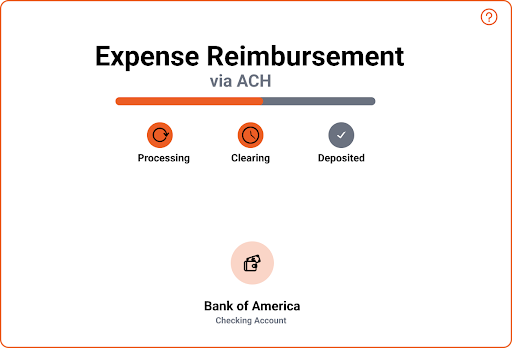
Timeline (target 7 business days from approval to deposit), payment method (direct deposit vs payroll rider), and what happens with advances not fully used.
7. Violations and exceptions
What happens on first, second, and repeat out-of-policy submissions, and an explicit workflow for legitimate exceptions (emergencies, stranded travelers, last-minute customer visits).
Sample expense policy template
Building an expense policy from a blank page is harder than it looks. The categories, thresholds, and approval tiers that seem obvious in isolation quickly conflict with each other when real expenses start coming in. Having worked with 500+ global companies, from 50-person teams to enterprises with 10,000+ employees, we've seen firsthand what makes a policy stick and what gets quietly ignored within a quarter. Based on how companies actually use ITILITE's policy and approvals features, we've distilled the most effective patterns into one free, ready-to-use template.
The template covers all seven components a working expense policy needs:
- Scope & eligibility: who it applies to, including employees, contractors, and executives.
- Expense categories: a full reimbursable table covering travel, lodging, meals, client entertainment, conference fees, professional development, office supplies, software subscriptions, and home-office costs, plus a non-reimbursable list so there's no ambiguity.
- Spending limits: tiered by category, with separate thresholds for standard and Tier-1 cities.
- Documentation requirements: receipt thresholds, what's required per expense type, and what to do when a receipt is missing.
- Approval workflow: dollar-threshold routing (auto-approved → manager → director/VP → CFO) with a documented exception path for out-of-policy submissions.
- Reimbursement: turnaround SLA, travel advance rules, and company card policy.
- Violations & exceptions: a tiered consequence table so the first offence isn't treated the same as a pattern of fraud.
Download the business expense policy template


Modern platforms like ITILITE can turn most of the rules above into enforced controls at booking or submission time, so travelers see only compliant options rather than reviewing violations after the trip.
How to create an expense policy in 8 steps
An effective expense policy should reduce confusion, control unnecessary spend, and make approvals easier for everyone involved. The goal is not to create more rules, but to build a process employees can realistically follow without slowing down day-to-day work.
Step 1. Audit your current expense spend
Pull six months of expense data. Segment by category, department, and employee band. Identify the top five categories driving spend and the top five categories driving exception approvals. Talk to your approvers: where do they waste time? Where do disputes arise?
Step 2. Align stakeholders before drafting
Involve finance, HR, legal, and a representative from each frequent-spend department before writing anything. Policies drafted in a finance silo get pushed back at rollout.
One ops lead described their current state directly: “That is a work in progress. We could use some support.”
Step 3. Pick your approach: detailed or principles-based
Some companies write exhaustive policies covering every scenario. Others, famously, Netflix, boil the whole thing to “act in the company’s best interest.” Neither is right for everyone. Detailed policies give approvers clear yes/no rules; principles-based policies depend on manager judgment and employee goodwill. If your team is under 50 and trust-heavy, principles work. Over 200 employees or regulated industries, detailed works better.
Step 4. Define categories and spending limits
Use the template above as a starting point. For U.S. per diems, use GSA rates as a benchmark. For global teams, expect per diem rates to differ significantly by country. Budget for manual upkeep.
Step 5. Design the approval workflow
Map every expense type to an approver and a decision time. Use threshold-based routing. Document the exception path so “out of policy” isn’t a trap but a documented sub-workflow.
Step 6. Specify payment modes and receipt rules
List all acceptable payment modes like corporate credit card, employee out-of-pocket with reimbursement, cash advance, and the approval rules and limits for each. Be explicit on receipt thresholds (commonly $25–$75 and up) and what counts as acceptable proof (photo, emailed digital receipt, itemized invoice).
Step 7. Write in plain language and publish centrally
Write short sentences, real examples, no legalese. Publish where employees already look for HR and finance answers, not a PDF buried in a shared drive. Static PDFs go stale; living documents get used.
Step 8. Roll out, train, monitor, and revise
Announce before go-live. Run a 30-minute training for frequent spenders and approvers. Track compliance metrics from month one: out-of-policy submission rate, average reimbursement cycle time, exception volume. Revise annually and whenever tax rules, GSA per diems, or company structure change materially.
How do you enforce an expense policy once it’s written?
Writing the template is the easy part. Enforcement is where programs fail.
In our analysis of 3000+ customer conversations, 37% of finance and ops leaders raised expense-policy pain as an active problem, and enforcement, not drafting, is the dominant theme.
Three tactics do most of the work:
- Embed the rules in the spend flow, not just the policy document. Pre-submission controls (category caps, receipt requirements, approval routing) stop violations before they happen. Post-submission review catches them after the money is gone. This is where expense platforms like ITILITE help; policy logic lives inside the booking and expense flow, not in a PDF employees glance at once.
- Threshold-based approval routing. Auto-send high-value expenses to director or VP level; never default everything to the direct manager.
One finance leader we spoke with described managers “getting really tired of reviewing huge expense reports”, the result is rubber-stamp approvals regardless of compliance.
- Monthly compliance dashboards. Compliance rate, out-of-policy submission rate, exception volume. Finance should see these numbers monthly, not at year-end audit.
The Association of Certified Fraud Examiners reports expense-reimbursement schemes cost an average of $251,000 per incident and go undetected for 18 months on average.
Weak enforcement is not just a policy-cleanliness issue; it’s a material loss category.
What are the most common expense policy mistakes?
Seven failure modes show up repeatedly across finance teams:
- Rules so strict employees find workarounds. If the policy bans anything above basic economy for 14-hour international flights, it gets ignored, not obeyed.
- Policy as PDF, not workflow. A policy that lives in a static document and nobody reads effectively doesn’t exist. Embed it into the platforms employees use for booking and submission.
- Per-line-item manager approval. Forces managers into reviewing every coffee receipt. Approver fatigue is real, and the ones rubber-stamping eventually just approve everything, out-of-policy or not.
- No threshold-based routing. High-value expenses routed to the same manager as a $12 lunch defeats the point of approval.
- Static per diem across regions. A $50 daily meal cap punishes New York travelers and overpays tier-3 city travelers. Use GSA rates or tiered caps.
- Skipping rollout change management. Announce the policy before go-live. Explain the why, not just the what. Train approvers separately from travelers.
- Never revising after launch. GSA rates update yearly. Tax rules change. Your company changes. A three-year-old policy is already wrong somewhere.
How often should you update your expense policy?
At minimum, once a year. Trigger an interim update when:
- GSA per diem rates are updated (annual)
- Tax rules change (especially accountable-plan rules under IRS Publication 463)
- The company goes through M&A or opens a new geography
- Home-office / hybrid-work patterns shift materially
- Your compliance dashboard shows a sustained rise in out-of-policy submissions in a single category (signals the rule is off)
FAQ
What’s the difference between an expense policy and a T&E policy?
An expense policy is broad. It covers all reimbursable costs including non-travel items like office supplies, subscriptions, professional development, and home-office stipends. A travel and expense (T&E) policy is a narrower specialization covering only travel-related spend. Some companies combine them; others run separate documents. Most mid-market companies start with one combined policy and split later.
Do I need a lawyer to draft an expense policy?
For a standard U.S. policy, no. A good template plus finance and HR review is enough. For multi-country operations, regulated industries (federal contractors, healthcare), or equity-affected reimbursements, have legal counsel review before rollout.
What expense categories should be non-reimbursable?
Universally non-reimbursable: traffic fines, parking tickets, minibar, personal grooming, entertainment not tied to a documented business purpose, travel for spouses or family (unless separately pre-approved), and any expense without a receipt when one is required. Company-specific exclusions usually include first-class upgrades and alcohol beyond a per-meal cap.
Should the expense policy require pre-approval for every trip?
No; requiring pre-approval for every expense burns manager time and slows the business. Use threshold-based pre-approval: anything above a set amount (often $1,000 or the company’s judgment call) requires pre-approval; routine spend doesn’t.
What should a good expense policy template include at minimum?
A good expense policy template should include at least seven components: (1) scope, (2) expense categories, (3) spending limits, (4) documentation rules, (5) approval workflow, (6) reimbursement process, (7) violations and exceptions handling. Missing any of these creates a predictable failure mode within the first year.
Can small businesses use the same template as enterprises?
Yes, with trimming. A five-person team can use a one-page version of the template above. Drop the threshold routing and tiered per diems until headcount hits ~50. Pair it with expense management software for small businesses that won't outgrow you in twelve months; most enterprise platforms are overkill until you cross the 50-person mark

Vishal Jetley is Director of Marketing at ITILITE, where he writes about business travel, expense management, and corporate cards. Before ITILITE, he worked at HighRadius, helping scale finance-focused SaaS products for enterprise teams. His work focuses on travel operations, spend control, and modern finance workflows.
Control Costs, streamline travel with 24/7 support.
A fully integrated corporate travel management software that dramatically reduces spends while improving user experience





.jpeg)


.jpeg)
.jpeg)

.jpeg)
.jpeg)

.webp)









.png)