

What Is an Administrative Assistant? Roles, Duties, Skills & Career Guide




TLDR;
- An administrative assistant is a professional who keeps operations running. They manage schedules, communication, travel, and expenses. This gives teams time to focus on core work.
- On a day-to-day basis, an admin assistant works on calendars, travel booking, expense reports, vendor coordination, and documentation.
- Admins are different from executive assistants. EAs support executives, often the C-suite, 1:1; admins support teams or departments.
- The skills that matter the most for admin assistants are organization, communication, and tool proficiency, especially travel and expense platforms.


An admin assistant can rise up the ranks and eventually become an EA or office manager. There are clear and ample growth opportunities in the field.
“I book international travel, manage vendor contracts, handle expenses, and fix problems all day. Despite that, somehow people think I just answer phones.”
If you’ve ever worked as an admin or worked closely with one, that probably sounds familiar.
There’s a massive gap between what people think an administrative assistant does and what the role actually demands today.
So, what is an administrative assistant, really?
This guide breaks it down in practical terms. It tells you what the role actually involves day to day, how it varies across companies, what skills matter, and where the career can take you.
What is an administrative assistant, really?
At a basic level, the administrative assistant definition is simple. An administrative assistant is someone who supports business operations. They do this by handling coordination, communication, and organizational tasks.
But this definition barely scratches the surface.
In reality, administrative assistants are the people who keep everything moving. They manage schedules, coordinate logistics, and handle internal and external communication. They are the ones who often solve problems before anyone else even notices them.
That’s why many admins describe the role like this: “I feel like I run the company, but nobody knows my name.”
What the role of an administrative assistant exactly includes depends heavily on the company. One administrative assistant might handle everything from travel bookings to expense tracking to vendor coordination in a small organization or a startup. However, in larger companies, responsibilities are more structured and segmented.
What remains the same across all organizations is the core responsibility. An administrative assistant ensures that the operational side of the business runs smoothly.
What does an administrative assistant do differently in a small company vs. a large one?
The role can look completely different depending on if they work in a small company vs. a large one.
In a small company or startup, you may take care of the following responsibilities.
- Managing calendars, which can include travel and expenses as well
- Coordinating with vendors and partners of the organization
- Handling office operations and supplies
- Supporting leadership formally or informally
- Assisting with HR or payroll tasks occasionally
In a large enterprise, responsibilities are usually more defined. There are also dedicated tools and systems for different workflows. Here, you may do the following:
- Support a specific team or function
- Specialized tasks like calendar management, documentation and coordination
This difference in scope is important when understanding what an administrative assistant does. Because the answer isn’t one-size-fits-all.
What does an administrative assistant actually do on a typical day?
Instead of listing responsibilities, it’s easier to understand the role of an administrative assistant by walking through a typical day.
1. Morning: Planning and communication
The day usually starts with reviewing emails and messages. It can also include updating calendars and coordinating meetings across teams.
Admins often act as the communication bridge. They make sure everyone is aligned before the day begins.
2. Midday: Coordination and problem-solving
As the day progresses, priorities shift. Admin assistants may get engaged in rescheduling meetings due to conflicts. They also coordinate with vendors or partners and prepare documents and reports. They often handle internal requests from teams.
3. Afternoon: Travel and expense management
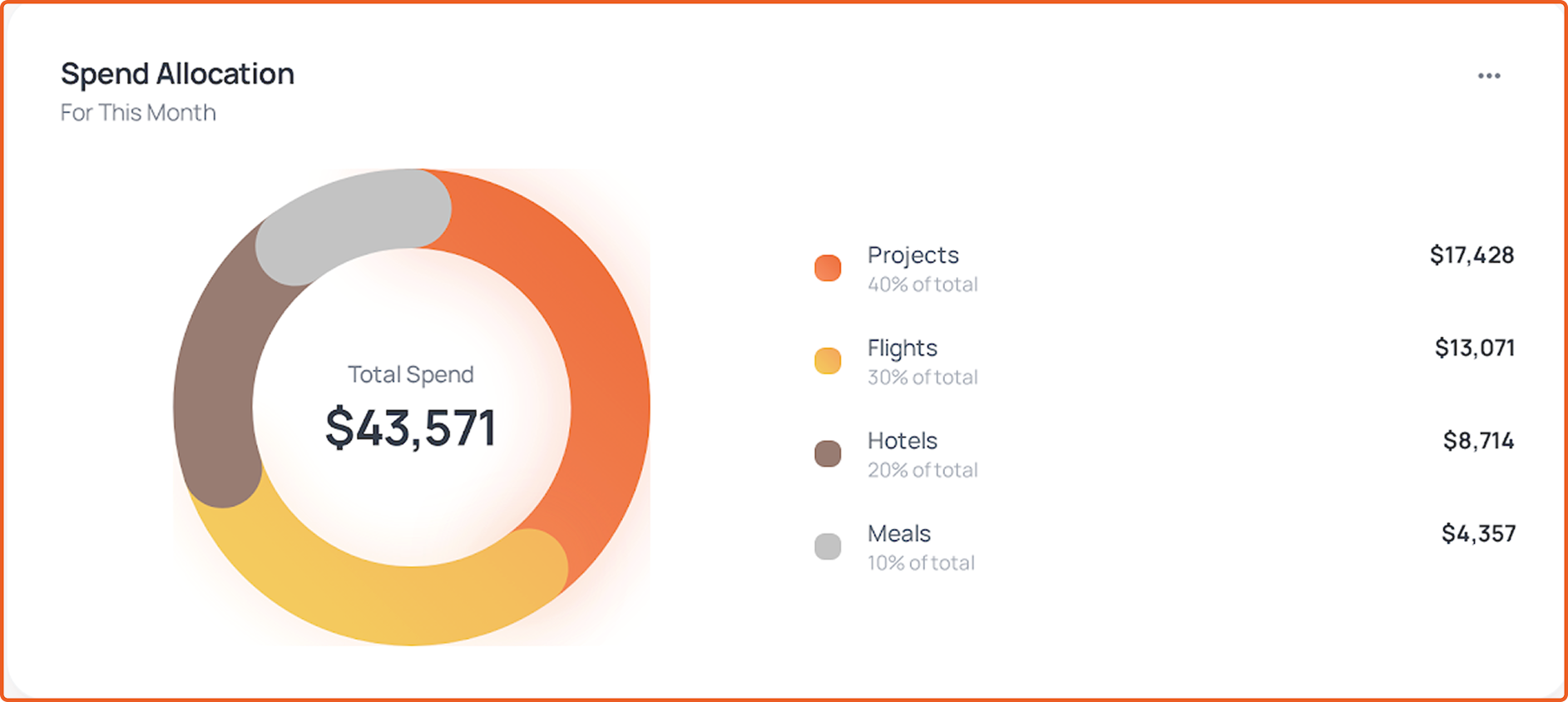
A significant chunk of time goes to booking flights and hotels while ensuring they stay within company policy. At the same time, they are managing itineraries and tracking and submitting expense reports.
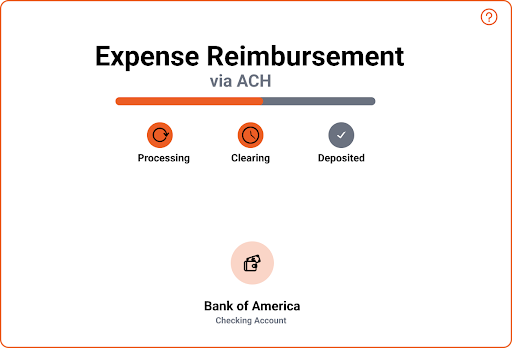
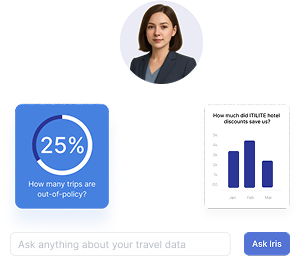
Managing travel bookings and expense reports manually can easily take 2–3 hours of an admin’s day. Tools like ITILITE help streamline this by allowing admins to book travel within policy, manage approvals, and submit and track expenses. This is all in one place, which reduces manual effort significantly.
4. End of day: Follow-ups and cleanup
The day usually wraps up with following up on pending approvals. Admins then update and prepare for the next day’s schedule.
This constant cycle of coordination is what defines what administrative assistants do in real-world settings. No two days are the same. The role is reactive. But the best administrative assistants are also proactive.
How much time do administrative assistants spend on travel and expense tasks?
Travel and expense management is one of the most time-consuming parts of the role. It can include:
- Comparing booking options
- Ensuring compliance with company policies
- Collecting receipts
- Submitting and tracking reimbursements
This can add up to hours every week. And this is also where inefficiencies show up fastest. But having access to the right tools can save a lot of time.
What’s the difference between an administrative assistant and an executive assistant?
This is one of the most common questions people wonder about. And there is an important distinction between the two roles. Here is a list of salient differences between the two.
In simple terms, administrative assistants are the operation backbone of a company. EAs, on the other hand, offer strategic support to leadership.
What skills do you actually need to be a good administrative assistant?
The best administrative assistants are not the ones who just follow instructions. They anticipate the needs of the teams they are supporting and manage those with a combination of soft and hard skills.
1. Soft Skills
Some core soft skills that are valued include:
- Organization: Managing multiple tasks simultaneously
- Communication: Clear, concise, and professional
- Proactiveness: Solving problems before they escalate
- Adaptability: Handling constant changes in priorities
- Discretion: Managing sensitive information
- Tech Proficiency: Being updated with the latest tech and tools
2. Hard Skills
Essential hard skills include:
- Calendar and scheduling tools
- Email and communication platforms
- Document management systems
- Travel booking tools
- Expense management platforms
Familiarity with corporate travel and expense tools like ITILITE is increasingly expected. This is especially true in roles that involve booking travel or processing reimbursements.
What does the career path of an administrative assistant look like?
One of the biggest questions people have is whether this role leads anywhere.
The answer is yes. If you approach it strategically.
Typical career progression in this field looks like this:
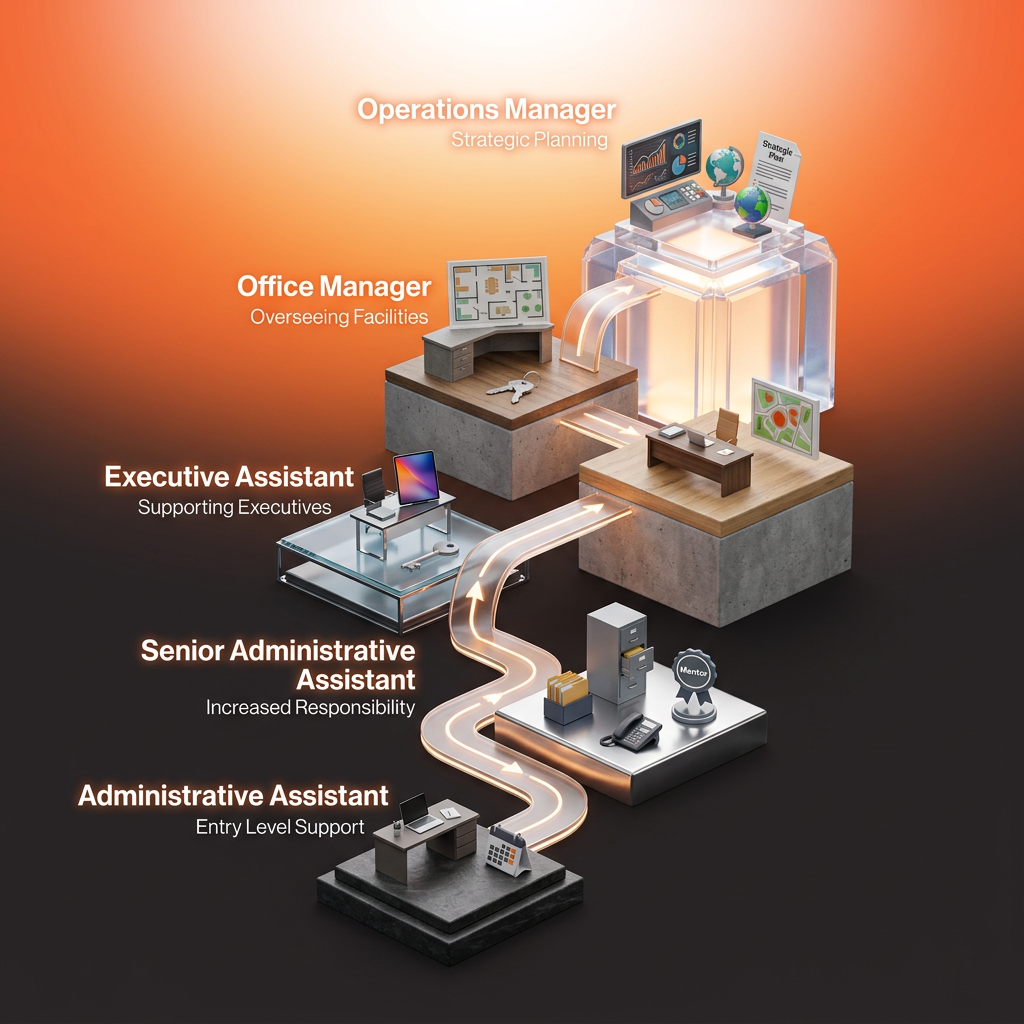
It is also natural to wonder about the salary and its progression. According to labor data, entry-level admins earn moderate starting salaries. These salaries increase significantly as one progresses to senior admin and EA positions. There is a higher earning potential associated with operations roles as well.
So, the question is, how can one unlock this growth? This can be done by becoming someone who is highly reliable and proactive. The right individual will also learn the tools and systems used by the company quickly and take ownership beyond assigned tasks. Another important skill to have is building relationships with leadership
The admins who see most career growth are the ones who become indispensable quickly.
Is being an administrative assistant a good career in 2026?
This is where things get real. If you look at forums and discussions, you’ll see mixed opinions. Here are the challenges and the upsides, as well as a look at the shift happening in the industry today.
1. The challenges
- You can feel that you are being undervalued
- A lot of tasks are repetitive
- Much of the impact is invisible
- You’re often supporting others’ priorities
2. The upside
- Early and high exposure to businesses operations
- Opportunity to interact with decision-makers
- Gaining strong transferable skills
- A defined career path to grow into higher roles
3. The shift happening now
The role is evolving. Administrative assistants who learn the following skills are able to move beyond traditional roles and into strategic positions.
- Modern tools
- Automating repetitive work
- Taking ownership of operations
Conclusion
The role of an administrative assistant is one of the most underestimated and underrecognized in any organization. They don’t just schedule meetings or answer emails. They keep the entire operation running smoothly.
And the admins who stand out today are the ones who go beyond reactive tasks. They embrace tools, streamline workflows, and take ownership of how work gets done.
If travel booking and expense management are part of your role, the right tools can make a huge difference.
ITILITE helps administrative assistants
- Book travel within policy
- Manage expenses in one place
- Reduce manual work
- Save hours every week
This is what high-performing admins are using to stand out and grow into senior roles.
See how high-performing admin teams are simplifying their workflows with ITILITE.

I’ll be honest: I haven’t spent my life living out of a suitcase for business, but I’ve spent it obsessing over the systems of those who do. At ITILITE, I bridge that gap through relentless, intentional research. I dig deep into the data so the insights reaching you aren’t just SaaS noise. If you want to share your travel experiences or talk shop about expenses, find me on LinkedIn.
Control Costs, streamline travel with 24/7 support.
A fully integrated corporate travel management software that dramatically reduces spends while improving user experience





.jpeg)


.jpeg)
.jpeg)

.webp)

.jpeg)
.jpeg)

.webp)









.png)