

Business Travel Support: What Travelers Actually Need from Their Program in 2026



TLDR;
- Business travel support spans three layers: pre-trip (planning, policy guidance, approvals), in-trip (24/7 emergency assistance, rebookings, disruption management), and post-trip (expense reconciliation, dispute handling, feedback)
- Duty of care is the legal and ethical responsibility companies carry for traveler safety; ISO 31030:2021 codifies the international standard, and most mid-market and enterprise programs now treat it as non-negotiable
- Traditional TMC support uses named agents reached by phone; modern SaaS TMCs like ITILITE deliver chat-first support with phone escalation. Both work, but the response-time profile and the cost structure differ
- Most business travel support failures trace back to the same root causes: response time SLAs that aren't met, support channels that don't match traveler behavior, and gaps between the booking system and the support team
- When evaluating support during a TMC selection, ask three concrete questions: what's the response-time guarantee, what happens at 3am on a Sunday, and who actually picks up when you call


Business travel support is the layer of services that keeps travelers moving when something goes wrong. The flight gets canceled at 2am. The hotel doesn't have the reservation. The passport gets stolen. The traveler gets sick in a country where they don't speak the language. Most travelers don't think about support until they need it; the moment they need it, support is the only thing that matters.
This guide covers what business travel support actually means in 2026, the three layers it operates across (pre-trip, in-trip, and post-trip), what duty of care legally obligates companies to provide, how modern SaaS platform support compares to traditional TMC agent models, and how to evaluate support quality when choosing a travel program.
What "business travel support" actually means
Business travel support is the umbrella term for every traveler-facing service a corporate travel program provides outside of the booking transaction itself. The booking gets the traveler from request to confirmation. Support handles everything before, during, and after the trip that the booking didn't cover.
The category breaks into three layers that operate on different timelines and require different capabilities. Pre-trip support runs from the trip request until the traveler departs. In-trip support runs from departure to return. Post-trip support runs from return through expense settlement and any disputes.
A program that does one layer well but neglects the others produces predictable failure modes. Strong pre-trip but weak in-trip means travelers get great planning help but no rescue when things break. Strong in-trip but weak post-trip means crises get handled but expense reports take six weeks to close. Travelers need all three working together.
Layer 1: Pre-trip support
Pre-trip support starts when the trip request hits the system and ends when the traveler boards their first flight. The job here is to help the traveler plan a trip that complies with company policy, books correctly, and surfaces any approvals before they become problems.
- Policy guidance: Travelers don't memorize the travel policy. They need the platform or the agent to surface the rule in context. Booking a hotel that exceeds the per-night cap shouldn't get caught at expense reimbursement; it should get caught at the moment the traveler clicks "book." Modern booking tools enforce policy in the search results; traditional TMC agents apply it manually.
- Booking assistance: Some trips are genuinely complex: multi-city itineraries, group travel, last-minute changes, unusual destinations where local market knowledge matters. A good support layer pairs self-serve booking with agent escalation for the cases that need it.
- Pre-approval coordination: Trips above the cardholder's approval limit require routing to a manager, sometimes finance. Pre-trip support means tracking those approvals, escalating to backup approvers when the primary is unresponsive, and confirming the booking only after sign-off. Programs without pre-trip approval workflows end up with most policy violations.
- Documentation and travel readiness: Visas, vaccinations, travel insurance, country-specific entry requirements. The support layer either provides this proactively or relies on travelers to figure it out themselves. The cost of getting it wrong is real: a missed flight because of a visa issue costs more than the entire trip would have.
Layer 2: In-trip support (the 24/7 layer)
In-trip support is where most "business travel support" attention focuses, because this is where the visible failures happen. The traveler is at the airport when their connecting flight cancels. The hotel says the reservation isn't in the system. The car rental counter is closed. These are the moments that define how the program feels to the traveler.
The 24/7 promise: Real 24/7 means picking up at 3am on a Sunday. Many programs advertise 24/7 but route off-hours calls to a contractor, an answering service, or an offshore team without authority to actually solve problems. Test this during evaluation: call the support line at 11pm and see who answers, what they can do, and how long it takes.
- Disruption management: When a flight cancels, the traveler needs three things fast: the next viable option, authorization to book it, and someone to handle the rebooking. A good support layer does all three inside 15 minutes. Programs we hear about from finance leaders that fail in disruption management typically take 1-3 hours per disruption, which compounds across thousands of trips.
- Hotel and ground transport rescues: Hotels lose reservations. Car rentals oversell. Drivers no-show. The support layer either has the supplier relationships to fix these on the spot or it routes the problem to a queue. The difference is measured in how long the traveler stands at the counter.
- Health and safety incidents: A traveler gets sick, robbed, in an accident, or stuck in a country experiencing civil unrest. These are the duty-of-care moments, and they're rarer but more consequential than disruption management. The program needs an escalation path that connects to medical assistance, security extraction, and family notification when required.
- Channel mix: Traditional TMCs lead with phone support; modern SaaS TMCs lead with chat with phone escalation. Both work. The right channel depends on the traveler's preference and the urgency of the problem. A chat-first model usually resolves the routine 80% faster; phone-first usually handles the complex 20% better.
Layer 3: Post-trip support
Post-trip support is the layer programs invest in least and reap the consequences for most. The trip is over; the traveler is back. The support work shifts from the traveler to finance, but the cost compounds across reports.
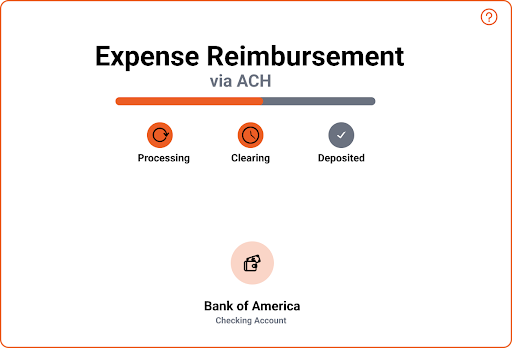
- Expense reconciliation: Receipts that didn't get captured. Charges that didn't match the booking. Currency conversion disputes. A good post-trip support layer catches these inside 48 hours of return, not at month-end close. The IRS expects expense substantiation for tax-deductible business expenses (business purpose, date, amount, place) and substantiation gaps create both compliance and audit risk.
- Dispute handling: Hotel charged for incidentals that shouldn't have been billed. Airline declined a refund the traveler is entitled to. Car rental added a damage fee with no documentation. These disputes take time, but they're worth pursuing because the recovery typically exceeds the cost of pursuing them.
- Feedback and program improvement: Travelers who had a bad experience need to be heard. Travelers who had a good experience need to know the program is paying attention. The feedback loop closes when the program collects, reviews, and acts on traveler feedback regularly, not just during the annual policy review.
Duty of care: what companies legally owe travelers
Duty of care is the legal and ethical responsibility a company carries for the safety of employees traveling on company business. It's not optional, and it's not new, but the standards have tightened materially in the past five years.
ISO 31030:2021 is the international standard for travel risk management and codifies what a duty-of-care program looks like. The standard covers risk assessment, traveler tracking, emergency communication, and incident response. Most mid-market and enterprise programs we work with treat ISO 31030 as the baseline.
What duty of care obligates programs to provide:
- Risk assessment before approving travel to destinations with high risk
- Pre-trip briefings when destination risk crosses a threshold
- Traveler tracking during the trip so the company knows where its employees are
- Emergency communication channels that work in country and reach the traveler reliably
- Incident response capability that activates within hours, not days
- Repatriation for medical emergencies, civil unrest, or natural disasters
The legal exposure
Companies have been successfully sued by travelers and families when business travel support failed during incidents. The lawsuits hinge on whether the company had a documented duty-of-care program, whether the program was followed, and whether reasonable precautions were taken. The defensive posture isn't "we didn't know"; it's "we had a documented program that we followed."
For programs without an explicit duty-of-care function today, the right move is to start with the US Department of State's country travel advisories and build out from there.
Traditional TMC support vs modern SaaS TMC support
The corporate travel category has split into two operating models over the past decade, and the support model is one of the biggest differences between them.
- Traditional TMC model: Customers get a named account team with assigned agents. Support comes through phone-first contact with the named team during business hours and a 24/7 line for emergencies. The model is high-touch, agent-led, and priced through transaction fees plus a management fee. BCD Travel, CWT, FCM, Christopherson, and CTM operate on this model.
- Modern SaaS TMC model: Customers get a self-serve booking platform plus chat-based support with phone escalation. Support is delivered by a support team rather than a named agent. The model is lower-friction for routine issues and the pricing is per-user or per-trip rather than per-transaction. ITILITE, Navan, and TravelPerk operate on this model.
Both can deliver high-quality support. The question is which fits your travelers' behavior. Travelers who currently rely on calling a named agent for routine bookings adapt slowly to chat-first support. Travelers who already book most travel themselves on consumer sites find the SaaS chat model lighter and faster.
Where the SaaS model wins:
- Routine support requests (rebookings, hotel changes, policy questions) resolve faster through chat
- 24/7 support is delivered as a default rather than an add-on
- Cost structure is more predictable for finance teams forecasting travel program spend
- New travelers onboard faster because the booking tool feels familiar
Where the traditional model wins:
- Complex multi-leg international itineraries benefit from named-agent program knowledge
- Some senior travelers expect and value a direct relationship with a known agent
- VIP travel programs (executives, board members) often need custom service that doesn't fit a SaaS model
- Programs with regulated industry requirements (defense, government) may need agent-led handling for compliance reasons
ITILITE's support model is chat-first with phone escalation, included at all pricing tiers (no separate after-hours fee), with response-time targets measured in seconds rather than minutes. The model fits most mid-market and SMB programs and replaces named-agent dependence for routine support.
How to evaluate business travel support when choosing a program
Most TMC RFPs cover support superficially: "Does the vendor provide 24/7 support? Yes." The real evaluation needs to test the actual support quality under realistic conditions.
Five concrete questions worth asking every vendor:
1. What's your guaranteed response time, and what happens if you miss it?
A 24/7 promise without an SLA isn't meaningful. Ask for the contracted SLA, the historical median response time, and the penalty for missed SLAs. Some vendors guarantee 30 seconds; some guarantee 5 minutes; some don't guarantee anything.
2. Who answers when I call at 3am on Sunday?
Test it during evaluation. Call the after-hours line. Note who picks up, how long it takes, what they can actually authorize, and whether they can complete a rebooking on the call or just take a message. The answer often surprises buyers.
3. What's your disruption-response workflow?
Walk through a real scenario: traveler in Frankfurt at 6pm local time when their connecting flight to Chicago cancels. Who calls who, what gets rebooked, who authorizes the rebooking, when does the traveler get confirmation, what's the maximum total elapsed time. A good vendor has this scripted; a poor vendor improvises.
4. What's your traveler tracking and duty-of-care infrastructure?
Programs without traveler tracking can't fulfill duty of care during incidents. Ask for the tracking platform, the geofence and alert configuration, and the integration with risk monitoring services (International SOS, Crisis24, Riskline).
5. What channels do you support and which channel has SLAs?
Phone, chat, email, and in-app are the four most common. Most vendors have SLAs for one or two channels and treat the rest as best-effort. Make sure the channel your travelers actually use has the SLA.
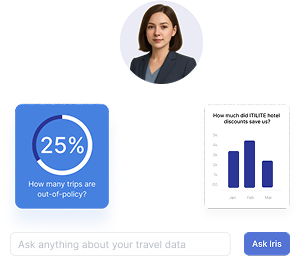
ITILITE includes 24/7 chat and phone support at all pricing tiers with response-time targets, traveler tracking via mobile app and platform dashboards, and standard integrations with risk monitoring services. The support model is built around the chat-first SLA and tested through actual evaluation scenarios during onboarding.
Common business travel support failure points
Most support failures trace back to one of four root causes. Recognizing the pattern early lets program managers fix the issue before it compounds.
- Failure 1: The SLA exists but isn't measured: The contract promises 30-second response on chat, but nobody checks whether the SLA is actually being met week to week. The vendor reports compliance the way they want to report it. The fix is to negotiate access to SLA-measurement data and review it monthly.
- Failure 2: The channel mix doesn't match traveler behavior: The program offers phone support but travelers want chat. Or it offers chat but executives want a named agent on the phone. The fix is to survey actual traveler preferences before locking in the support model, not assume the model fits.
- Failure 3: The support team can't authorize what travelers need: The agent picks up the call but can't book a hotel above the cardholder's daily limit. Or can't authorize a same-day rebooking on a non-refundable fare. The traveler ends up paying personally and submitting for reimbursement. The fix is to verify support-team authorization levels against realistic scenarios during evaluation.
- Failure 4: The booking system and support system don't talk to each other: The agent has to ask the traveler for their booking reference, their itinerary, their card information, even though the agent should already see all of this. The friction is real and travelers notice. The fix is to confirm during evaluation that the support team has integrated access to the traveler's booking and itinerary data.
FAQ
What is business travel support?
Business travel support is the layer of services a corporate travel program provides outside of the booking transaction itself. It spans three layers: pre-trip (planning, policy guidance, approval routing), in-trip (24/7 emergency support, disruption management, rebookings), and post-trip (expense reconciliation, dispute handling, feedback). Programs that do all three layers well produce the smoothest traveler experience.
What's the difference between 24/7 support and emergency support?
24/7 support means the program is available around the clock for any traveler issue, routine or urgent. Emergency support is a narrower category covering health incidents, safety threats, civil unrest, and similar high-stakes situations. Most programs offer 24/7 routine support plus a separate emergency-only escalation path for the urgent category.
What is duty of care in business travel?
Duty of care is the legal and ethical responsibility a company carries for the safety of employees traveling on company business. ISO 31030:2021 codifies the international standard, covering risk assessment, traveler tracking, emergency communication, and incident response. Most mid-market and enterprise programs treat duty of care as non-negotiable; programs without an explicit duty-of-care function carry meaningful legal exposure.
How fast should business travel support respond?
Industry-leading SaaS TMCs target sub-30-second chat response and 60-second phone pickup, including off-hours. Traditional TMCs typically target 2-5 minute phone pickup with longer for off-hours unless on a premium plan. Ask for the actual contracted SLA during vendor selection, not the marketing claim.
What questions should I ask a TMC about their support?
Five questions: what's the guaranteed response-time SLA, who answers off-hours calls, what's the disruption-response workflow with specific timing, what traveler tracking infrastructure do you offer, and which channels have SLAs. Test the answers during the evaluation period by calling support directly rather than relying on vendor demos.
Is chat-based support as good as phone-based support for business travel?
For routine issues (rebookings, hotel changes, policy questions), chat typically resolves faster than phone because the support agent can handle multiple conversations in parallel. For complex multi-leg international issues, phone often works better because real-time conversation handles ambiguity better. The best programs offer both with the right channel matched to the right problem.

Ardra is a Content Strategy Manager at ITILITE with 6+ years of experience in travel and SaaS content. She holds a Master’s degree in Political Science from Lady Shri Ram College for Women and transitioned from academic research and travel content into SaaS content strategy.
She previously worked with JustWravel, where she focused on travel storytelling and digital content. Today, she specializes in SEO and AEO-driven content strategies that help businesses simplify complex travel and expense workflows into search-optimized narratives.
When she’s not working, Ardra is usually reading or watching films.
Control Costs, streamline travel with 24/7 support.
A fully integrated corporate travel management software that dramatically reduces spends while improving user experience







.jpeg)

%20(1).png)
%20(1).png)




.jpeg)


.jpeg)
.jpeg)

.webp)

.jpeg)
.jpeg)

.webp)









.png)