ITILITE European Rail Booking: Integrated Train Travel & Expense Tracking

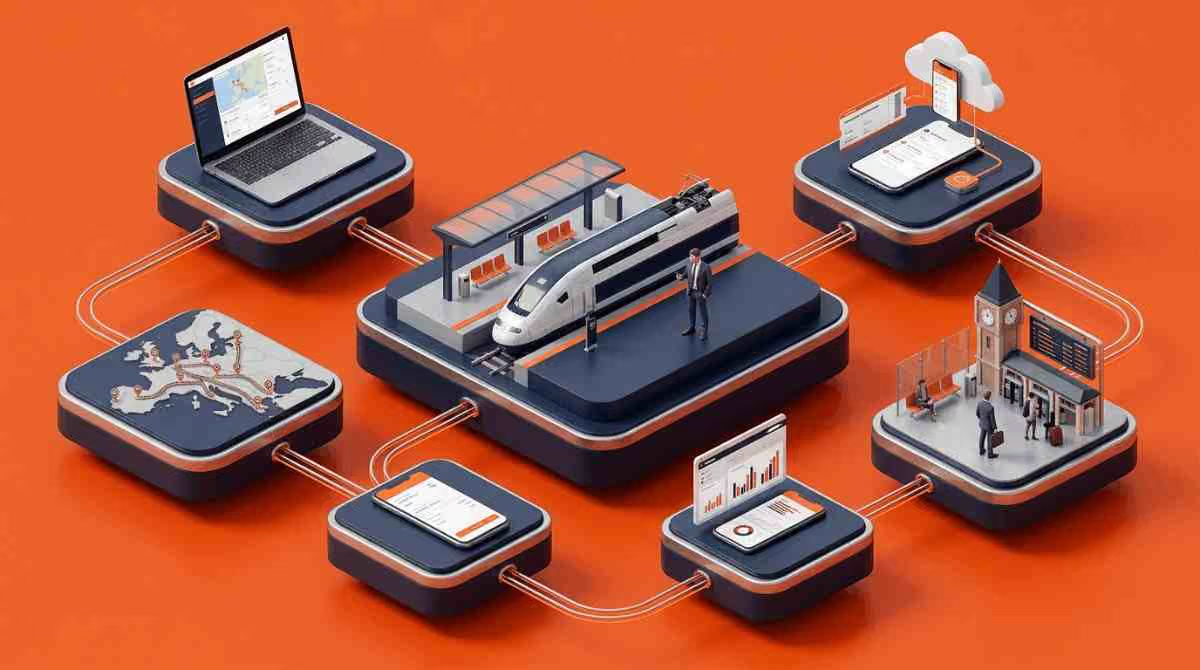



ITILITE now brings train booking into the platform, so every European rail trip sits in the same trip record as your flights, hotels and cars.
In much of Europe, the train is the first choice for business travel between cities. Paris to Brussels, Frankfurt to Amsterdam, Milan to Zurich: for many of these routes, rail is faster, simpler and closer to city centers than flying. ITILITE has doubled down on full multi-modal coverage for European clients, and rail is the newest mode to join flights, hotels and car rentals.
How train booking works on ITILITE
Booking a train follows the same path travelers already know.
- Search: Traveler picks Train on the ITILITE search page, next to Flight and Hotel.
- Choose: They pick their route and train from a dedicated rail booking experience.
- Confirm: The ticket confirmation reaches the traveler instantly.
- Pay: The traveler's or the company's card is charged for the booking, as with any other mode.
- Track: The booking is logged against the trip, so it appears alongside the rest of the itinerary.
It works on both web and mobile, so travelers can book from wherever they plan the trip.
One trip, every mode
Multi-leg European trips now live under a single trip ID. A traveler flying into Paris and taking the train on to Brussels no longer has two separate records to manage. The flight, the train, the hotel and the car all sit in one itinerary.
That means one place to check where your people are, one booking history, and one set of trip details when plans change.
What this means for your team
Travel managers: You get one self-serve platform for every mode your European travelers use. Rail requests follow the same flow as flights and hotels, and your team spends its time on the travel program itself.
Finance teams: Rail spend appears in the same trip-level reporting as flights and hotels. You see the full cost of a European trip in one view, which makes spend tracking and reporting more complete.
Travelers: One place to search and book, with the same familiar experience whether the trip is by air, rail, road or hotel. Confirmations arrive instantly.
Leadership: Full visibility into European travel across every mode, with no gaps in the picture.
Who benefits most
- Companies with entities in Europe or frequent European business travel
- Teams where rail is a primary mode of travel between cities
- Travel managers who want every mode of travel under one platform
- Finance teams that want all trip spend in one report
- Organizations planning to grow their European footprint
How to get started
Train booking is switched on per client. Reach out to your ITILITE customer success manager, and they will turn it on for your organization. Once it is on, travelers see the Train option on the search page across web and mobile.
What's next for European coverage
ITILITE will keep investing in European travel. The goal is for a train leg to feel as native to the trip as a flight leg, with everything living inside the itinerary view your travelers already use.
Anish Khadiya co-founded ITILITE in 2017 after spending nearly a decade building the strategic and operational instincts that now shape how the company goes to market.
Before ITILITE, Anish was an Engagement Manager at McKinsey & Company. He experienced firsthand how inefficient corporate travel management was — not just as a traveler, but as a consultant helping organizations identify exactly where their operational costs were leaking. He later served as Director of Strategy & Planning at Myntra, before joining Mayank to build ITILITE from the ground up.
At ITILITE, Anish leads the business side , from revenue and partnerships to customer success. Anish holds a B.Tech (Hons) from IIT Kharagpur and a PGDM from IIM Lucknow.
Anish is ITILITE's go-to voice on the future of corporate travel and expense management, you'll find him on podcasts and webinars speaking about AI, spend visibility, and what modern T&E looks like for construction, manufacturing, healthcare staffing, and IT companies.