Managing Travel for Field Engineers & Plant Site Visits: A 2026 Manufacturing Playbook




TLDR;
- Field engineer travel is reactive, remote, and project-coded, so a standard corporate travel policy does not fit it.
- Unplanned downtime can cost up to $2.3 million an hour, so getting an engineer on-site fast beats saving on the fare.
- Reactive booking is expensive: fares booked inside six days run about 59% higher than the prime window.
- Book hotels by distance to the plant, code every trip to a job number, and track who is on which site.
- A platform with site-radius hotel search, job-code booking, and live tracking turns crew travel into one system.




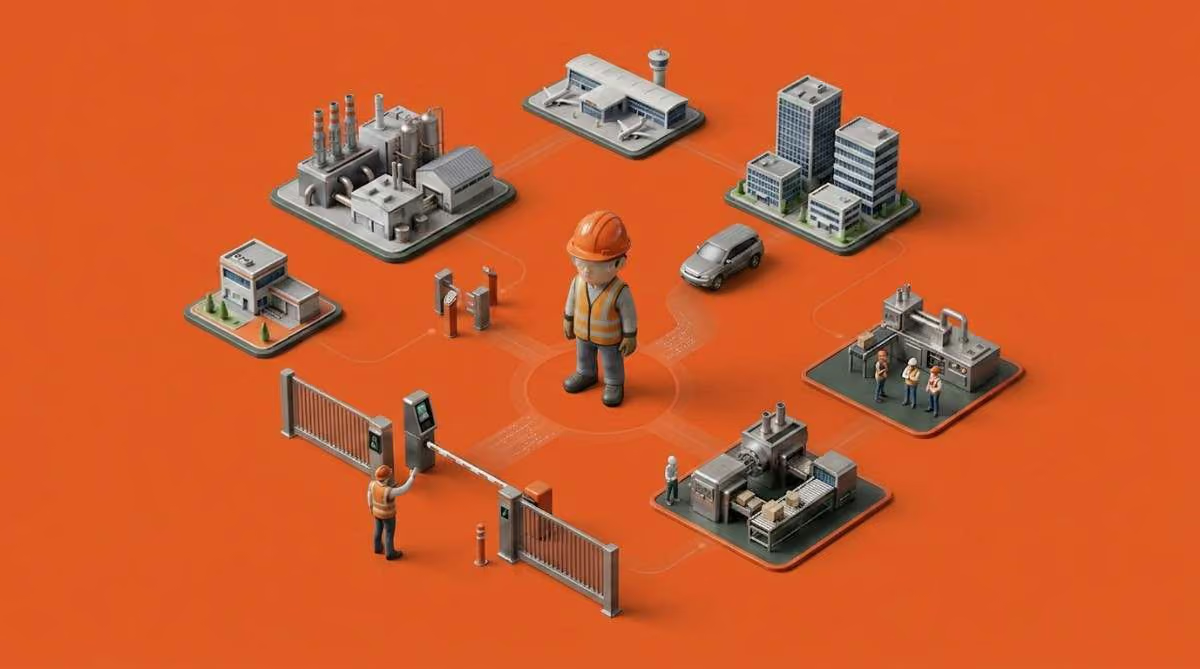
A production line goes down at a plant three states away. The meter starts running the moment it stops, and the only thing that restarts it is a qualified engineer standing in front of the machine. That is field engineer travel, and it looks nothing like booking a sales rep on a Tuesday flight to a conference. It is reactive, it heads to industrial sites with no hotel next door, and every dollar has to land on a job number. This playbook is how manufacturers manage it in 2026.
Why field engineer travel breaks a standard corporate travel policy
Field engineer travel differs from ordinary business travel on three structural axes: it is triggered by a breakdown rather than a calendar, it heads to industrial sites instead of city centers, and every trip has to bill to a specific job. A standard policy built around advance booking, downtown hotels, and a single cost center fails on all three.
The workforce behind these trips is large, scarce, and expensive to idle. The US employs about 538,300 industrial machinery mechanics, maintenance workers, and millwrights, a group growing 13% through 2034, far faster than average. Skilled hands are only getting harder to find: manufacturing may need 3.8 million workers by 2033, with roughly 1.9 million of those roles at risk of going unfilled. When the person is that hard to replace, their time is too valuable to lose to travel friction.
The place they travel to is the other half of the problem. Field engineers head to plants, substations, and customer facilities that rarely sit near a hotel district, so proximity to the site matters more than brand or price. The broader manufacturing travel management guide covers the category; field service is its hardest corner.
A VP at an 800-1,200-employee industrial services firm that maintains power plants across the US told us their location managers book travel for entire crews and choose hotels by proximity to the plant site, not by city.
What poorly managed field engineer travel actually costs
The cost of a delayed engineer dwarfs the cost of the flight. Unplanned downtime now costs the world's largest firms about $1.4 trillion a year, close to 11% of their revenue, and a single idled automotive line can run as high as $2.3 million an hour. Against that number, arguing over a $300 fare difference to get an engineer there a day earlier is the wrong math.
Reactive booking does carry a real premium, which is why the answer is process, not a lecture about booking earlier. Fares bought zero to six days out cost about 59% more than the prime 21-to-74-day window, and even the 7-to-13-day window runs about 26% higher. A breakdown does not wait for the prime window, so the goal is to make unavoidable last-minute travel fast and controlled rather than to pretend it can be planned away. The same reactive pattern shows up in construction field-crew travel, where jobs move without much notice.
There is a quieter cost in the back office. Field engineers spend a large share of the day not turning a wrench but getting to the site, and when the booking and the job code are handled in separate systems, someone reconciles every trip by hand afterward. That manual work scales badly across dozens of sites and hundreds of trips.
A manufacturing playbook for plant site visit travel
The playbook is six plays that convert the chaos of reactive, project-coded, multi-site travel into a repeatable process. Each one targets a specific way field engineer travel breaks, and together they turn a spreadsheet full of receipts into a managed program.
1. Book hotels by distance to the site, not the city: Search by the job-site address and sort by drive time, so a crew is not staying 40 minutes from a plant when a closer property exists. Proximity, not brand, is the field metric that matters.
2. Code every trip to a job number at booking: Attach the project or cost-center code the moment the trip is booked, not in a month-end scramble. This is the single biggest reconciliation saver, and it keeps project profitability honest. The business travel finance approach for manufacturing is built around exactly this kind of allocation. The same industrial services firm's biggest reporting gap was job-number coding, because their flight tool would not let them attach a job number at booking, so every trip became manual cost-allocation work afterward.
3. Pre-authorize a reactive dispatch lane: Build one approval path for "line down, go today" travel so urgent trips skip the standard queue while still being logged. Speed and control are not opposites when the exception is designed in advance.
4. Give location managers a crew-booking role: Field crews rarely book for themselves, so give the managers who dispatch them a delegate role with one shared view, rather than 19 people booking on personal cards. The mechanics of booking for others are covered in the guide to multi-site manufacturing itineraries.
5. Set a clear per-diem and use extended-stay rates for long jobs: Commissioning and turnaround work runs for weeks, so anchor a sensible daily cap and switch to extended-stay properties. The US federal per-diem baseline of $178 a day is a clean reference point.
6. Keep one live view of who is on which site: Central visibility across every location is what makes both spend reporting and duty of care possible, instead of chasing status across text threads.
Duty of care for field engineers on plant and customer sites
Sending an engineer into a live industrial site raises a legal duty, not just a logistical one. OSHA's General Duty Clause requires every employer to furnish a workplace "free from recognized hazards that are causing or are likely to cause death or serious physical harm," and that obligation travels with the worker you dispatch. Private employers reported about 2.5 million nonfatal workplace injuries in 2024, a reminder that plant floors carry real risk.
Meeting that duty for a mobile workforce comes down to knowing where people are and being able to reach them. A live record of which engineer is on which site, paired with around-the-clock support if a trip goes wrong, is what turns duty of care from a policy statement into something you can actually deliver when a crew is scattered across a dozen states.
How a travel platform supports field engineer travel management
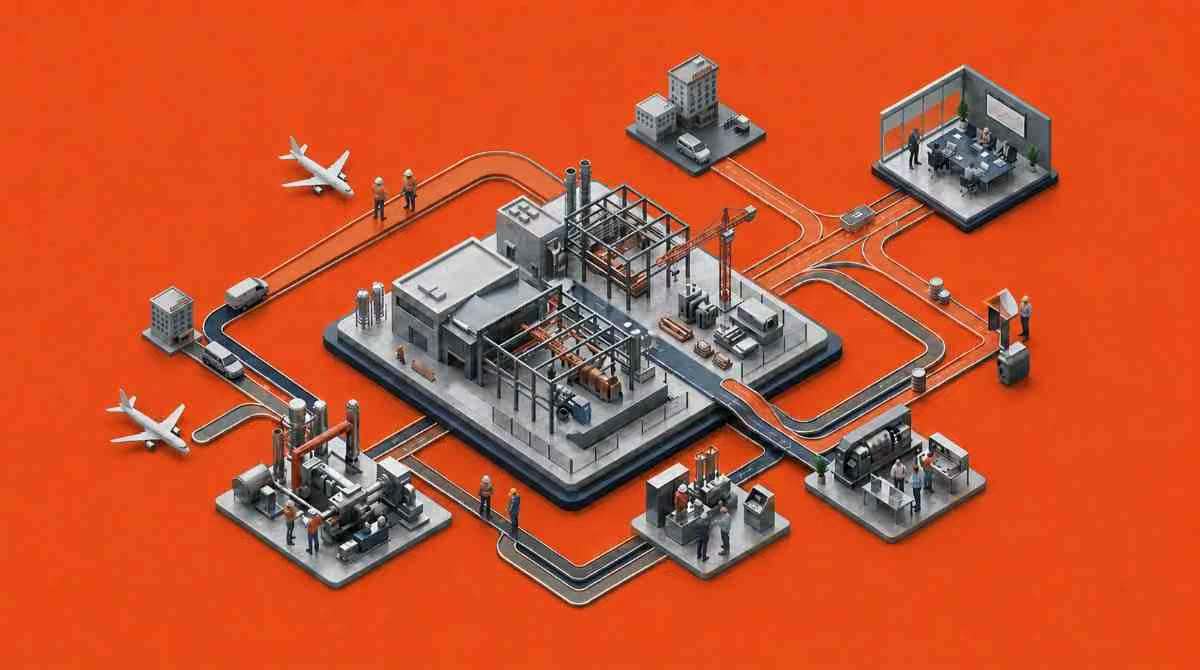
The six plays only hold together when booking, coding, tracking, and reporting live in one system rather than across hotel apps and spreadsheets. ITILITE handles the field-specific parts directly: hotel search by distance to a job-site address, job and cost-center codes attached at booking, and a delegate model so location managers can book for their crews under one account. Automatic rebooking when fares drop recovers a few points of savings on the reactive trips you cannot plan, and central reporting gives finance one view of spend across every site.
That single view is also what makes duty of care and project costing work at scale. Real-time traveler tracking shows who is on which site, around-the-clock support covers the crew when a job runs late, and every booking already carries its job number, so project profitability is clean without month-end rework. For the wider setup, ITILITE's travel and expense solution for manufacturing and its corporate travel booking platform tie the field plays into one program.
FAQ
What is field engineer travel management?
Field engineer travel management is the process of planning, booking, and tracking travel for engineers and technicians dispatched to plants, job sites, and customer facilities. It differs from standard corporate travel because trips are reactive, head to remote industrial locations, and must be coded to a specific project or job number rather than a single department budget.
How is field engineer travel different from regular business travel?
It is reactive, remote, and project-coded. A breakdown triggers the trip, so booking is often last-minute; the destination is a plant or site with no hotel district nearby, so proximity beats brand; and every cost has to bill to a job number for project accounting. A policy built for planned, city-center, single-cost-center travel does not fit.
How do you book hotels near a plant or job site?
Search by the job-site address and sort by distance or drive time, rather than by city name. A booking platform with site-radius hotel search lets a coordinator enter the exact plant address and see properties within a set number of miles, which matters when the site sits well outside any normal hotel district.
How do you handle last-minute travel for a breakdown?
Build a pre-authorized dispatch lane. Set up one approval path for urgent "line down" travel so it skips the standard queue while still being logged, and default those trips to flexible fares. Last-minute booking costs roughly 59% more than the prime window, but a stalled line can cost far more per hour, so speed is usually the right call.
How do you track travel costs by project or job number?
Attach the job or cost-center code at the moment of booking, not during a month-end reconciliation. When the booking platform captures the code up front, every flight, hotel, and car already carries its project allocation, which keeps project profitability accurate and removes the manual receipt-matching that field service teams otherwise do by hand.
What is an employer's duty of care for field engineers?
It is the legal obligation to protect the health and safety of workers you send to a site, anchored in the US by OSHA's General Duty Clause. In practice it means knowing which engineer is on which site, providing around-the-clock support, and being able to reach and help a traveler quickly if a trip or a site situation goes wrong.

Ardra is a Content Strategy Manager at ITILITE with 6+ years of experience in travel and SaaS content. She holds a Master’s degree in Political Science from Lady Shri Ram College for Women and transitioned from academic research and travel content into SaaS content strategy.
She previously worked with JustWravel, where she focused on travel storytelling and digital content. Today, she specializes in SEO and AEO-driven content strategies that help businesses simplify complex travel and expense workflows into search-optimized narratives.
When she’s not working, Ardra is usually reading or watching films.
Get your field engineers on-site, not on hold
A fully integrated corporate travel management software that dramatically reduces spends while improving user experience


.avif)