


TLDR;
- Corporate cards suit larger companies: company liability, strict spend controls, and a high eligibility bar.
- Business cards suit small companies and startups: a personal guarantee, flexible limits, and easy approval.
- Corporate-card liability sits with the company; business-card liability sits with the owner personally.
- A third option, the SaaS corporate card, gives corporate-style controls with no personal guarantee, for smaller companies.
- Choose based on your size, liability tolerance, and how much spend control you need.




When it comes to managing business expenses, both cards offer valuable solutions. However, each card serves different needs, and understanding the differences can help businesses choose the right one.
Though both cards aim to simplify payments and track expenses, they cater to different needs. Corporate cards are built for large enterprises with strict controls, while business cards offer flexibility for smaller companies and startups. Understanding how these cards work and what they offer can save you time, money, and headaches down the road.
In this blog, we'll explore the key differences between corporate and business credit cards, looking at eligibility, spending limits, rewards, and more. By the end, you'll know which card aligns with your company's size, goals, and financial needs.
What is a Corporate Card?
A corporate credit card is issued to large companies to streamline business-related expenses. The organization manages the card accounts and assigns them to employees for authorized purchases, such as travel, client meetings, and office supplies. These cards offer advanced control over spending, reporting, and policy enforcement.
- Ideal For: Large enterprises with many employees and high-volume expenses.
- Examples: Multinational companies or organizations with a dedicated finance department.
What is a Business Credit Card?
A business credit card is designed for small to mid-sized businesses. It helps business owners and key employees manage operational expenses like inventory, office equipment, or travel. These cards offer flexible credit limits and rewards tailored to business spending. However, the business owner is personally liable for the debt.
- Ideal For: Small businesses, startups, and growing companies.
- Examples: Entrepreneurs, freelancers, and small business owners.
Key Differences Between Corporate and Business Credit Cards
1. Eligibility and Approval Process
Corporate Cards are issued only to companies that meet strict financial criteria. Banks evaluate the company's revenue, size, and ability to manage large expenses before approval. Most issuers require at least $4-10 million in annual revenue and multiple employees handling travel or business purchases.
In contrast, Business Credit Cards are easier to obtain. Even small businesses with limited cash flow can qualify, provided the owner has a good credit score. The approval process is quicker, making these cards a popular choice for entrepreneurs and startups.
2. ,Liability and Accountability
One major difference lies in liability. With corporate cards, the company is responsible for repaying the card balance. These cards protect employees from personal financial risks, as the business takes full responsibility for the expenses.
However, business credit cards often carry personal liability for the business owner. If the company cannot pay its debts, the issuer can hold the owner personally accountable. Some business cards offer joint liability, where both the owner and company share responsibility.
3. Control and Policy Enforcement
Corporate credit cards give businesses greater control over how employees spend. Companies can set limits on spending categories (like travel, dining, or office supplies) and restrict unauthorized purchases. These cards also integrate with expense management tools, enabling automatic tracking and reporting of expenses.
Business credit cards provide limited control compared to corporate cards. While owners can set spending limits for individual cards, there is less oversight over categories. Small businesses typically rely on basic statements or manual reports to track expenses.
4. Expense Tracking and Reporting
Corporate credit cards offer detailed reporting that helps companies monitor spending trends and enforce policies. Many cards come with customized reports, allowing finance teams to track expenses by employee, department, or project. This makes it easier for businesses to manage budgets and comply with audits.
Business credit cards usually provide simpler tracking through monthly statements. Some issuers offer basic summaries or tools to categorize expenses, but they lack the advanced reporting features of corporate cards.
5. Rewards and Perks
Both corporate and business credit cards offer rewards, but the type of benefits differs. Corporate Credit Cards focus on travel perks such as airport lounge access, travel insurance, and discounts on flights and hotels. These benefits appeal to companies with frequent business travelers.
Business Credit Cards offer rewards like cashback, points, or discounts on office supplies, fuel, and travel. These cards are better suited for small businesses that want to maximize savings on everyday purchases.
6. Fees and Costs
Corporate cards often come with higher annual fees, reflecting the premium services and features they offer. These fees cover services like dedicated account managers, enhanced reporting tools, and travel concierge services. However, large companies typically offset these costs with the savings and benefits provided by the card.
Business credit cards usually have lower fees or even no annual fees for basic cards. Small business owners can choose between cards with minimal costs or premium cards with higher fees that provide additional rewards and benefits.
Which Card is Right for Your Business?
Choose a Corporate Card if:
- Your company generates high annual revenue.
- You need advanced expense tracking and strict policy enforcement.
- Many employees handle business travel and large purchases.
- Your business requires premium travel benefits and concierge services.
Choose a Business Card if:
- You run a small business, startup, or freelance operation.
- You want access to credit without complex requirements.
- Your spending needs are moderate, and you prefer lower fees.
- You're looking for cashback, points, or other business rewards.
A third option: SaaS corporate cards
The corporate-versus-business choice leaves out a third category that now sits between them: the SaaS corporate card. Software spend platforms issue a corporate card that carries no personal guarantee, yet skips the traditional barriers, because they underwrite on your business bank balance and cash flow instead of the founder's personal credit.
That matters because traditional bank corporate cards are hard to qualify for. They are generally limited to C and S corporations and can require a minimum annual card spend, and some programs ask for at least 15 cardholders before they approve you. A SaaS corporate card removes that gate, so a 20-person company can get corporate-card controls without a founder signing a personal guarantee.
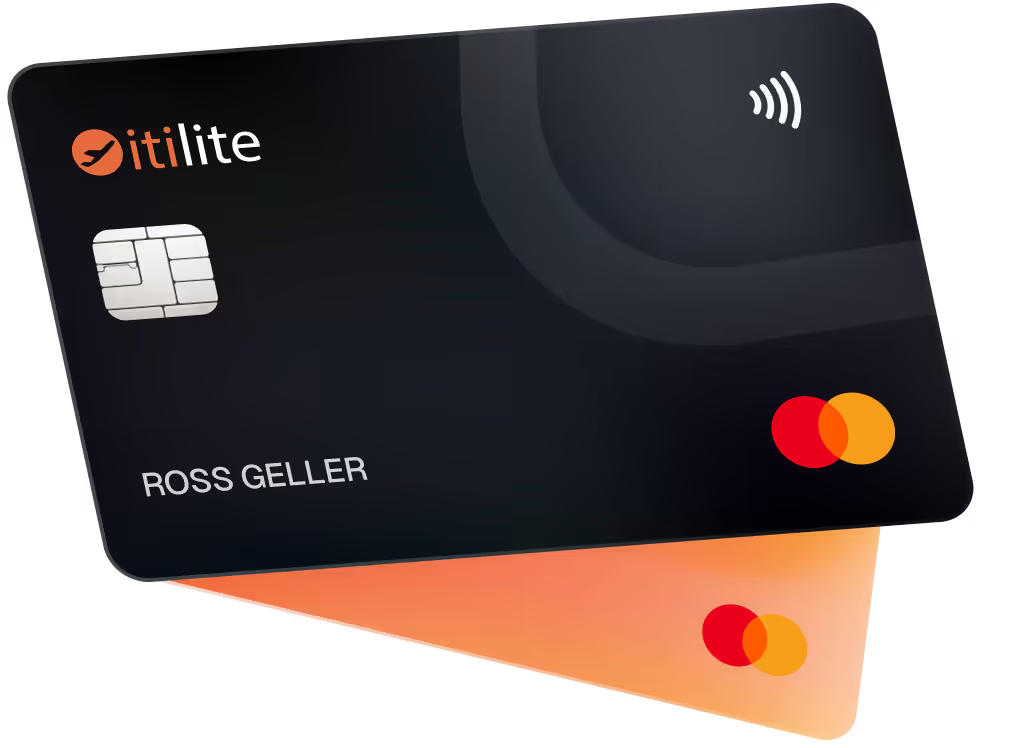
The choice you are really weighing is three-way: a business card (fast to get, but personal liability and light controls), a traditional corporate card (strong controls, but a high revenue and cardholder bar), or a SaaS corporate card (corporate-style controls and virtual cards, available to smaller companies). ITILITE sits in that third group, issuing unlimited virtual and physical cards on one account with per-employee limits, automated expense tracking, and up to 2.5% combined cashback on travel and card spend.
For a side-by-side of the specific SaaS and traditional cards, including who each one fits, see the best corporate credit cards for small businesses.
Maximize Control and Savings with itilite Corporate Card
Both corporate and business credit cards offer unique advantages, but the right choice depends on your company's size, spending patterns, and financial goals. By understanding these differences, companies can choose the right card to manage expenses effectively, optimize cash flow, and unlock valuable rewards.
ITILITE corporate cards offer more than just convenience, they empower businesses to streamline payments and optimize financial operations. With up to 2.5% total cashback when booking travel on ITILITE cards, every transaction adds value. Centralizing your corporate payments ensures better visibility and control, making it easier to manage expenses across departments.
ITILITE also helps you spend less time on reconciliation by automating expense tracking and ensuring seamless policy compliance. To know more about the benefits, book a demo.
FAQ
What is the difference between a corporate card and a business card?
A corporate card is issued to the company, which holds the liability and sets strict spend controls; it suits larger firms and has a high eligibility bar. A business card is issued to the owner with a personal guarantee, offers flexible limits, and is easy for small businesses to get.
Is a corporate card better than a business card?
Neither is universally better; it depends on your size and needs. Corporate cards win on liability protection and spend control for larger companies. Business cards win on easy approval and flexibility for small businesses. Growing companies increasingly pick a third option, the SaaS corporate card, which offers controls without a personal guarantee.
Does a corporate card require a personal guarantee?
Traditional corporate cards usually do not require a personal guarantee, because the company holds the liability. Business cards typically do require one, so the owner is personally responsible for the debt. SaaS corporate cards also skip the personal guarantee, underwriting on business cash flow instead.
Who qualifies for a corporate card?
Traditional bank corporate cards are generally limited to C and S corporations and can require a minimum annual card spend, with some programs asking for at least 15 cardholders. Smaller companies that fall short can qualify for a SaaS corporate card, which underwrites on business cash flow instead of the founder's personal credit.
Can a small business get a corporate card?
Yes, through a SaaS corporate card. Software spend platforms issue corporate cards to smaller companies by underwriting on business cash flow and bank balance rather than the founder's personal credit, so you get per-employee limits and virtual cards without the traditional revenue or cardholder minimums.
Does a corporate credit card affect personal credit?
A corporate card generally does not affect the cardholder's personal credit, because liability sits with the company and repayment is the company's responsibility. A business card usually does affect personal credit, since it carries a personal guarantee from the owner.

Ardra is a Content Strategy Manager at ITILITE with 6+ years of experience in travel and SaaS content. She holds a Master’s degree in Political Science from Lady Shri Ram College for Women and transitioned from academic research and travel content into SaaS content strategy.
She previously worked with JustWravel, where she focused on travel storytelling and digital content. Today, she specializes in SEO and AEO-driven content strategies that help businesses simplify complex travel and expense workflows into search-optimized narratives.
When she’s not working, Ardra is usually reading or watching films.
Corporate-card control without the barriers
A fully integrated corporate travel management software that dramatically reduces spends while improving user experience



.avif)