8 Alternatives to Amex: Corporate and Business Cards



TLDR;
Companies leave the Amex Corporate Card for three reasons: the approval bar, the annual cost, or because they want spend controls the card programme does not provide. Which alternative fits depends on which of those three you are solving.
- Eight alternatives to Amex, split by what they actually replace: four corporate card programmes and four small business cards.
- BILL, Brex, ITILITE and Ramp are corporate programmes. Company liability, no personal guarantee, spend controls built in.
- Chase Ink and Capital One Spark are small business cards. Personally guaranteed, and the right answer if you are small.
- Pick the group first. A personally-guaranteed business card does not replace a corporate programme, whatever the rewards look like.
- If no annual fee is the goal, both Chase Ink cards are $0, in exchange for that personal guarantee.
- Verify every fee and bonus with the issuer. Card terms change faster than any article does.




Why companies look for Amex Corporate Card alternatives
Three objections come up repeatedly, and each one points at a different replacement.
- Approval difficulty: Amex applies a higher bar than most issuers, which is a problem for younger companies and those without a long credit history. Card-led platforms that underwrite on cash balances and business financials, rather than on credit history, are the usual answer.
- Cost: Annual fees on the cards carrying the strongest rewards are significant, and for a business with conservative spending the rewards do not always cover them. Flat-cashback cards with no annual fee solve this directly.
- Control: This is the objection people articulate last and feel most. A card that reports spend after the fact is a different product from one that applies policy at the point of purchase. If the real problem is that finance finds out about spending at month end, a new card with better rewards does not fix it.
8 alternatives to the Amex Corporate Card
All eight at a glance, before the detail.
Group 1: corporate card programmes (company liability)
These carry liability at the company rather than the individual, underwrite on business financials rather than the owner's personal credit, and come with spend controls built in. If you are replacing an Amex Corporate Card, this is the group that replaces it like for like.
1. BILL Spend & Expense
BILL Spend & Expense is the card and expense side of BILL, and was called Divvy until BILL renamed it in September 2023 . The card is still branded the BILL Divvy Card, so both names appear in comparisons.
How it differs from Amex:
- Budget-level controls set before spend happens, rather than reviewed afterwards
- Software provided alongside the card programme rather than licensed separately
- Accounts payable automation available through the wider BILL platform
Watch for:
- The commercial case assumes you move card spend across, since the model is interchange-funded
- Travel booking is not part of the product, so it sits alongside a travel platform
Best for: Best where card control and AP automation matter more than travel. No booking layer.
2. Brex
Brex is a corporate card built around company liability rather than a personal guarantee, with expense management, bill pay and travel booking on the same system. Capital One completed its acquisition of Brex in 2026, and the product still trades under the Brex name.
How it differs from Amex:
- Underwriting looks at company financials rather than the owner's personal credit
- Policy checks apply at the point of purchase, so an out-of-policy transaction is declined rather than reviewed later
- Card issuing across multiple currencies suits multi-entity operations
Watch for:
- The full value assumes adopting the wider platform, not just the card
- Card-led platforms price around interchange, so terms shift with your spend profile
Best for: Best for multi-entity and international operations. Less compelling if you want the card alone.
3. ITILITE Corporate Card
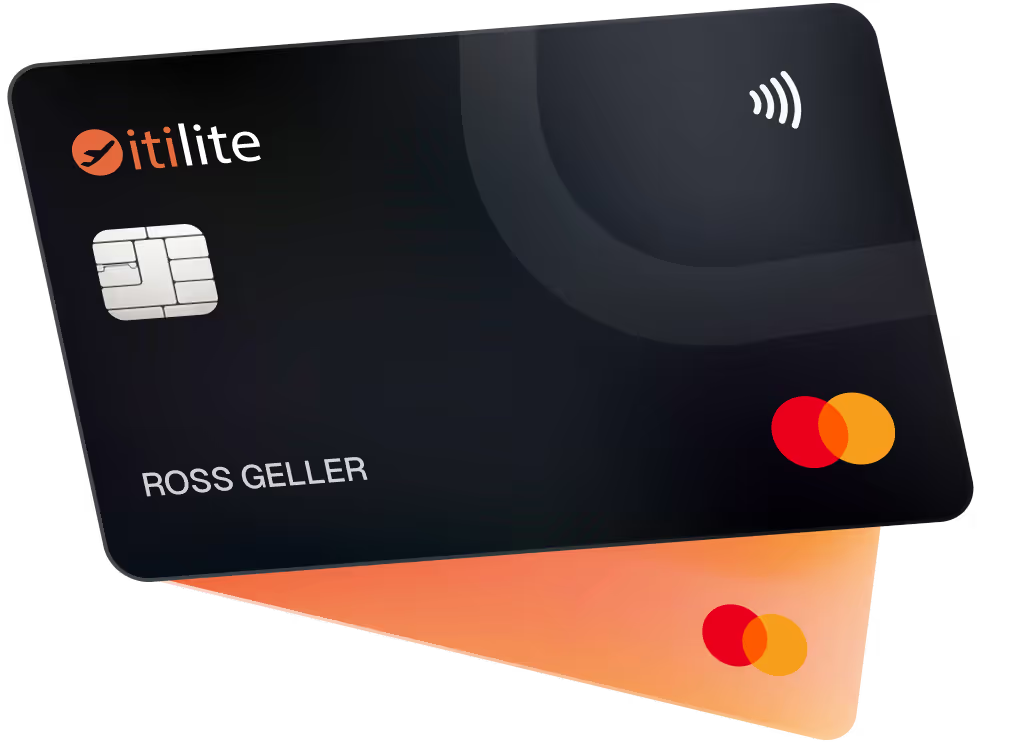
One of the major alternatives to the Amex Corporate Card is the itilite Corporate Card. This card has multiple benefits, making it the ultimate solution for corporate spending.
- Up to 2.5% combined cashback: Corporate card spend and ITILITE travel bookings combine into a single cashback rate, with no points system or conversion rates in between.
- Direct Cash Transfer to Company Account: Say goodbye to waiting for rewards to accumulate. The cashback is directly transferred to your company account without any hassle.
- Issue Unlimited Cards for All Corporate Payment Needs: Streamline your corporate payment process effortlessly. Itilite allows you to issue unlimited virtual and physical cards at no extra cost, ensuring all your employees' payment needs are met efficiently.
- Central Card Payments for Simplified Expense Management: Take control of your expenses with the software’s centralized card payments. Manage all your travel payments through one convenient card, eliminating Amex corporate card disadvantages and out-of-pocket expenses for employees and tedious reimbursement processes.
- Real-Time Visibility for Enhanced Cash Flow Management: Stay on top of your finances with real-time monitoring of card limit usage and expenses. itilite provides instant visibility, empowering finance teams to optimize cash flow and budget effectively.
Best for: Best where travel is the bulk of employee spend, since the cashback case combines card and travel. Narrower fit for companies whose spend is mostly non-travel.
4. Ramp
Ramp pairs a corporate card with spend management, bill pay, procurement and travel, which makes it one of the broader options here. Like Brex, it underwrites on business financials rather than a personal guarantee.
How it differs from Amex:
- Flat cashback on all spend rather than category multipliers and points
- Unlimited physical and virtual cards with controls set per card
- Procurement requests approved before money is committed
Watch for:
- Breadth is the selling point and the risk: teams that only need a card pay attention to features they will not use
- Travel booking sits alongside a managed travel programme rather than replacing one
Best for: Best for broad spend control across cards, bills and procurement. More product than a card-only buyer needs.
Group 2: small business cards
These are business credit and charge cards issued against the owner's personal credit, with a personal guarantee attached. They are a genuine option for a small company leaving Amex, and they are not a replacement for a corporate card programme. Read the distinction above before treating these as equivalent. For a fuller comparison of this group, see the corporate credit cards for small businesses breakdown.
5. Capital One Spark Cash Plus
The Capital One Spark Cash Plus stands out as a business credit card with a simple rewards structure. Notably, it operates as a charge card, requiring cardholders to settle their balance monthly.
Annual Fee: $150
Pros:
- Unlimited Rewards: Benefit from earning a flat 2% cash back on all business purchases without any restrictions or earning caps. Additionally, enjoy a 5% cash back on hotel and rental car bookings made through Capital One Travel, adding value to your spending.
- $1,200 Cash Bonus: Receive a one-time cash bonus of $1,200 when you spend $30,000 within the initial 3 months of card membership, giving you a boost in rewards as you begin using the card.
- Flexible Spend Capacity: With Spark Cash Plus, you can adapt your spending capacity to suit your business needs. There's no preset spending limit, and your capacity adjusts based on your spending behavior, payment history, and credit profile, offering flexibility and assurance.
Cons:
- Rewards Redemption Limitations: While the card offers flexible redemption options, including cash back and travel purchases, there may be limitations or restrictions on redeeming rewards.
- The annual fee is a meaningful cost for businesses with conservative spending, the same objection people raise about Amex.
- Failure to pay your credit card statement in full each month will incur a monthly late fee of 2.99%.
Best for: A small business charge card, personally guaranteed. Not a like-for-like replacement for a corporate card programme.
6. Capital One Venture X Business
Operating as a charge card, Capital One Venture X Business offers boundless spending freedom without a predefined limit. However, settling the balance in full each month is mandatory.
Annual Fee: $395
Pros
- Enhanced Mileage Rates Through Capital One Travel: By booking travel through Capital One Travel, cardholders can earn even more miles. Enjoy 5X miles on flights and an impressive 10X miles on hotel and rental car bookings, making it easier to earn rewards for business travel expenses.
Cons:
- Challenging Welcome Bonus Requirements: While the welcome bonus for the Capital One Venture X Business card can be enticing, achieving the full bonus may prove to be exceptionally difficult for some cardholders.
- High Annual Fee: The card comes with a substantial annual fee of $395, which may deter businesses with lower spending volumes or tighter budgets.
Best for: A small business charge card with a travel-rewards focus. The annual fee needs real travel volume to pay back.
7. Chase Ink Business Cash Card
The Ink Business Cash Card is a cash-back card with no annual fee and 0% APR on purchases for the first 12 months.
Annual Fee: $0
Pros
- No Annual Fee: The absence of an annual fee reduces the overall cost of ownership, making it a budget-friendly option for businesses looking to maximize rewards without incurring additional expenses.
- Bonus Cash Back Categories: Enjoy bonus cash back rewards on purchases made at office supply stores, as well as on internet, cable, and phone services. This provides businesses with opportunities to earn extra rewards on essential expenses.
- Valuable Transferable Rewards: The ability to transfer rewards to other Chase Ultimate Rewards accounts or redeem them for travel through the Chase Ultimate Rewards portal adds flexibility and value to the rewards program, allowing businesses to maximize their benefits.
Cons:
- Requires Another Chase Card to Maximize Value: To fully maximize the rewards potential of the Ink Business Cash Credit Card, businesses may need to pair it with another Chase credit card. This requirement adds complexity and may not be suitable for all businesses.
- Low Rate Outside Bonus Categories: While the card offers bonus cash back in specific categories, the cashback rate on purchases outside of these categories may be lower, reducing the overall rewards potential for businesses with diverse spending patterns.
- Spending Caps on Bonus Rewards: The Ink Business Cash Credit Card imposes caps on bonus rewards categories, limiting the amount of cashback businesses can earn on eligible purchases. Once these caps are reached, the cashback rate may revert to the standard rate, reducing overall reward potential.
Best for: A small business credit card, personally guaranteed, with rewards capped by category.
8. Chase Ink Business Unlimited Credit Card
Annual Fee: $0
Pros
- No Annual Fee: Enjoy the benefit of using the Chase Ink Business Unlimited Credit Card without the burden of an annual fee, allowing you to maximize your rewards without any extra cost.
- Generous Sign-Up Bonus: The current sign-up bonus offers an opportunity to earn $750 in cash back after spending $6,000 on purchases within the first three months of card membership.
Cons
- Foreign Transaction Fees: The Chase Ink Business Unlimited Credit Card charges a 3% foreign transaction fee on purchases made outside of the United States. This fee can add up quickly for businesses with international transactions, potentially offsetting some of the card's rewards.
- No Introductory APR on Balance Transfers: Unlike some other credit cards, the Chase Ink Business Unlimited Credit Card does not offer an introductory APR on balance transfers. This means that if you need to transfer existing debt to the card, you won't benefit from a promotional period with lower or 0% interest rates, potentially limiting its usefulness for debt consolidation or repayment strategies.
Best for: A small business credit card, personally guaranteed. Foreign transaction fees make it a poor fit for international travel.
Not sure which Amex card you have?
The list above splits by card type, so it is worth being certain which product you are replacing before you shortlist. Corporate and Business are different cards, and the difference is not the size of the company using them. It is who is liable if the bill is not paid.
An Amex Business Card is issued to you against your personal credit, with a personal guarantee. If the company cannot pay, you can be pursued personally. An Amex Corporate Card is part of a commercial programme: liability sits with the company, approval rests on company financials rather than your credit file, and there is normally a minimum size or spend requirement to qualify at all.
That single difference cascades into everything else.
The structural differences above hold across commercial card programmes generally. Specific Amex terms, thresholds and fees change, so confirm the current position with Amex before deciding.
Which one do you actually have? If you applied yourself, signed a personal guarantee and receive a statement in your own name, it is a Business Card. If your company enrolled you, finance receives consolidated reporting and you never had a personal credit check, it is a Corporate Card. This matters before you shop for alternatives, because the two have different replacements.
What about the no-annual-fee question?
Amex Corporate Card fees are set at programme level rather than published, so "no annual fee" is a negotiation on that side rather than a product feature. On the business card side, no-fee options do exist, and both Chase Ink cards in group 2 below carry a $0 annual fee.
The trade is straightforward. A no-annual-fee business card means a personal guarantee and per-card statements. A corporate programme with negotiated fees means company liability and consolidated controls. Decide which of those two you are optimising for before comparing headline rates.
How to choose between them
Work backwards from which of the three objections above actually applies to you.
- If approval was the blocker, the corporate programmes in group 1 underwrite differently from a traditional issuer, which is usually the whole reason they exist. Ask what the underwriting looks at before applying.
- If cost was the blocker, compare the total of annual fee, foreign transaction fees and any per-card charges against the rewards you realistically earn, using last year's actual spend rather than a projection. A no-annual-fee card with lower rewards frequently wins that arithmetic.
- If control was the blocker, a card alone will not solve it. What you need is spend controls applied before the transaction, which is the defining difference between group 1 and group 2. That is also the distinction worth pressing any vendor on: does the platform block an out-of-policy purchase, or report it afterwards?
Where travel is the bulk of employee spend, the calculation changes again, because card cashback and travel savings stack. That is the specific case the ITILITE corporate card is built around, sitting alongside its expense management so card transactions and trip costs reconcile in one place rather than two. For the wider context on why card choice and travel programme interact, corporate business travel cards covers the mechanics, and if you are comparing spend platforms rather than cards, the Ramp alternatives breakdown covers that side.
Verify terms before you apply. Every fee, bonus and cashback rate in this article comes from published card terms that change without notice. Treat them as a starting point for a shortlist, not as current pricing.
FAQ
What is the difference between an Amex Corporate Card and an Amex Business Card?
A Corporate Card is a commercial programme: liability sits with the company, there is no personal guarantee, and approval depends on business financials and spend volume. A Business Card is issued against the owner's personal credit with a personal guarantee. They are different products, and their alternatives are different too.
What are the best alternatives to the Amex Corporate Card?
For a like-for-like replacement, the corporate card programmes are Brex, Ramp, BILL Spend & Expense and ITILITE. All four carry company liability rather than a personal guarantee and include spend controls. Chase Ink and Capital One Spark are alternatives only for a small company willing to sign a personal guarantee.
Why is the Amex Corporate Card hard to get approved for?
Amex applies a higher approval bar than most issuers, weighing credit history and business financials, which is difficult for younger companies without an established record. Card platforms that underwrite on cash balances and revenue rather than credit history are usually the practical route for companies that get declined.
Can a small business credit card replace a corporate card programme?
Not really. A small business card carries a personal guarantee, so the owner is liable if the company cannot pay, and it lacks the pre-purchase controls and multi-cardholder management a corporate programme provides. It works for a small team, not for a finance function managing spend across departments.
Do Amex Corporate Card alternatives offer better rewards?
Sometimes, but rewards are the wrong first question. Flat-cashback cards beat Amex on simplicity and often on no-annual-fee terms, while Amex points can be worth more if you use the transfer partners. Compare against your actual spend from last year rather than the headline rate.
What should you check before switching corporate card providers?
Check liability structure, whether a personal guarantee is required, foreign transaction fees, whether spend controls apply before or after purchase, how the card reconciles into your accounting system, and what happens to any rewards balance you leave behind.
Is there an Amex corporate card with no annual fee?
Corporate programme fees are negotiated at programme level rather than published per card, so a no-fee arrangement is a commercial conversation with Amex rather than a product you apply for. If a published $0 annual fee is the requirement, the no-fee options are business cards, which carry a personal guarantee in exchange.
How do I know whether I have an Amex Corporate or Business card?
If you applied yourself, signed a personal guarantee and receive a statement in your own name, it is a Business Card. If your company enrolled you, finance receives consolidated reporting and you were never personally credit-checked, it is a Corporate Card. The distinction decides which alternatives are relevant.

Keyzer is a content writer with 4+ years of experience in content writing and marketing. With a background in engineering and hands-on experience in B2B SaaS, she enjoys working on topics that sit at the intersection of technology and business.
She writes about low-code development, AI, corporate travel, and expense management, with a focus on making complex ideas simple and easy to understand. Her approach is practical and clear, helping readers quickly grasp what matters.
Combine card cashback with travel savings
A fully integrated corporate travel management software that dramatically reduces spends while improving user experience