
Ramp is undeniably a powerhouse. It reinvented the corporate card stack, making it easy for finance teams to issue cards, control spend, and automate the boring parts of closing the books. They’ve since bolted on bill pay and procurement, creating a financial operating system that is genuinely impressive. Ramp is a no-brainer for a hyper-growth startup or a finance-led organization. It is fast, slick, and offers the kind of “price intelligence” that makes CFOs smile.
But not everyone needs a “finance-first” platform in 2026. Plenty of teams need a tool that handles actual business travel, not just paying for it, but managing the chaos that comes with it.
If that sounds like you, this guide is for you. We’re breaking down the best Ramp alternatives in 2026, from unified travel, expense, and card platforms built for control.
Comparing Ramp with it’s top alternatives, at a glance:
| Platform | Key Difference v/s Ramp | Pricing Model | Customer Support |
|---|---|---|---|
| Ramp | N/A | ~$15 / user / month + platform fees | N/A |
| ITILITE | – Inhouse Travel Platform – Accrue Loyalty points on Travel Bookings – Unlimited, Instant, $0 Customer Support – Flat Per trip or Per user price, no add on pricing | Travel: $10 / trip Expense: $9 / user / month Unlimited Support, No platform fees | – 24/7 by phone, chat, email – Guaranteed 10s response time – Human support, every time |
| Brex | Offers Flexible banking setups | $12 / user / month | 24/7 live support available via chat, email, phone |
| Navan | Inhouse Travel platform with savings incentive and rewards | Expense: ~$15 / user / month Travel: Contact sales team | 24/7 support assisted by AI bots |
| Expensify | Quick and easy to use, especially for SMBs | $5 – $9 / user / month | – 24/7 in-app support via its AI-augmented “Concierge,” – Live Human Escalations |
| BILL Spend and Expense | Offers flexible credit lines and programs for businesses with less cash history | Free | Live support only in working hours |
| SAP Concur | Complex Audit and Compliance Controls | Expense: per report pricing model | 24/7 Support. Handled by either Concur or TMC |
| Sage Expense | Direct Bank connections via APIs | $12 – $15 / user / month | 24/7 Support via email and call |
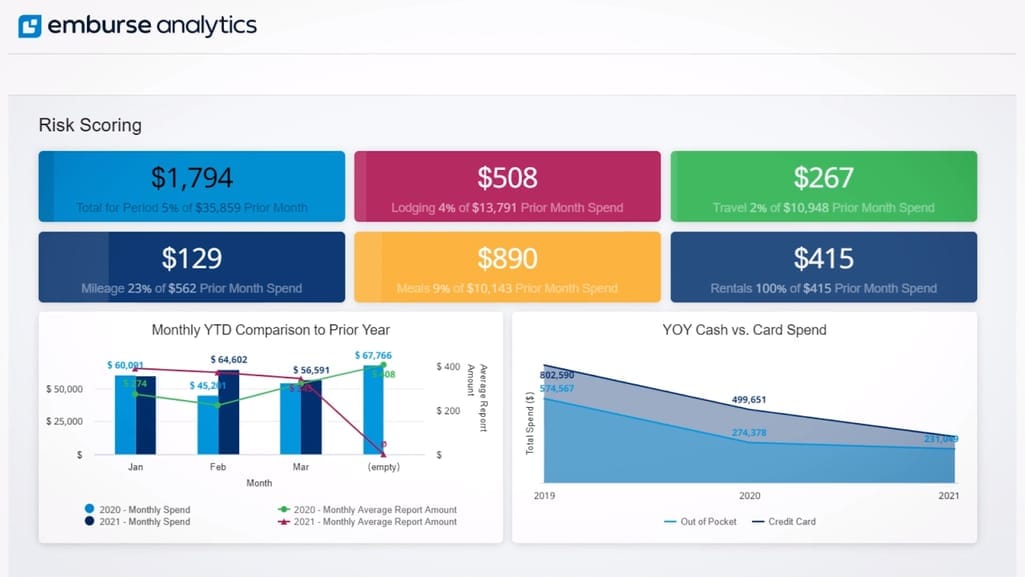
| Emburse | Create Deep and complex expense workflows | Tiered Plans | 24/7 Support. Unclear whether human or bots |
| Spendesk | Built for EU complexity | Custom Pricing | Live Support during CET |
| Coupa | Handles overall Procure-to-pay process | Contact Sales | Support is via online ticket portal, phone, email, and chat |
Why companies explore Ramp alternatives?
Ramp is excellent at issuing cards and syncing expense data. But for many growing teams, the cracks start to show when those cards interact with the messy reality of the real world. Here are the three main reasons teams eventually look for an alternative:
1. Transaction Decline Issues:
- Users frequently report getting stuck in loops. In decline scenarios, Ramp cards can get flagged as unusual activity. It might happen multiple times, even after the customer responds to fraud alert. After which, you need to escalate it to Ramp Support.
- According to G2 data, nearly 5% of all user reviews specifically flag card issues, ranging from random declines to currency blockers that leave employees stranded.
2. Non-Native Travel Offering:
- Because it relies on consumer inventory (Priceline) for its business travel offering, you miss out on the deep negotiated corporate rates and specialized inventory that native platforms offer.
- Users report getting stuck in the middleman trap. If a flight is cancelled, the airline tells you to call Priceline, and Priceline tells you to call the airline. You don’t have a dedicated agent to fix it, you just have a consumer support number.
3. Support Issues:
- Support is heavily reliant on chat bots and tickets. Real-time help is often limited to US eastern business hours.
- If your employee is stuck in a hotel lobby in Singapore at 3 AM with a payment issue, they don’t have a direct line to a human who can fix it instantly. They have a ticket number.
What are the 10 best Ramp alternatives?
1. ITILITE
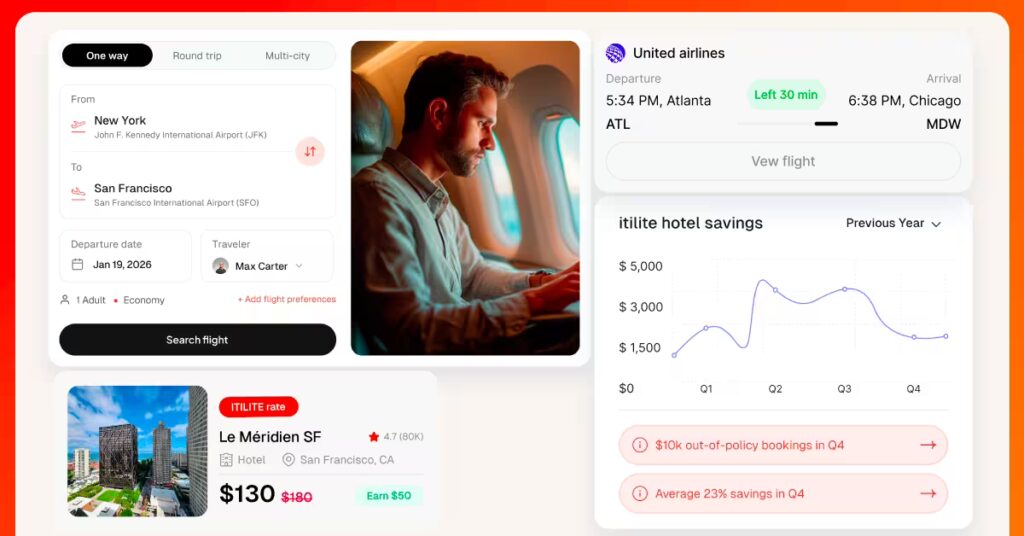
ITILITE is one of the leading platforms offering Expense, Corporate Cards, and Business Travel – all under one platform. Unlike Ramp, which mainly offers Expense Management and cards, ITILITE provides the entire unified stack in one verified loop.
Key features of ITILITE:
- Corporate cards cashback: Industry-leading rewards with up to 2.5% Cashback on all spends made via the ITILITE corporate card.
- Integrations: ITILITE integrates with any ERP, HRMS, Expense, or SSO system of your choice. Users have expressed delight when syncing expense and travel data with major systems like NetSuite, Oracle, Microsoft Dynamics, and SAP, ensuring data flows without manual intervention.
- Instant reconciliation: Every card swipe gets instantly tagged to the right General Ledger (GL) code according to your ERP rules. This ensures accountants spend zero time reconciling expenses during month-end closes.
- AI-powered travel platform: ITILITE offers a consumer-grade travel booking experience with 20%+ discounted rates and proprietary AI agents (Iris and Mastermind) that power seamless approvals, group bookings, and advanced spend insights.
What are the key differences between ITILITE and Ramp?
- ITILITE offers 24/7 support with under 10-second response times. Users never have to worry about failed transactions or being stranded in urgent situations. Ramp’s support is often limited to business hours, users may struggle in case of after-hours requirements.
- ITILITE’s integrations, especially with NetSuite, are top-notch. Transactions made on the ITILITE card flow smoothly into the ERP, accurately categorized and audit-ready, solving the sync errors common with other tools.
- With ITILITE bookings, users can accrue their loyalty points across airlines, hotels and rental cars. This is not possible with Ramp as all travel in its case is booked via Priceline.
- ITILITE offers a transparent flat fee with no hidden platform, integration, or support fees. In contrast, while Ramp markets itself as free, advanced controls (such as custom travel policies, integrations with specifc ERPs / HRMS) may often sit behind the paywall.
ITILITE Pricing:
- $10 per trip for travel
- $9 per user for expense.
- No additional platform, integration, or support fees. Check detailed pricing.
Choose ITILITE if: You want a single platform that manages the entire lifecycle of a business trip, i.e., booking, paying, and expensing, without forcing your employees to debug travel issues with a bot.

2. Brex
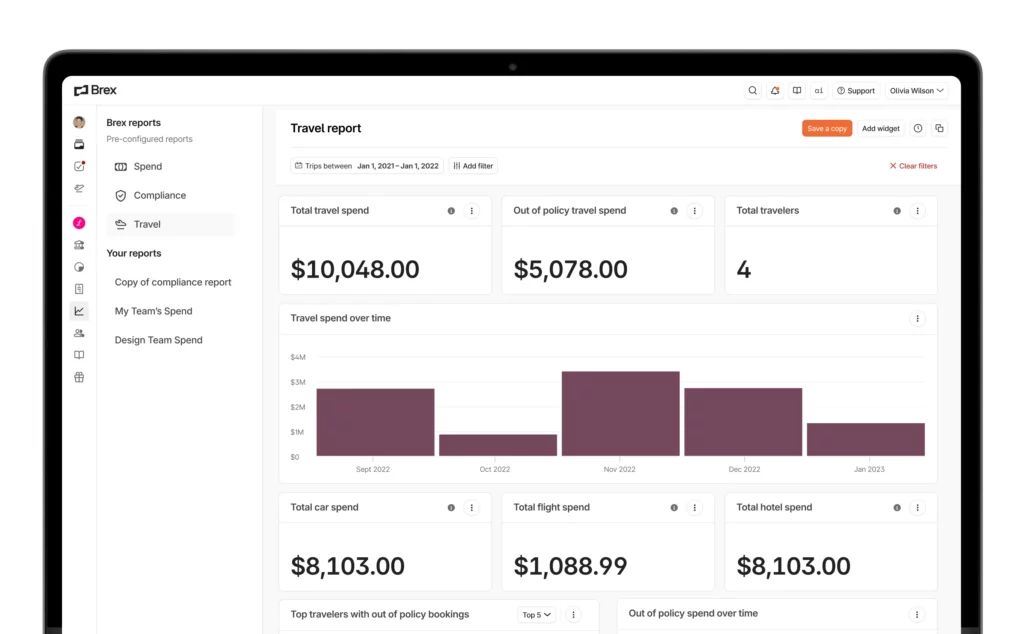
Brex is the closest direct rival to Ramp, but with a different philosophy. It is built as a “banking-first” platform, offering high-limit corporate cards and treasury accounts designed to replace your traditional bank entirely.
Key features of Brex:
- Travel infrastructure: Brex launched a travel booking tool in March 2023, built on the Spotnana infrastructure. It offers basic corporate travel booking capabilities. It functions more as an add-on to their banking stack rather than a dedicated TMC.
- Expense management: It offers treasury accounts, high-yield storage, and corporate cards in one ecosystem.
- Integrated banking: Brex brings saving, spending, and cash growth into one unified business account, with competitive yields and built-in bill pay for faster international payments.
What are the key differences between Brex and Ramp?
- Brex offers more flexibility in banking setups, whereas Ramp is more opinionated around its own card ecosystem.
- Brex has a documented history of abruptly closing accounts for small businesses they deem “too small” (the famous “SMB Purge”), often with zero warning. Ramp has remained stable for SMBs.
- Ramp is generally praised for reliability. In contrast, some former Brex customers have flagged concerning security practices, citing instances where support agents provided sensitive account info to staff members who did not pass verification protocols.
- Ramp is known for its “set it and forget it” ERP sync. Brex users frequently report needing to manually intervene to prevent duplicate entries in QuickBooks.
Brex Pricing:
- $12 / user / month, Free plan available.
Choose Brex if: You are a funded startup that needs a complete banking replacement and high credit limits and you are confident you won’t get “purged” for being too small.
3. Navan
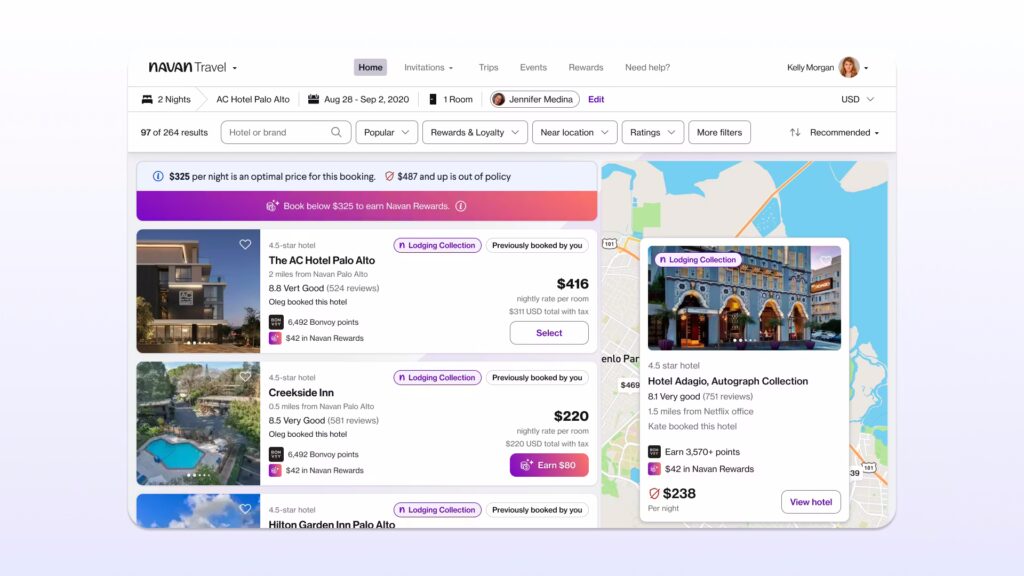
Navan (formerly TripActions) is visually pleasing. It prioritizes User Experience (UX) combining a slick, consumer-grade mobile app with expense automation. It gamifies saving money. If an employee books a cheaper hotel than the policy allows, they earn rewards.
Key features of Navan:
- Travel platform: End-to-end booking and trip changes with a gamified rewards system, policies and approvals.
- Reward points: Navan lets users accrue their loyalty points on their favorite airlines / hotels.
- Seamless Expense process: You get automatic expense creation and instant reconciliation.
- Great user experience: Users admire the sleek and modern nature of the travel platform.
What are the key differences between Navan and Ramp?
- Navan provides a more complete travel program with deeper inventory, but its support relies heavily on AI agents Users report that getting a human during complex disruptions is difficult. Ramp is strictly a card-first platform with partner-based travel support.
- Ramp is stronger for card-based spend controls and price intelligence. Navan focuses heavily on travel-based spend and gamification.
- Ramp is praised for card stability. Navan users have flagged reliability issues with cards declining during travel and the friction of the aggregator booking model.
Navan Pricing:
- $15 per month per user for expense.
- For travel, you need to contact sales team
Choose Navan if: You want a beautiful interface that your employees will actually enjoy using, and you are comfortable resolving most support issues via self-serve / AI chat.
For teams considering Navan as a Ramp replacement, our dedicated Navan alternatives comparison covers pricing, support model, and savings in more detail.
4. Expensify
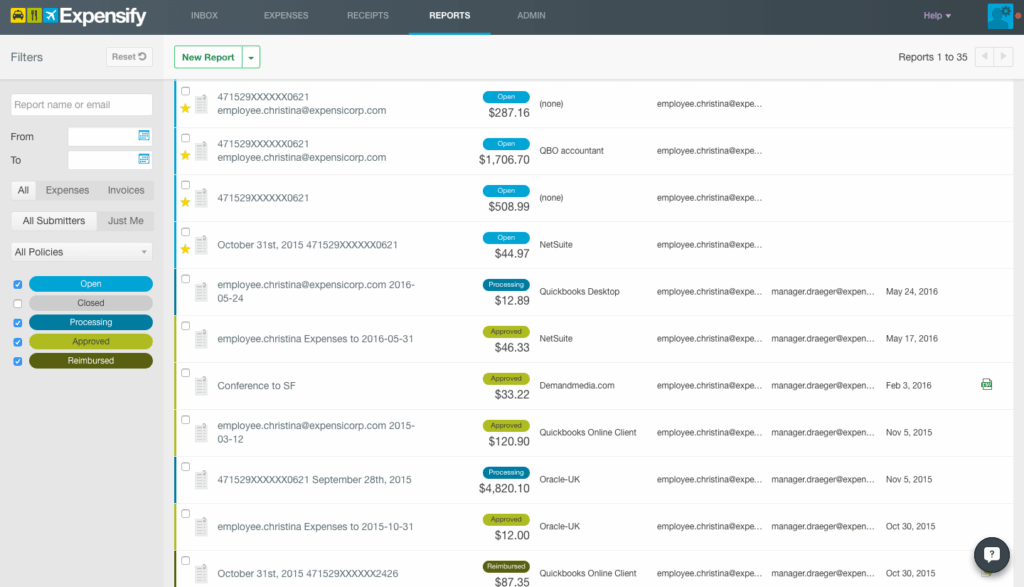
Expensify is the brand everyone knows. It started as a receipt scanner and grew into a full expense management tool. Expensify is still a strong contender, if you want to snap a picture and be done with it.
Key features of Expensify:
- Simple and easy to use: Expensify is built for speed. As one 30-year veteran noted, it is “hands down the simplest expense system I have ever worked with.”
- Feature rich expense management: It excels in expense management and reimbursement workflows. They combine industry-leading receipt scanning (“SmartScan”) with customizable workflows and multi-GL coding for deep accounting control.
- Great for SMBs and growing businesses: Works best for teams of small sizes. However, scaling teams often find it overwhelming. Verified reviews describe the interface as cluttered, inconsistent making navigation a test of patience.
What are the key differences between Expensify and Ramp?
- Expensify is optimized for freelancers and micro-teams. Ramp is built for scaling companies and finance teams that need granular control, not just receipt storage.
- Ramp is has many features in the free tier. Expensify users frequently report “billing traps. Sometimes a lot of back and forth is needed to close an account, or subscriptions upgraded without notification
- Ramp offers consistent support. Expensify relies on “Concierge” (a bot/human hybrid). Users report waiting days for generic replies, where support is unavailable outside US hours.
Expensify Pricing:
- $5–$9 per user/month, Free plan available.
Choose Expensify if: You are a very small business (SMB) or freelancer with low transaction volume, and you want to bring your own credit card (Amex/Chase) rather than switching banks.
5. BILL Spend & Expense (formerly Divvy)
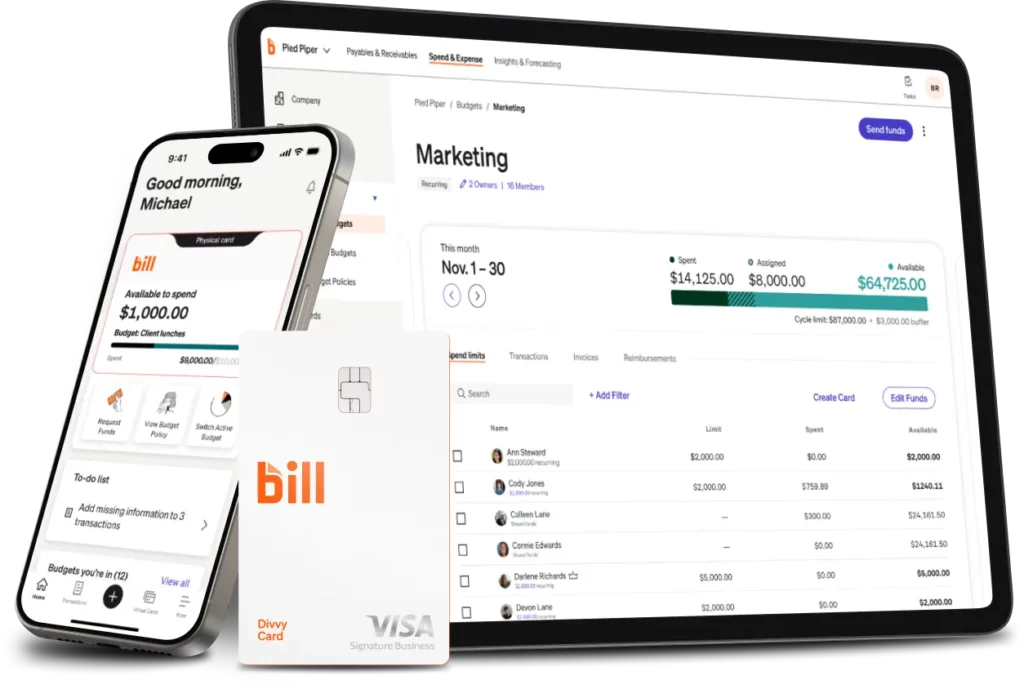
BILL (formerly Divvy) is a close alternative. Like Ramp, they provide corporate cards and expense software for free, monetizing through interchange fees. However, BILL leans heavily into Accounts Payable (AP) and Credit Building, making it the go-to choice for smaller SMBs or startups that might not qualify for Ramp’s strict cash-balance underwriting.
Key features of BILL:
- Underwriting: BILL’s standout feature is its underwriting flexibility. While Ramp typically demands a healthy cash balance for approval, BILL offers “credit builder” lines for bootstrapped businesses.
- Budgeting: Users consistently praise the budgeting tools. The transparency allows them to “get out of the procurement business almost entirely.
- Integrations: Verified reviewers highlight the seamless sync with QuickBooks. Thus, transactions flow over automatically, keeping books spotless and audit-ready.
- Invoicing: BILL is the industry standard for paying invoices. If your finance team already lives in BILL for AP, adding the expense product is a natural upgrade.
What are the key differences between BILL and Ramp?
- BILL offers flexible credit lines and programs for businesses with less cash history. Ramp is stricter, typically requiring high cash balances for approval.
- Ramp waives foreign transaction fees. BILL typically charges standard FX fees. If you have international spend (travel or software), Ramp is significantly cheaper.
- Ramp is praised for consistent, unified support. BILL users report that support can be “fairly siloed,” leading to frustration when issues cross between the AP and Expense modules.
BILL Pricing:
- Free (Interchange Fees).
Choose BILL if: You need to build business credit, want robust AP automation for a small team, and you don’t have a heavy volume of international travel.
6. SAP Concur
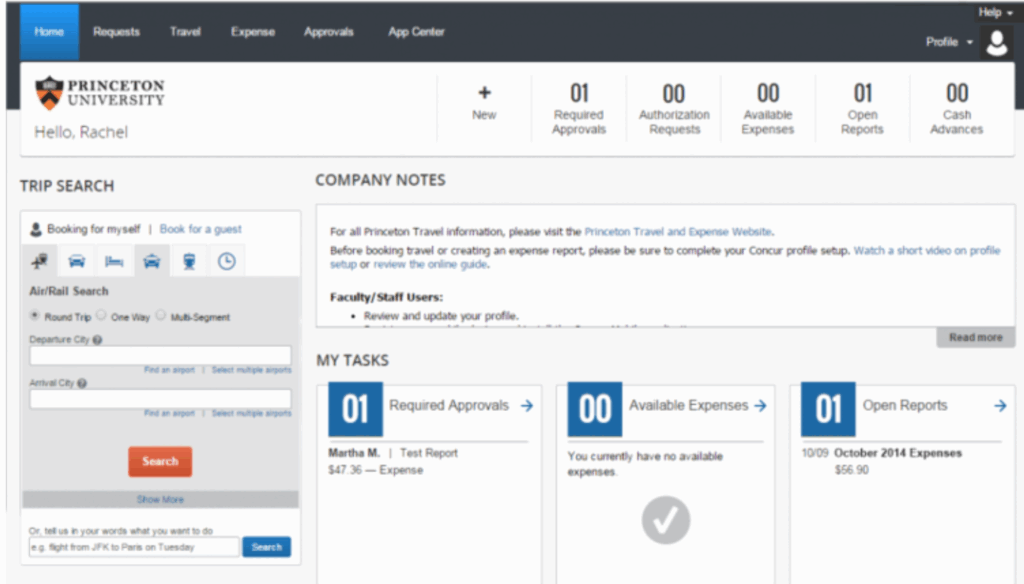
SAP Concur is the heavyweight of the sector. It is built for the Fortune 500, where managing complex global policies and risk takes precedence over having a lightweight user interface. Concur is built for control. It manages complex tax rules, per diems, and duty-of-care requirements seamlessly. It integrates with your existing bank program (Amex, Visa, Mastercard), which is crucial for large orgs with established banking relationships.
Key features of SAP Concur:
- Integrations: Its superpower is the ability to integrate with virtually any ERP (especially SAP and Oracle) and bank program.
- Audit and compliance: It excels at complex audit controls and statutory compliance that lighter tools often miss.
While powerful, the interface can feel “heavy and slow to adopt”, and hence Concur users usually shop for alternatives quite quickly after starting up. Verified reviews often contrast it with modern tools like ITILITE or Ramp, noting that Concur requires more clicks and training to navigate effectively.
What are the key differences between Concur and Ramp?
- Concur supports complex compliance needs and is a good fit for large enterprises. Ramp is easier to use but less configurable for complex global setups.
- SAP Concur does not issue its own branded corporate card like ITILITE or Ramp. It manages and integrates with corporate card programs. Ramp forces you to switch to their card; Concur lets you keep your existing bank relationship.
- Ramp is modern, fast, and self-serve. SAP Concur, as users often mention has an “outdated“ interface.
SAP Concur Pricing:
- Custom Pricing
Choose SAP Concur if: You are a global enterprise, you prioritize rigid compliance over user happiness, and you have a budget for implementation consultants.
7. Sage Expense (formerly Fyle)
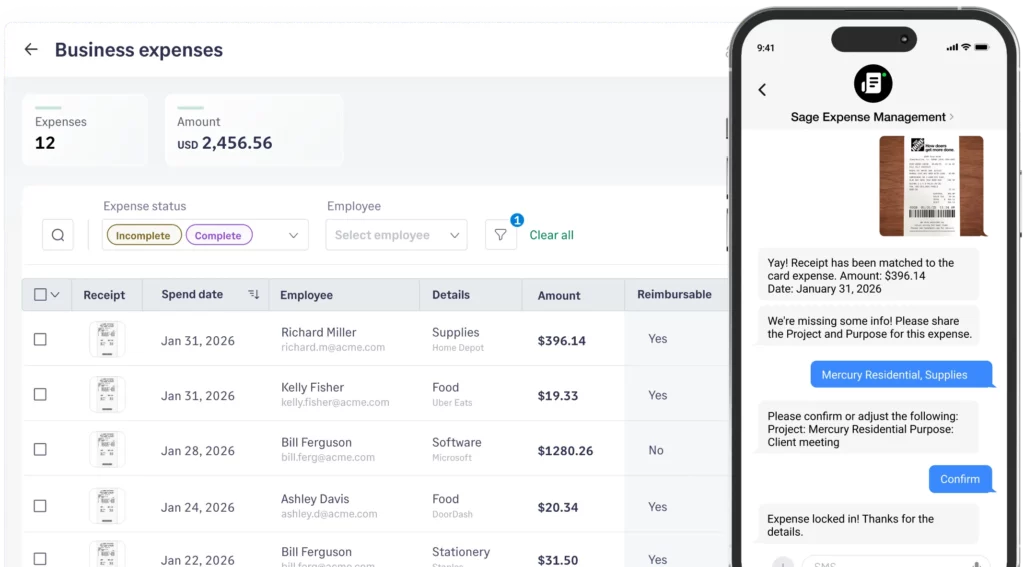
Most modern expense platforms (like Ramp and Brex) rely on a simple trick: they force you to use their corporate card so they can see the transaction data in real-time. Sage Expense (formerly Fyle) is the only player that fixed this broken API layer. They built direct integrations with Visa, Mastercard, and Amex to give you Real-Time Feeds (RTF) on the cards you already have in your wallet.
Key features of Sage Expense:
- Recept upload: You swipe your card, get a text, reply with a photo, and you’re done
- Integrations: Users note the Google Maps integration is a “huge time-saver,” automatically calculating distances and rates for reimbursement.
- Bank APIs: Direct API connections with Visa/Mastercard/Amex mean you get “instant receipt matching” without switching banks.
What are the key differences between Sage and Ramp?
- Sage Expense lets you “Bring Your Own Card”. Ramp requires you to switch to their card ecosystem.
- While employees love the text features, verified reviews warn that the admin setup can feel overwhelming at first because of the number of features. Ramp is generally faster to deploy and more intuitive for admins.
- Unlike ITILITE or other enterprise tools, there is no phone number for customer support. This is a friction point compared to Ramp’s generally responsive support.
Sage Pricing:
- $11.99 – $14.99 per user/month (Growth Plan).
- $14.99-$17.99 per user/month (Business Plan).
Choose Sage Expense if: You refuse to give up your existing corporate card program but still want the instant receipt matching automation that modern fintechs offer.
8. Emburse (Certify & Chrome River)
Emburse is a portfolio of different tools (Certify, Chrome River, Abacus) rolled into one brand. While Ramp is a “one-size-fits-all” platform, Emburse allows you to pick a specific product (like Chrome River) that is tailored to complex enterprise needs.
Key Features:
- Granular configurations: From UDAs, Workflow, to Export configurations, you have full control over configuration of everything.
- Quick reimbursements: Users praise the automation shortening reimbursement times and making attorneys and staff happier.
- Analytics: The Emburse Analytics portal allows stakeholders to build custom dashboards that save AP teams hours of manual work.
What are the key differences between Emburse and Ramp?
- Emburse allows for deep, complex workflow. Ramp is easier to use, but harder to bend to unique rules.
- Emburse is card-agnostic but also offers virtual cards. Ramp requires you to move to amp cards to enjoy full benefits.
Emburse Pricing:
- Tiered Plans
Choose Emburse if: You are a mid-market or enterprise company (500+ employees) that needs complex, custom workflows (like grant tracking or multi-entity routing) that Ramp’s “out-of-the-box” model can’t handle, and if business travel is not your main requirement for forseeable future.
9. Spendesk
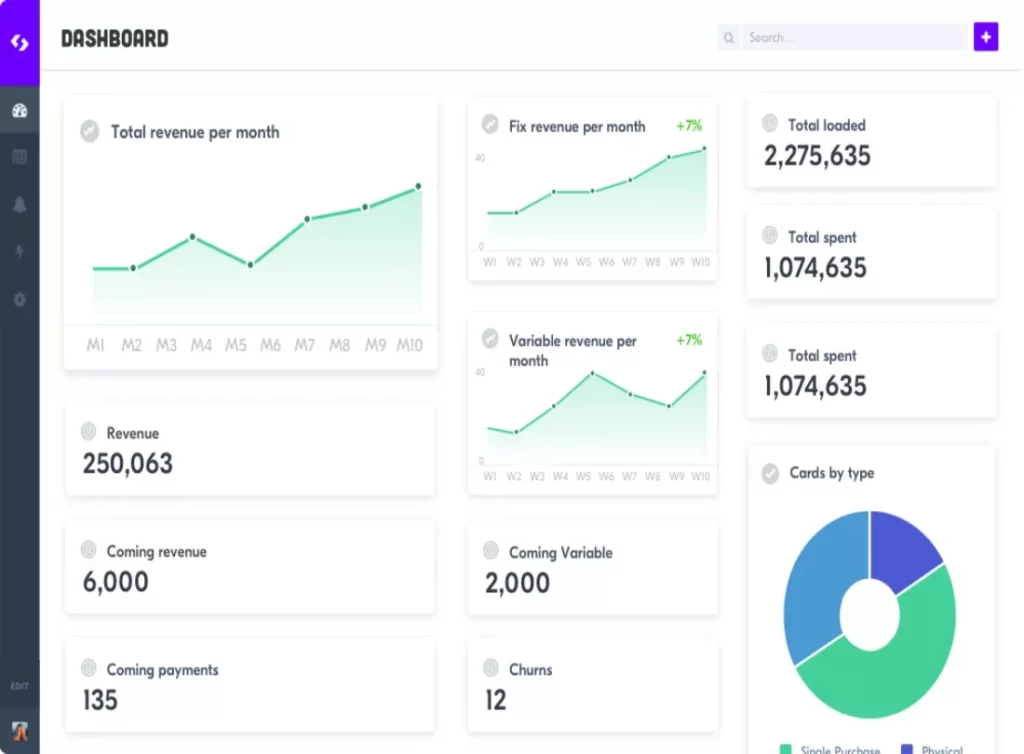
Spendesk positions itself as a 7-in-1 spend management platform, combining corporate cards, invoice processing (AP), expense reimbursements, and budgeting into one CFO suite. If you have a European entity, this is likely the first name you will hear.
Key Features of Spendesk:
- Visibility: Spendesk sells total visibility. Instead of disjointed tools, you get one dashboard for everything.
- Receipt scanning: Users consistently praise the mobile app with its smart receipt scanning and detection.
- Spend v/s budget tracking: Unlike simple card tools, Spendesk allows for “pre-approved” budgets. Managers can see exactly what their team has left to spend in real-time.
What are the key differences between Spendesk and Ramp?
- Spendesk is built for the complexity of EU compliance (VAT, per diems, DATEV integration). Ramp is US-centric and excels with US ERPs (NetSuite, QuickBooks, etc).
- Spendesk is a broader “CFO suite” that includes heavy procurement and AP workflows. Ramp is stronger for card-based spend controls and price intelligence.
Spendesk Pricing:
- Custom Pricing
Choose Spendesk if: You are a European-headquartered company (especially in France/Germany) that needs a single tool for AP and expenses, and you use a local ERP like DATEV (rather than NetSuite).
10. Coupa
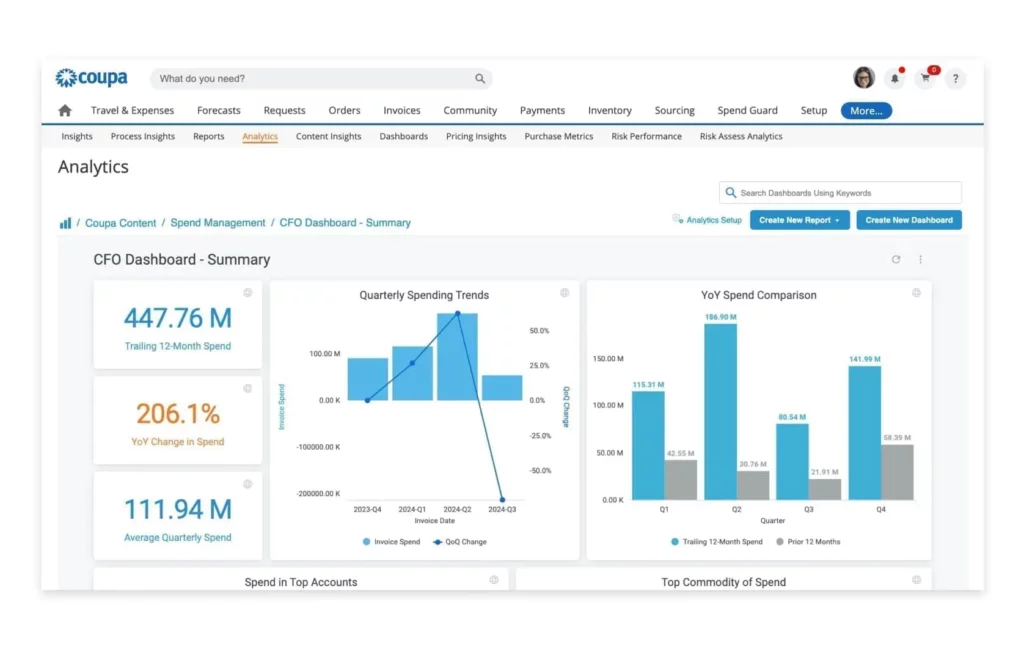
Coupa is the “big gun” for procurement. While most tools on this list started as expense cards and added some procurement features later, Coupa was built for complex purchasing from day one.
Key Features of Coupa:
- Complete spend management platform: Coupa sells the dream of “Business Spend Management” (BSM), one platform for everything from buying office supplies to managing multi-million dollar contracts. For large enterprises, having AP, Procurement, and Expenses in one database is valuable. Users appreciate the “single point visibility” across all spend types.
- Complex procurement workflows: According to users, it handles the entire life cycle of a purchase from sourcing to payment. It is something lightweight tools like Ramp simply can’t do.
What are the key differences between Coupa and Ramp?
- Coupa is Procurement-first (POs, Supply Chain, Invoicing). Ramp is Card-first (T&E, Virtual Cards).
- Ramp pays vendors directly (they don’t need a login). Coupa forces vendors into a portal, which adds friction.
- Coupa does not have a native travel booking engine. You have to integrate a third party. Ramp has a basic travel portal; Navan/ITILITE have full TMCs.
Pricing:
- Contact Sales for pricing
Choose Coupa if: You are a large enterprise where complex Procurement and Supply Chain management is 90% of your problem, and employee expenses are just an afterthought.
Conclusion: Which Ramp Alternative is Right for You?
Ramp is fantastic for financial speed, but “fast” isn’t the only metric that matters. The right alternative depends on why you are looking elsewhere.
- Need a banking replacement? Brex is the logical choice, if you can accept the operational risks.
- Just need to scan receipts? Expensify is still the simplest tool for freelancers and micro-teams.
- Need enterprise-grade compliance? SAP Concur or Coupa remain the heavyweights for complex, multinational control.
But if you want to solve the entire Travel & Expense and Cards puzzle (booking, paying, reconciling), all in one place, ITILITE stands alone.
Book a demo with ITILITE today and experience T&E where everything finally works together.