
Corporate Card Expense Submission
Trusted by 500+ companies








A Card-First Approach to Easy Expense Submission

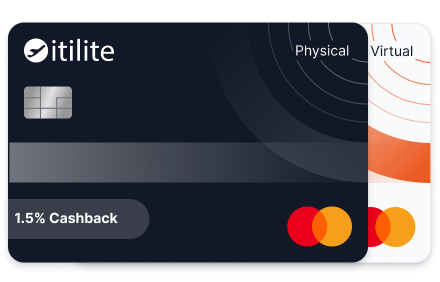
A modern card built for companies that want expenses to capture themselves with minimal manual work. This design ensures easy expense submission becomes a default behavior instead of an added task.
- Every swipe creates a ready-to-review expense line.
- Policy rules apply instantly, not after the fact.
- Receipts attach directly to the transaction without hunting for proof.
- Employees spend confidently knowing the card enforces company expectations.
- Finance teams experience streamlining expense reimbursement through automated checks and clean data.

Why the Card Is Central to Your Expense Workflow
Not an add-on. The card is the core engine that powers low-effort, high-visibility business spending. It ensures easy expense submission is consistent across the organization.
- Issued instantly for in-office, field, or travel needs.
- Unlimited virtual cards remove shared-card risks.
- Configurable controls prevent out-of-scope purchases.
- Real-time visibility means finance sees transactions as they happen.
- All information flows into the same system where expenses, approvals, and policies live.
Smart Controls That Keep Spending Within Guardrails

Compliance, accuracy, and control without slowing people down.
- Merchant category and vendor-level restrictions.
- Time-bound, role-based, or project-based spend limits.
- Domestic or international usage toggles for safety.
- Online or offline controls to reduce misuse.
- Automated policy checks that remove manual validation and support easy expense submission with fewer exceptions.

A Flexible Expense Experience for Every Team
Designed for organizations with different spending environments and approval patterns.
- Field teams pay on the spot without out-of-pocket spending.
- Office teams use virtual cards for tools, travel, or department purchases.
- Managers get one-tap mobile approvals.
- Finance receives consistent, structured transaction data.
- Exception-only manual submission remains available when needed to maintain easy expense submission in unusual cases.
Audit-Ready Data That Flows Into Your ERP

Complete visibility from transaction to reconciliation with no extra handling.
- Auto-categorized transactions with matched receipts.
- Clean data mapped to your accounting system.
- Policies and approvals stored centrally for compliance.
- Month-end close becomes faster with fewer corrections.
- Ideal for companies scaling operations and spend processes while maintaining easy expense submission across all departments.
101 on Corporate Card Expense Submission
Corporate card expense submission is becoming the preferred way organizations handle day-to-day spending. Instead of asking employees to remember what they spent, store receipts, and fill a form later, the card creates the first record of the expense. Every payment adds an entry to the system, giving finance a consistent starting point and giving employees fewer steps to complete.
This structure supports easy expense submission because the card makes the process lighter and more predictable. The expense tool still plays an important role in review, policy checks, and documentation, but the heaviest lift moves to the transaction itself. Companies do not eliminate their expense process. They simply reduce unnecessary effort from it.
Why Companies Are Moving Toward a Card-Led Workflow
As spending categories expand across software, subscriptions, travel bookings, and local purchases, relying only on reimbursement workflows leads to delays and fragmented data. A card-based system creates a unified flow where transactions enter cleanly into the expense platform without employees needing to reconstruct the details.
This shift naturally supports streamlining expense reimbursement. The card removes friction at the front of the process while the expense platform handles structured approval and reporting at the end. Companies still maintain their expense policies and controls. They simply experience fewer exceptions and clearer, easy expense submission paths.
How the Card Reduces the Steps Employees Take
The biggest advantage of a card-led model is that employees no longer need to create an expense from scratch. Once a transaction happens, the system already knows the vendor, the amount, and the date. The employee’s contribution becomes minimal, often just attaching a receipt if the policy requires one.
This creates an environment where easy expense submission happens organically. People spend as usual and the platform builds the expense automatically. The role of the employee becomes lighter without compromising the information finance teams need. Over time, the habit of submitting everything at month end naturally disappears.
Controls That Keep Spend Within the Right Boundaries
Expense management is not only about documentation. It is also about ensuring spend stays within company expectations. Corporate cards help by applying rules before the transaction occurs. With limits, merchant restrictions, and time-based controls built directly into the card, most mismatches are prevented rather than corrected later.
This does not replace expense policies. It reinforces them. The expense platform still validates and surfaces exceptions, but the number of exceptions decreases. With fewer corrections and fewer clarifying requests, finance teams gain time back and employees experience smoother, easy expense submission throughout the month.
Reducing Repetitive Work for Finance Teams
Finance teams spend significant time cleaning up expense data, matching receipts, correcting categories, and reminding employees about missing details. A corporate card cuts down this repetitive work because transactions come pre-structured. Policy checks apply automatically, so many issues resolve themselves before reaching review.
This transforms the team’s workload from operational to supervisory. Finance still exercises oversight and control, but the manual tasks that typically slow down streamlining expense reimbursement become lighter. Month-end processing becomes faster and approvals become more predictable.
Maintaining a Clear, Real-Time View of Your Spend
When employees use corporate cards instead of personal cards, companies gain consistent visibility. Every transaction enters the system instantly, allowing managers and finance teams to track spending patterns as they evolve.
This unified view strengthens budgeting, forecasting, and variance analysis. The expense platform remains essential for reporting, but the card ensures that data feeding those reports is complete and supports easy expense submission without manual reconstruction.
Keeping Manual Submission Available for Exceptions
Even with strong corporate card adoption, some scenarios fall outside card usage. For these cases, manual expense submission remains part of the workflow. The process is designed to be quick: snap a receipt, enter the required details, and the system routes it to the right approver.
Manual submission becomes an exception instead of the primary method. Companies do not eliminate reimbursement capability. They simply reduce dependency on it. This keeps the platform flexible while ensuring easy expense submission stays consistent across teams.
Building Long-Term Stability in Spend Processes
As more transactions originate on corporate cards, the organization gains long-term consistency. Employees become familiar with spending guidelines and finance teams spend less time correcting outliers.
This cumulative stability is what ultimately supports streamlining expense reimbursement at scale. With cleaner transaction data, well-defined controls, and a predictable submission flow, the entire spend ecosystem becomes easier to manage. The card initiates the process and the expense platform completes it, creating a balanced workflow that enables ongoing easy expense submission without compromise.
Frequently Asked Questions
What is corporate card expense submission
It is the process where expenses are created automatically from card transactions, giving companies easy expense submission without manual entry.
How does the card improve expense accuracy
The card records exact details at the moment of payment, reducing errors common in manual reports.
Does this replace expense management
No. Expense management remains important. The card simplifies how data enters the system so workflows take less time.
How does this help with streamlining expense reimbursement
Receipts match instantly, approvals move faster, and fewer corrections are required, improving reimbursement speed.
What controls can finance teams set
Limits, merchant categories, time windows, and online or offline restrictions.
Does the card support international spending
Yes. International usage can be enabled or disabled per card.
Can employees still submit manual expenses
Yes. Manual expenses remain available for rare, non-card scenarios.
Does this work for field teams
Yes. Field teams get instant purchasing ability without personal payments.
How does this reduce month-end pressure
With every transaction pre-checked and categorized, closing becomes faster and cleaner.
How do receipts get attached
Employees receive a prompt to snap a photo and the system auto-matches it to the correct card transaction.